

HRMS Software for Startups in Rajkot: Manage Attendance, Payroll, Leave and Workforce Operations
HRMS Software for Startups in Rajkot helps growing businesses simplify employee management, attendance, payroll, leave, shift scheduling, time tracking and workforce operations. Discover how an integrated HRMS can reduce manual HR work, centralize workforce data and support startups as they scale.
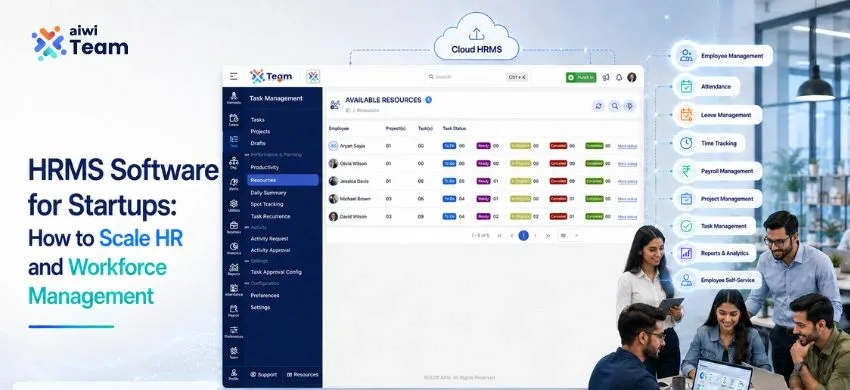
Growing businesses in Rajkot often need to balance business expansion with efficient workforce administration. As employee numbers increase, HR responsibilities also increase. Managing employee records, attendance, leave, payroll, working hours, holidays, shifts, and employee requests manually can become difficult.
A startup may initially use Excel or Google Sheets because these tools are simple and inexpensive. Leave requests may be handled through email or messaging applications, while payroll may be processed through another system.
This approach can work for a very small workforce.
As the company grows, however, disconnected HR processes can create duplicate records, manual verification, and additional administrative work.
This is why businesses searching for HRMS software in Rajkot may consider an integrated human resource and workforce management platform.
Why HRMS Matters for Growing Businesses
HRMS software is designed to centralize employee and HR operations.
Instead of maintaining separate records for employee information, attendance, leave, payroll, and working hours, a connected HRMS can provide a central system.
For growing businesses, this can make everyday HR administration more structured.
A modern platform may include:
-
Employee management
-
Attendance management
-
Leave management
-
Payroll management
-
Shift scheduling
-
Time tracking
-
Employee self-service
-
Workforce reporting
-
Project management
-
Task management
Not every business requires every feature. The important consideration is whether the software addresses the company's actual requirements.
Attendance Management
Attendance is one of the most common HR processes that becomes difficult to manage manually.
When a business has only a few employees, HR can quickly verify attendance.
As the workforce grows, the number of daily attendance records increases.
Employees may also work under different schedules.
An attendance management system can provide structured check-in and check-out processes and maintain attendance records in a centralized location.
Depending on the platform, companies may be able to use web attendance, mobile attendance, biometric devices, shift-based attendance, attendance regularization, and attendance reporting.
Businesses should choose the methods that fit their workforce.
Leave Management
Leave management is closely connected to attendance.
If employees request leave through different channels, HR may need to manually update attendance records and leave balances.
An online leave management system can simplify this process.
Employees can submit leave requests digitally, managers can approve them, and HR can maintain records of leave balances and history.
For a growing company, this provides a clearer workflow than relying entirely on informal messages.
Payroll Management
Payroll is another area where automation can be useful.
Salary processing may involve employee salary structures, earnings, deductions, working days, approved leave, payslips, and payroll reports.
When information is stored in different spreadsheets, HR teams may spend additional time checking and transferring information.
An integrated payroll management system can centralize salary information and connect relevant workforce inputs according to configured company policies.
For businesses in Rajkot, payroll software should be evaluated according to organizational requirements and applicable payroll processes.
Employee Management
An HRMS also provides a structured way to manage employee information.
As a company grows, HR may need to organize employees by departments, designations, reporting managers, employment types, and roles.
Maintaining this information centrally can make organizational administration easier.
It also provides a foundation for other HR workflows because attendance, leave, payroll, and reporting can be associated with employee records.
Time Tracking
Time tracking may be especially useful for businesses where employee work is connected to projects or tasks.
For example, an IT company may need to monitor project hours. An agency may want to understand client-related work time. A service business may need visibility into working hours.
Time tracking can provide structured information about how working hours are allocated.
When time tracking is connected to projects and tasks, managers can understand workforce activity in greater context.
Workforce Management
Modern businesses may need more than traditional HR administration.
Managers may want information about:
Employee availability
Working schedules
Project assignments
Task progress
Working hours
Leave
Workload
Workforce reports
This broader approach is often referred to as workforce management.
Connecting HR and workforce information can reduce the need to move data between several applications.
Productivity Monitoring
Some businesses may also use productivity monitoring.
Depending on the platform, productivity-related features can include activity information, screenshots, working time, project activity, or task information.
Businesses should establish clear employee policies before implementing monitoring features.
Monitoring should be appropriate to the organization's working model, communicated transparently, and interpreted alongside business context.
For example, low application activity does not automatically mean an employee is not working. Meetings, planning, communication, research, and other activities may not appear in simple activity measurements.
AIWI Team for Rajkot Businesses
AIWI Team provides an integrated HRMS and workforce management platform designed for startups, SMEs, and growing organizations.
Its capabilities include employee management, attendance, leave, payroll, time tracking, productivity, projects, tasks, organizational management, shift management, and reporting.
Businesses looking for HRMS software in Rajkot can compare these capabilities against their specific workforce requirements.
The platform's detailed HRMS guide for startups explains how companies can connect employee administration with broader workforce management as they grow.
What to Check Before Buying HRMS Software
A business should evaluate HRMS software based on practical requirements.
Consider the following:
-
Can employee information be centralized?
-
Does attendance support the company's working model?
-
Can employees submit leave requests online?
-
Can managers approve leave digitally?
-
Can payroll manage the required salary structures?
-
Are payslips available?
-
Can shifts be scheduled?
-
Is time tracking required?
-
Can projects and tasks be connected with workforce information?
-
Are useful HR reports available?
-
Does the platform support future growth?
-
Is employee self-service available?
-
Is the software easy for employees and managers to use?
These questions can help businesses avoid selecting software simply because it has an extensive feature list.
Moving From Manual HR to Digital HR
The transition does not have to happen all at once.
A business can start by centralizing employee records.
Then it can introduce digital attendance.
After that, leave management can be moved online.
Payroll can then be connected to relevant HR information.
Time tracking and project management can be introduced if they solve a real operational need.
Finally, reporting can help managers understand workforce information.
This phased approach can make HRMS adoption easier for growing businesses.
Conclusion
For startups and SMEs in Rajkot, HRMS software can help create more organized HR and workforce processes.
Employee management, attendance, leave, payroll, time tracking, shifts, projects, tasks, and reporting can all become difficult to manage through disconnected spreadsheets as a company grows.
An integrated HRMS provides an opportunity to centralize these workflows.
Businesses should evaluate software based on workforce requirements, payroll processes, attendance methods, employee experience, reporting needs, and future scalability.
AIWI Team brings HRMS and workforce management functions together, providing startups and growing businesses with a centralized platform for managing people and day-to-day workforce operations.
I’m AIWI Team, an all-in-one HRMS and workforce management platform built to help businesses simplify the way they manage people, productivity, and daily operations. AIWI Team brings essential workplace tools together in one platform, including employee management, attendance, leave management, payroll, time tracking, task management, project management, productivity tracking, workforce management, and reporting. Our goal is simple: help startups, SMEs, and growing businesses reduce manual HR work, improve workforce visibility, and create more organized and productive workplaces. Whether your team is remote, hybrid, or office-based, AIWI Team provides the tools you need to manage your workforce more efficiently and support business growth.









Comments (0)