

How to Choose the Right 925 Sterling Silver Jewelry Manufacturer for Your Brand
If you've ever tried sourcing silver jewelry for your business, you already know the problem. A quick search turns up hundreds of suppliers, all claiming "premium quality" and "best prices." But when the samples arrive, half of them tarnish within weeks, the stamping is inconsistent, or the finish just doesn't match what was promised.
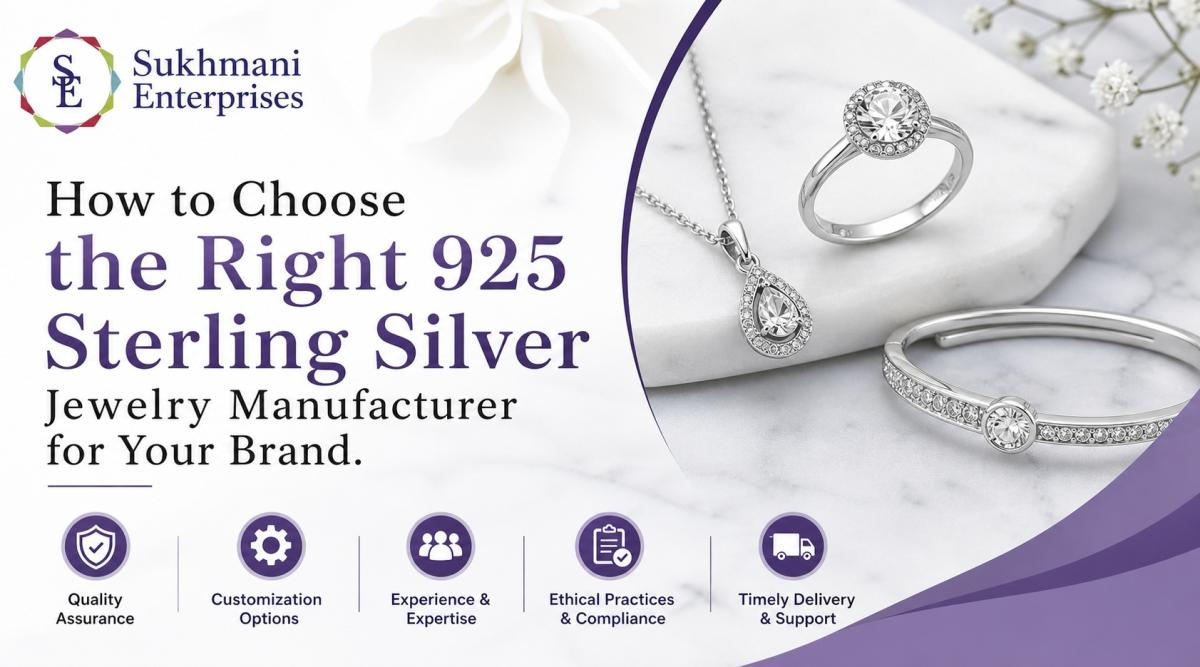
Selecting a suitable jewelry manufacturer is one of the key aspects of running a successful jewelry brand. No matter whether you are starting up a new collection, developing an existing enterprise, or entering the wholesale jewelry market, product quality and supplier reliability will affect your brand's reputation. As there are many manufacturers out there offering products at various prices and providing different services, it takes some research to find a reliable one.
A reputable 925 sterling silver jewelry manufacturer will ensure product consistency, unique design development, and customer satisfaction. Nevertheless, the selection process should take into account many more aspects rather than prices. The quality of the silver used, production capacity, and delivery terms are just some of the factors that matter.
Here you can learn about the factors that must be considered while choosing a sterling silver jewelry manufacturer.
1. Understand the Value of 925 Sterling Silver Composition
It is important to know why 925 sterling silver is better than other types of silver before choosing any company to manufacture jewelry products.
Sterling silver consists of 92.5% silver and 7.5% other metals, usually copper. Such composition provides additional durability while preserving the properties of silver. In addition, pure silver is quite soft; that is why 925 sterling silver is mostly used for making rings, necklaces, earrings, bracelets, pendants, etc.
A reputable manufacturer of 925 sterling silver products should be able to prove the composition of materials used in the manufacturing process.
The following criteria should be considered when choosing a supplier:
-
Inquire about the silver composition used for each product.
-
Provide documentation regarding the purity of the products.
-
Make sure there are proper hallmarks on products where needed.
-
Verify that the materials correspond to those specified in the purchase agreement.
This will help to avoid products not meeting the requirements of your brand.
2. Analyze Manufacturing Experience and Expertise
The level of manufacturing experience may play an important role in the quality and consistency of jewelry products that the company produces. An experienced manufacturer knows the demands of producing sterling silver jewelry items, such as casting, forming, soldering, polishing, setting stones, and finishing of the product.
Prior to choosing a supplier, it is necessary to analyze its experience in manufacturing those jewelry products that you want to sell.
For example, if the manufacturer specializes in producing minimalist rings made from silver, it does not mean that the company has the appropriate experience in producing elaborate bridal jewelry or gemstone necklaces.
It might be useful to ask the manufacturer about the production process, past experience in producing different jewelry, design capabilities, and whether the manufacturer has worked with companies like yours before.
It is also useful to find out whether the company manufactures products itself or uses external production partners. Both approaches are acceptable if the company follows certain standards of quality.
3. Verify the Quality and Workmanship of the Products
In jewelry buying, consumers pay attention to the smallest things, including finishing, alignment of stones, the strength of clasps, symmetry, and aesthetics of a piece. Inconsistencies in quality may negatively impact consumer satisfaction, causing more returns.
That is why quality control should be one of the top concerns when selecting sterling silver jewelry manufacturers.
Order samples and examine them in terms of finish, weight, comfort, durability, and craftsmanship. If there are gemstones in the jewelry, verify their location and safety. For jewelry pieces that undergo plating, clarify what kind of plating and how thick it is expected to be.
Moreover, a reputable manufacturer has a quality inspection process.
Quality control procedures include:
-
Inspection of raw materials coming to the manufacturer.
-
Process control in manufacturing and finishing.
-
Product dimensions and design verification.
-
Clasp, closure, and other components testing.
-
Final inspection before dispatch.
Do not judge the manufacturer by a sample only. Ask how they ensure product consistency in repeat orders and large production lots.
4. Price Comparison without Compromise in Quality
The cost factor is crucial, especially for start-ups and companies buying jewelry in large quantities. However, opting for the least expensive supplier may not always result in the best business outcomes.
Costs can differ based on the price of silver, product weight, design, choice of gems, finishing processes, order quantity, and packaging needs.
In order to obtain quotes, send each manufacturing company identical product specifications. This way, it would be easier for you to make comparisons.
Find out whether the quote encompasses:
-
Costs of sterling silver material.
-
Manufacturing and finishing costs.
-
Costs of gemstones or other ornaments.
-
Design or mold development costs.
-
Costs of branding and packaging.
-
Costs of shipping, taxes, etc.
A clear quote enables you to figure out the product's cost and set adequate retail prices.
Apart from being concerned only with the lowest price, try to take into account the manufacturer's overall worthiness. High-quality production, reliable deliveries, and reduced rates of defects can positively influence your business profitability.
5. Familiarize Yourself with Minimum Order Quantity and Manufacturing Capability
Another key element when picking a jewelry manufacturer is minimum order quantity, which is abbreviated as MOQ.
There are manufacturers that take low MOQs and some that produce only wholesale volumes of jewelry. It all depends on your type of business, budget, inventory plan and expected consumer demand.
Small MOQs allow testing more designs without having to invest a lot into the inventory when you start up a new business. Established stores could take advantage of large MOQs and save on the average price of manufacturing per item.
Prior to selecting a particular manufacturer, find out about the following things:
-
MOQ per design.
-
Price difference between small and large orders.
-
Timeframes for sample creation and approval.
-
Monthly manufacturing capability.
-
Plan for ordering popular items again.
-
Flexibility regarding creating new designs.
You need to be sure that the supplier will manage to increase manufacturing capability along with increasing your business volume.
6. Research Custom Manufacturing and Private Labeling Services
In an increasingly competitive jewelry marketplace, distinct products may give your company an edge. This is why many companies favor those manufacturing facilities that provide customization and private labeling services.
Through custom manufacturing, you will be able to manufacture jewelry according to your own ideas, drawings, images, and technical illustrations. Depending on the abilities of the manufacturer, you may customize the dimensions, shape, gems, finishes, and other product attributes.
Private labeling service will also allow you to maintain a unified brand identity with branded packaging, logos, product labels, and other branded features.
Regarding custom projects, it should be determined:
-
If the manufacturer is capable of creating original designs;
-
Who will hold the rights to design files and tooling;
-
If prototypes are possible to manufacture prior to large-scale production;
-
How changes in designs influence cost and schedule of manufacture;
-
If any exclusivity arrangements are available;
-
How your designs and business information are kept confidential.
These issues will help you avoid future problems and protect your commercial interests.
7. Verify Certifications and Market Compliance
If you wish to sell jewelry in different markets, there can be specific certification or testing criteria applicable to your products.
Your responsible manufacturer should know about the applicable criteria for your target market and assist in obtaining the available documentation of their products.
Silver purity, specific hallmarking rules, metal restrictions, and special certification rules for gemstone or product labeling may be among other relevant factors to check depending on the destination and type of the products.
For instance, companies exporting jewelry to Europe have to evaluate how chemical restrictions and REACH regulations apply to their products. In some cases, nickel release requirements may also become significant for certain products designed for skin contact.
In case of Indian sourcing, confirm the current hallmarking rules from the Bureau of Indian Standards (BIS) and their applicability to specific products and transactions in question. Never think that all silver jewelry is subject to the same mandatory hallmarking rules.
Ask for the appropriate certifications, test results, and other related documents instead of asking for verbal statements.
8. Evaluate Communication and Consistency in Delivery
Even if the manufacturer has good quality in their products, they can be difficult to deal with if there is poor communication or unreliable delivery time schedules.
Good communication will minimize mistakes related to specifications, quantity, finishes, packaging, and dispatching of goods.
In the initial talks, evaluate the promptness and accuracy of responses from the supplier. A reliable partner should have information about the manufacturing timeline, limitations, and notify you of any unforeseen delays.
Prior to placing your order, you should establish some expectations regarding:
-
Lead time of production.
-
Approval process and design changes.
-
Quality inspection and defect correction.
-
Packaging and shipping process.
-
Payment schedule and order cancellations.
-
Handling of damaged and incorrect goods.
For large orders, ask for updates on production and make sure both sides are on the same page about the final specifications of the product.
A good manufacturer should be ready to talk about problems and find ways to solve them.
9. Examine Reputation and Client Feedbacks
The reputation of the manufacturer may offer some indication regarding its professionalism and quality of the product it manufactures.
Try to find independently verifiable information about the business, client testimonials, images of the products, and past experiences of the manufacture with clients. Try requesting testimonials from existing business clients that buy jewelry items.
While analyzing the feedback from the clients, look out for any common complaints regarding shipment delays, lack of quality, poor communication skills, and defect corrections.
Requesting for an online meeting or visit of the supplier to your firm and factory will give you more understanding of the company.
Please note that an excellent website or brochure will not necessarily guarantee good manufacturing skills. Make sure you do not take things at their face value.
10. Establish a Long-Term Manufacturing Partnership
It is not always the jewelry supplier with the most favorable quotation that makes the best choice. The right supplier will be one that constantly delivers what you require, gives honest communication, and assists your business when your requirements change.
A good partnership will enhance production planning, make repeat ordering easier, allow for customization, and help both parties adapt better to market changes.
Once you find an appropriate 925 sterling silver jewelry manufacturer, keep a clear record of the product specifications, approved samples, expectations of quality, and terms of doing business.
Mistakes to Be Aware of When Sourcing Your Jewelry from a Manufacturer of Sterling Silver
Avoiding some typical mistakes will facilitate the entire sourcing procedure.
Purchasing based solely on low prices: Cheap quotes can mean that production, packaging, and shipping are not included in the price.
Not checking samples: The sample enables evaluating the quality of workmanship.
Neglecting product consistency: It should be confirmed that production in batches will correspond to the accepted sample and specifications.
Not paying attention to compliance: You should verify the laws and materials appropriate for your products and target audience.
Not documenting the agreement: Specifications and terms of delivery are important for resolving future disagreements.
Placing too much order: You should estimate the actual demand and storage space you have.
By taking these mistakes into consideration, companies can avoid making wrong decisions during the sourcing process.
Selecting an appropriate 925 sterling silver jewelry manufacturer demands a detailed analysis of material purity, craftsmanship, production capacity, pricing, customization options, compliance, and communication. All these factors play an important role in determining the quality of your products as well as the reputation of your jewelry line.
Instead of selecting the supplier based only on price or appealing samples, evaluate the suppliers based on the same criteria, request any necessary documentation, examine the samples, and set your expectations clearly before making bulk purchases.
An experienced and trustworthy manufacturer will help you ensure the product consistency, implement unique designs, control inventory, and gain customers' trust. With the proper research and sourcing strategy in place, your brand will be able to build a solid base for future success in the 925 sterling silver jewelry market.
FAQs
1. Definition of 925 sterling silver jewelry.
925 sterling silver is an alloy consisting of 92.5 percent silver and 7.5 percent other metals, primarily copper. This alloy is highly popular in jewelry since it combines the properties of silver with enhanced durability.
2. How can one find a reputable 925 sterling silver jewelry producer?
Experience, purity of the used silver, skills, quality assurance measures, production capacity, price policy, custom work options, and delivery guarantees should be evaluated. It is recommended to request samples and prove relevant facts before purchasing.
3. Is it possible to produce unique sterling silver jewelry?
Most producers provide custom jewelry creation according to sketches, pictures, or detailed drawings. It is recommended to clarify details about the ownership of the design, the cost of a prototype, production time, and restrictions in customization.
4. What is the minimum order quantity of sterling silver jewelry?
The minimum order quantity depends on the producer and specifics of particular designs and production technology. Some manufacturers accept trial orders while others prefer wholesale orders. The MOQ for each design should be clarified before getting a quotation.
5. How do I confirm purity of 925 sterling silver jewelry?
You may seek out appropriate assaying or purity tests and look into applicable hallmarking criteria.
6. Is the most inexpensive jewelry manufacturer the one to choose from?
Certainly not. Low price is no guarantee of quality and reliable deliveries and compliance with all criteria. Make comparisons of full costs of procurement in relation to quality and other considerations.
7. What should I inquire about before ordering jewelry in bulk?
Inquire about purity of materials, approval of samples, lead times of production, minimums, inspections, packaging and shipping, payments and how to address defective or erroneous delivery.
8. Why is quality control crucial in the manufacture of sterling silver jewelry?
Quality control ensures compliance with the specifications of materials used, dimensions, finishing, setting of stones and other parameters of your agreement. Good quality can help you reduce returns.

We are a trusted 925 sterling silver jewelry manufacturer, specializing in handmade sterling silver jewelry, spiritual energy jewelry, and bohemian gemstone designs. As a reliable handmade sterling silver jewelry wholesaler and sterling silver bohemian jewelry exporter, we offer unique collections for global retailers, wholesalers, and jewelry businesses. Our range includes spiritual yoga jewelry in sterling silver, bohemian gemstone silver jewelry wholesale, and chakra jewelry crafted with attention to detail. We also specialize in handmade chakra yoga jewelry in silver and wholesale spiritual gemstone jewelry. With a focus on quality craftsmanship and distinctive designs, we support businesses seeking a dependable chakra jewelry sterling silver manufacturer and partner for export sterling silver jewelry wholesale.













Comments (0)