

Warehouse Ergonomics: How Automation Improves Workplace Safety

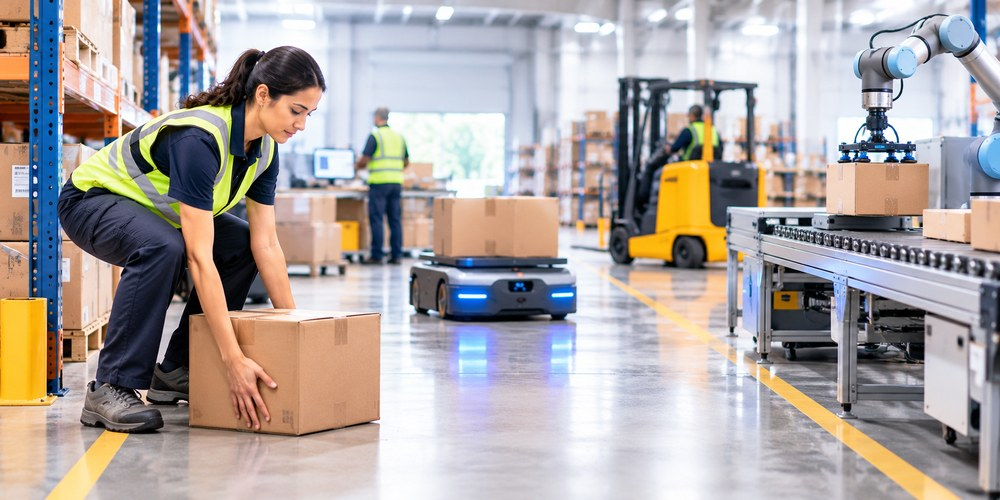
Warehouse work involves many physical tasks, including lifting heavy items, moving goods, packing orders, and loading products for delivery. These activities can put pressure on workers' bodies and increase the risk of workplace injuries. Repeated movements, poor lifting techniques, and long working hours can also lead to back pain, muscle strain, and fatigue.
Warehouse ergonomics focuses on designing work areas, tools, and tasks to make warehouse jobs safer and more comfortable for employees. It helps businesses reduce physical strain, improve working conditions, and support better productivity.
Automation is becoming an important part of warehouse safety. Automated equipment, robotic systems, conveyor belts, and smart lifting tools can reduce the need for workers to perform difficult or repetitive tasks manually. When businesses combine automation with good ergonomic practices, they can create a safer working environment.
In this article, we will explore how automation improves warehouse ergonomics, the main benefits it offers, and the steps businesses can take to make their warehouses safer.
What Is Warehouse Ergonomics?
Warehouse ergonomics is the process of designing workplace tasks and equipment around the needs and abilities of workers. The main goal is to reduce physical stress and make everyday activities easier to perform.
Warehouse employees often spend hours standing, walking, bending, reaching, lifting, and carrying items. If these activities are not managed properly, they can cause injuries over time.
For example, repeatedly lifting heavy boxes from floor level can put pressure on the lower back. Reaching for items stored on high shelves may strain the shoulders. Packing products at an unsuitable workbench height can also cause discomfort in the neck, wrists, and arms.
A good warehouse ergonomics plan looks at these risks and finds ways to reduce them. This may include adjusting shelf heights, improving workstation layouts, using lifting equipment, and changing how tasks are completed.
Automation supports these efforts by allowing machines to handle some of the most physically demanding warehouse activities.
Common Ergonomic Risks in Warehouses
Before understanding how automation improves safety, it is important to identify the main ergonomic risks found in warehouses.
1. Heavy Lifting and Carrying
Workers often need to lift boxes, containers, and other products throughout the day. Heavy or awkward loads can increase the risk of back injuries, muscle strain, and shoulder pain.
2. Repetitive Movements
Picking, scanning, packing, and sorting orders may require employees to repeat the same movements hundreds of times. These actions can put stress on muscles, joints, and tendons.
3. Bending and Reaching
Items placed too low or too high can force workers to bend their backs or stretch their arms repeatedly. Over time, these movements can cause discomfort and increase injury risks.
4. Long Periods of Standing and Walking
Warehouse employees may spend most of their shifts on their feet. Long periods of standing or walking across large facilities can contribute to fatigue, leg discomfort, and physical strain.
5. Workplace Fatigue
Physically demanding work can leave employees tired, especially during busy periods. Fatigue may reduce concentration and make it harder to follow safe working practices.
These risks show why warehouse ergonomics should be an important part of every warehouse safety plan.
How Automation Improves Warehouse Ergonomics
Automation helps reduce the physical demands of warehouse work by allowing machines and digital systems to perform selected tasks. It does not remove every workplace risk, but it can help businesses control many common ergonomic hazards.
1. Automated Guided Vehicles Reduce Manual Transport
Moving goods from one warehouse area to another can require considerable physical effort. Employees may need to push loaded carts, pull heavy equipment, or carry products across long distances.
Automated guided vehicles (AGVs) and autonomous mobile robots (AMRs) can move goods between storage areas, picking stations, and packing zones. This reduces the need for employees to transport every load manually.
For example, a mobile robot can carry a container of products to a picking station. The worker can then focus on selecting the required items instead of moving the container across the warehouse.
This approach can reduce pushing, pulling, and carrying demands. However, businesses must also manage traffic routes, pedestrian crossings, and safe operating distances to prevent collisions.
2. Robotic Systems Reduce Repetitive Tasks
Repetitive tasks are common in warehouses, especially during order fulfilment. Employees may need to sort products, place items into containers, or move packages along production lines throughout their shifts.
Robotic systems can perform certain repetitive activities, such as sorting parcels, handling standardised items, and packing products. This reduces the number of repeated movements workers must perform.
Reducing repetitive physical work can help lower the risk of muscle fatigue and repetitive strain injuries. It can also allow employees to focus on tasks that require decision-making, quality checks, and problem-solving.
However, poorly designed automated workstations can create new problems if employees must stand in one position or repeat the same small movements for long periods. Workstation design and task rotation remain important.
3. Automated Lifting Equipment Makes Heavy Loads Easier to Handle
Lifting heavy products is one of the main ergonomic challenges in warehouses. Even when workers follow proper lifting techniques, handling heavy or awkward items repeatedly can increase physical strain.
Vacuum lifting systems, hoists, lift tables, and mechanical lifting devices can help employees move heavy products with less physical effort.
For example, a lift table can raise a pallet to a suitable working height. Employees can then access products without repeatedly bending down to reach items near the floor.
Vacuum lifting equipment can also help move certain boxes or materials that would otherwise require significant manual effort.
These tools support better warehouse ergonomics by reducing difficult lifting positions and helping workers maintain more comfortable postures. Employees should still receive training and follow equipment load limits and safety procedures.
4. Conveyor Systems Reduce Unnecessary Carrying
Conveyor belts help move products between different warehouse areas. Instead of carrying every package by hand, employees can place items on a conveyor system and allow the equipment to transport them.
This can reduce walking distances, manual carrying, and the physical effort involved in moving products between workstations.
Conveyor systems are especially useful in warehouses that handle large numbers of orders. They can connect picking, sorting, packing, and dispatch areas to support a smoother workflow.
To improve warehouse ergonomics, conveyors should be positioned at suitable heights and designed to avoid excessive reaching, twisting, or bending. Emergency stops, machine guards, and clear access routes are also necessary.
5. Smart Picking Systems Improve Working Positions
Order picking requires workers to find products and collect the correct quantities for each order. In some warehouses, employees must repeatedly bend, reach, climb, or move heavy containers.
Automated storage and retrieval systems can bring products to designated picking stations. This reduces the need for employees to travel through storage aisles or reach into difficult locations.
Some warehouses also use pick-to-light systems, barcode scanning, and digital instructions to help workers find items more easily.
When these systems are designed well, they can reduce unnecessary movement and make picking tasks more comfortable. Businesses should also ensure that frequently picked items are stored within easy reach whenever possible.
6. Warehouse Management Systems Help Balance Workloads
Warehouse management systems (WMS) help businesses organise inventory, assign tasks, and manage order fulfilment. Although these systems do not directly remove physical strain, they can support better task planning.
For example, a warehouse management system may help distribute orders between workstations and identify busy areas. Managers can use this information to plan staffing, schedule breaks, and avoid placing too much work on a small number of employees.
Balanced workloads can help reduce fatigue during busy periods. Managers should also review work rates to ensure that productivity targets do not encourage unsafe lifting, rushed movements, or skipped breaks.
Key Benefits of Combining Automation and Warehouse Ergonomics
When automation is introduced with proper ergonomic planning, warehouses can gain several important benefits.
Reduced Risk of Workplace Injuries
Automated lifting devices, mobile robots, and conveyor systems can reduce exposure to some physical hazards. Less manual handling may help lower the risk of back strain, muscle injuries, and other work-related problems.
However, automation must be selected and installed according to the actual risks in the workplace.
Improved Employee Comfort
Equipment designed around workers' needs can make daily tasks less physically demanding. Suitable workstation heights, easier access to products, and reduced manual handling can improve comfort throughout a shift.
Better Productivity
Automation can help products move through a warehouse more efficiently. Employees may spend less time carrying goods or searching for items and more time completing tasks that require human attention.
Safer work methods can also reduce disruption caused by preventable injuries and equipment-related incidents.
Lower Physical Fatigue
Reducing heavy lifting, long carrying distances, and repeated bending can help employees manage their physical workload. This is especially useful in warehouses with high order volumes or long operating hours.
Improved Employee Satisfaction
A workplace that takes safety seriously can help employees feel more supported. Providing suitable equipment, training, and comfortable workstations shows that the business values employee wellbeing.
How to Introduce Automation for Better Warehouse Safety
Businesses do not need to automate every warehouse activity at once. A planned approach can help them identify the most important safety improvements and use their budgets effectively.
1. Assess Existing Workplace Risks
Start by reviewing warehouse activities that involve heavy lifting, repetitive movements, awkward postures, or long travel distances. Speak with employees to understand which tasks cause the most discomfort.
A workplace risk assessment can help identify where automation may offer the greatest safety benefits.
2. Choose Equipment Based on Actual Needs
Select equipment that addresses the identified risks. A warehouse with frequent heavy lifting may benefit from lift tables or mechanical lifting devices, while a facility with long transport routes may benefit from mobile robots or conveyor systems.
The right solution depends on the products handled, available space, workflow, and employee needs.
3. Design Workstations Around Employees
Automation works best when the surrounding work area is also designed properly. Ensure that work surfaces are at suitable heights, frequently used products are easy to reach, and employees have enough room to move safely.
Avoid creating workstations that require constant twisting, stretching, or standing in uncomfortable positions.
4. Train Employees to Use Equipment Safely
Employees should understand how automated equipment operates, what risks it creates, and how to respond to problems. Training should cover operating procedures, emergency stops, pedestrian safety, and reporting equipment faults.
Only authorised and properly trained employees should operate equipment that requires specific training or certification.
5. Monitor Results and Make Improvements
After introducing automation, review workplace injury reports, employee feedback, equipment downtime, and task performance. These measures can help businesses determine whether the changes are reducing physical strain and improving safety.
Regular reviews are important because warehouse operations, order volumes, and employee needs can change over time.
Challenges to Consider When Automating a Warehouse
Although automation offers many benefits, it also creates challenges that businesses must manage.
The initial cost of equipment, installation, software, and training can be high. Some warehouses may also need to change their layouts or upgrade their existing systems before automation can be introduced.
Automated machines can create new hazards, including moving equipment, trapped fingers, unexpected machine movements, and collisions with pedestrians. Proper guarding, maintenance, traffic management, and emergency procedures are essential.
Businesses should also avoid assuming that automation will solve every ergonomic problem. Employees may still need to lift smaller items, stand for long periods, or perform repetitive tasks at automated workstations.
A successful approach combines appropriate technology with workplace risk assessments, employee training, sensible workloads, regular breaks, and ongoing ergonomic improvements.
Conclusion
Warehouse ergonomics is essential for reducing physical strain and preventing workplace injuries. Heavy lifting, repetitive movements, awkward postures, and long working hours can affect employee health and make daily warehouse tasks more challenging.
Automation can help reduce these risks by using mobile robots to transport goods, robotic systems to handle repetitive tasks, lifting equipment to move heavy loads, and conveyor belts to reduce manual carrying. Smart storage systems can also improve product access and make warehouse operations more efficient.
However, automation alone cannot ensure workplace safety. Businesses must also provide suitable equipment, comfortable workstations, proper employee training, and regular safety assessments. Combining technology with effective ergonomic practices can help create a safer and healthier working environment.
Businesses looking to improve workplace wellness and reduce injury risks can explore the workplace health and ergonomic solutions offered by Custom Onsite Health.
By combining automation with proper ergonomic planning, warehouses can reduce physical demands, support employee wellbeing, and maintain efficient daily operations.

















Comments (0)