

How Heavy Rain Can Cause Basement Water Damage in St. Louis Homes
A basement floods when water outside builds up against the walls and floor faster than the soil, the gutters and the sump pump can move it away.
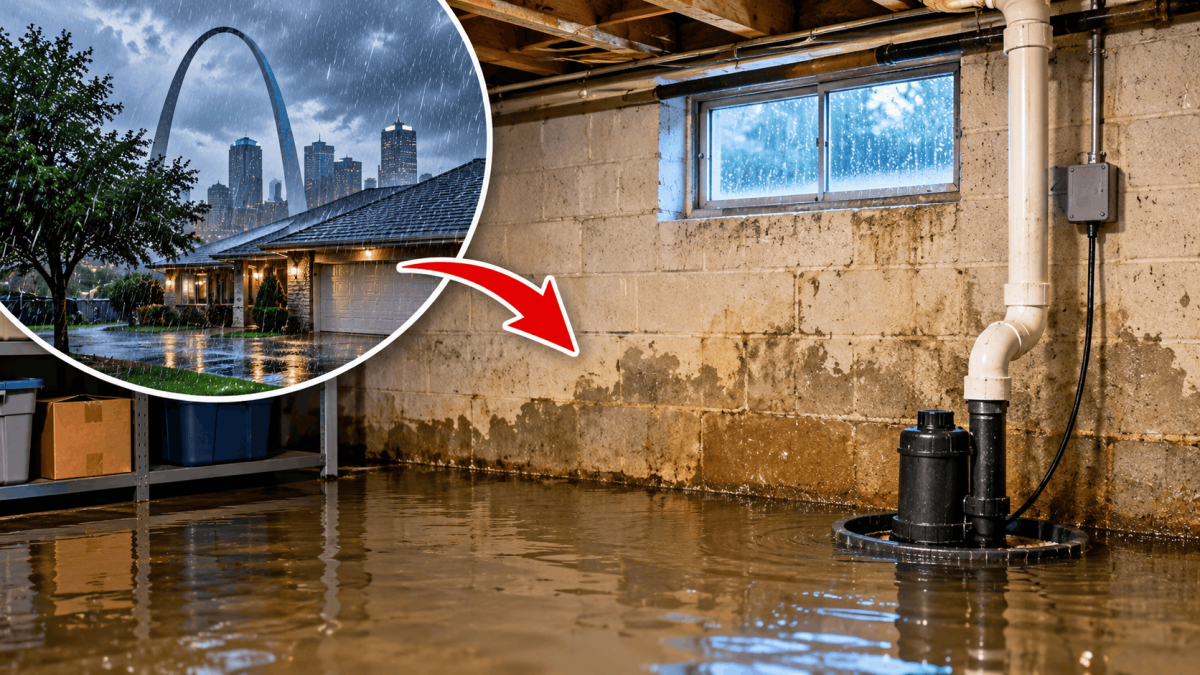
A basement floods when water outside builds up against the walls and floor faster than the soil, the gutters and the sump pump can move it away. That's the whole mechanism. In St. Louis it gets help from clay soil, older houses and sewer lines that fill up during big storms. The question that follows every flood, how long does water damage restoration take, gets its own section below.
The short answer before the full breakdown
1. Where the water actually comes from
Rain soaks the ground, and the soil around your foundation fills up like a bathtub wrapped around the house. Builders call the result hydrostatic pressure. It pushes. It finds the seam where the floor meets the wall, a crack nobody noticed, a window well that doesn't drain. Most basements that flood in a big storm were already seeping a little in smaller rains, and nobody was looking.
2. The fix that does the most
Move the rain away from the house before it reaches the foundation. That means gutters that aren't clogged, downspouts that empty several feet from the wall, and soil that slopes away from the house instead of toward it. Boring work. It beats nearly everything you can do inside the basement, and it costs less than one ruined carpet.
The usual ways rain gets into a basement
1. The joint where the floor meets the wall
Where the slab meets the foundation wall there's a joint, and in a lot of basements it's the first place water shows up. You'll see a dark line along the bottom of the wall, or a puddle creeping in from the edge of the room instead of the middle.
Why hairline cracks matter less than you think
Concrete cracks. Thin, dry cracks usually just sit there. The ones worth attention are wet, wider than a pencil line, still growing, or stained with rust or white mineral crust. Those tell you water is moving through the wall under pressure, and no amount of patching the inside will change what the outside is doing.
2. Window wells
A window well without a drain fills with rain like a cup, and the window sitting in it is the weakest spot in the wall. A clear cover and a drain to gravel at the bottom stop a surprising number of basement floods for very little money.
3. Floor drains and sewer backups
Heavy rain can push water back up through a floor drain. In some older parts of the region, storm water and sewage share pipes, and the Metropolitan St. Louis Sewer District (MSD) runs combined sewers in those areas that can fill up during a big storm. Water that comes up a drain isn't rain water. It's contaminated, and that changes the cleanup, the safety rules and sometimes the insurance conversation.
When the sump pump fails
1. Power loss during storms
Storms knock out power, and a sump pump without power is a bucket. The pit fills, the water rises past the floor line, and the basement floods during the exact hours the pump was bought for. A battery backup is the most useful upgrade on this list. If you only have money for one thing, buy that before you buy a bigger pump.
2. Pumps that are old or stuck
Pumps wear out, and a pump that sat idle through a dry stretch might not start when the pit finally fills. A stuck float switch is a classic failure. Test yours before storm season by pouring water into the pit until the float lifts and the pump kicks on, then check that the water leaves the house and doesn't just circle back to the foundation.
Why St. Louis basements take the hit
1. Clay soil
Much of the area sits on clay-heavy soil. Clay drains slowly and holds water against foundation walls. When it dries out it shrinks and can pull away from the wall, and when the rain returns it swells and pushes. That cycle is hard on foundations that were already aging.
2. Older homes and older drainage
Plenty of local homes with basements were built decades ago, before today's drainage details were common. Original drain lines, original window wells and original grading all age. If you're hiring for water damage restoration St. Louis homeowners need after one of these storms, ask whether the crew will look for the entry point, not only dry what got wet. Drying a basement without finding the leak is a loan you pay back at the next storm.
3. Fast rain, not just a lot of rain
Soil can only absorb so much water per hour. A slow two inches of rain over a day is a nuisance. The same amount in a couple of hours overwhelms the ground and the storm drains together. Whether storms like that are getting more frequent here is something the weather records will answer better than any contractor.
What to do in the first hours
1. Safety before cleanup
If water is standing near outlets or the electrical panel is in the wet basement, stay out and call your utility or an electrician. Don't wade through water that came up a drain. Treat it as sewage until someone proves otherwise.
2. Photos, water removal and belongings
Take photos and video first. Then, once it's safe, get the water out with a wet vacuum or pump and move furniture and boxes to dry ground. Cardboard boxes of stored papers and photos wick water upward, so move those early.
3. Drying and who to call
Wet carpet, padding and soaked drywall need to come out fast, because they hold moisture for days. For a basement that took in real water, Gateway Water and Mold offers water damage restoration St. Louis homeowners can reach around the clock, with moisture readings taken before anything gets torn out and written drying logs afterward. Call the same day. The hours between the flood and the first fan matter more than which fan you buy.
How long does water damage restoration take for a rain flooded basement?
1. The drying stretch
Plan on three to five days of equipment running for a typical job. Basements often run longer than upstairs rooms because the air is cooler and damper, and concrete, finished walls and carpet over a slab all release moisture slowly. A crew should end drying by showing moisture readings that match an unaffected part of the house, not by saying it feels dry.
2. The rebuild
After drying, new drywall, baseboards and flooring still have to go in. Drywall needs mud, sanding, primer and paint with drying time between coats. Flooring can be on back order. A finished basement can take weeks to rebuild, and most of that time is scheduling and materials, not labor.
3. Insurance and why quotes differ
Standard homeowners policies often exclude flood damage and sewer or drain backup unless you added a specific endorsement, so read yours before you need it and call your agent early. Quotes also differ because two basements with the same puddle can have very different water inside the walls. Any honest number for how long water damage restoration takes comes after the first moisture readings, not before. Anyone quoting a timeline from the doorway is guessing.
Keeping the next storm out
1. Gutters, downspouts and grading
Clean the gutters in fall and again in spring, run downspout extensions several feet from the house, and check that the soil near the foundation still slopes away. Settling and old landscaping flip that slope more often than people expect.
2. Backup power
Add a battery backup to the sump pump, and test it with the pump's main power switched off. A backup you've never tested is a hope, not a system.
3. Skip the wall paint
Interior waterproofing paint slows down damp, but it can't hold back water pushing through a wall from the outside, and it usually peels within a year or two. Spend that money on drainage outside, where the problem starts.
Conclusion
Heavy rain floods basements when the outside water has nowhere to go, and in St. Louis the clay, the older homes and the sewer systems stack the odds against you. The cheapest protection is the dull stuff: gutters, grading, a tested sump pump with a battery behind it. When the water does get in, call a crew that takes moisture readings and shows you the log. Ask that crew how long does water damage restoration take for your basement, and trust a range that follows the readings. If you search for water damage restoration St. Louis after a storm, pick the company that explains how they'll know the job is done.
Frequently Asked Questions

Professional mold remediation and water damage restoration backed by IICRC-trained technicians and 145+ five-star customer reviews.












Comments (0)