

What Happens During a Laser Carbon Peel Treatment?
Discover what happens during a Laser Carbon Peel in Dubai, from carbon application and laser treatment to aftercare, recovery, and expected skin benefits.
If you are curious about what actually happens during a Laser Carbon Peel in Dubai, the treatment is easier to understand than it may sound. Often called a carbon laser peel or carbon facial, this non-invasive skin treatment combines a carbon-based mask with laser energy to refresh the skin’s surface. The procedure is designed to help remove surface impurities, improve the appearance of pores, and leave the complexion looking smoother and more radiant, usually with little to no downtime.
What Is a Laser Carbon Peel?
A laser carbon peel is a cosmetic skin treatment that uses a liquid carbon solution followed by controlled laser energy. The carbon is applied to the skin and allowed to settle into the pores and surface layers. The laser then interacts with the carbon, helping remove the solution along with accumulated oil, dead skin cells, and surface debris.
Unlike traditional chemical peels that rely on acids to exfoliate the skin, this approach uses laser energy. The treatment is generally quick and does not involve cutting or significant skin removal, making it an option for people looking for a convenient facial treatment.
A carbon laser facial may be considered for several common skin concerns, including:
- Excess oil and oily-looking skin
- Enlarged or noticeable pores
- Dull or uneven-looking complexion
- Rough skin texture
- Mild acne-related concerns
- Accumulated surface impurities
The exact results can vary depending on your skin type, condition, and the treatment plan recommended by a qualified professional.
How Is the Skin Prepared Before Treatment?
Before the actual laser procedure begins, the skin is typically cleansed carefully. Makeup, sunscreen, oil, and other products need to be removed so the carbon solution can be applied evenly.
The practitioner may also examine your skin to determine whether the treatment is appropriate for your current condition. It is important to mention any active skin problems, recent cosmetic procedures, or products that may make your skin more sensitive.
Once the skin is clean and dry, the treatment area is prepared for the carbon application. Protective eyewear is normally provided because laser energy is used during the procedure.
Proper preparation helps ensure that the carbon layer is distributed consistently and that the laser can be used in a controlled manner.
What Happens During the Carbon Laser Facial?
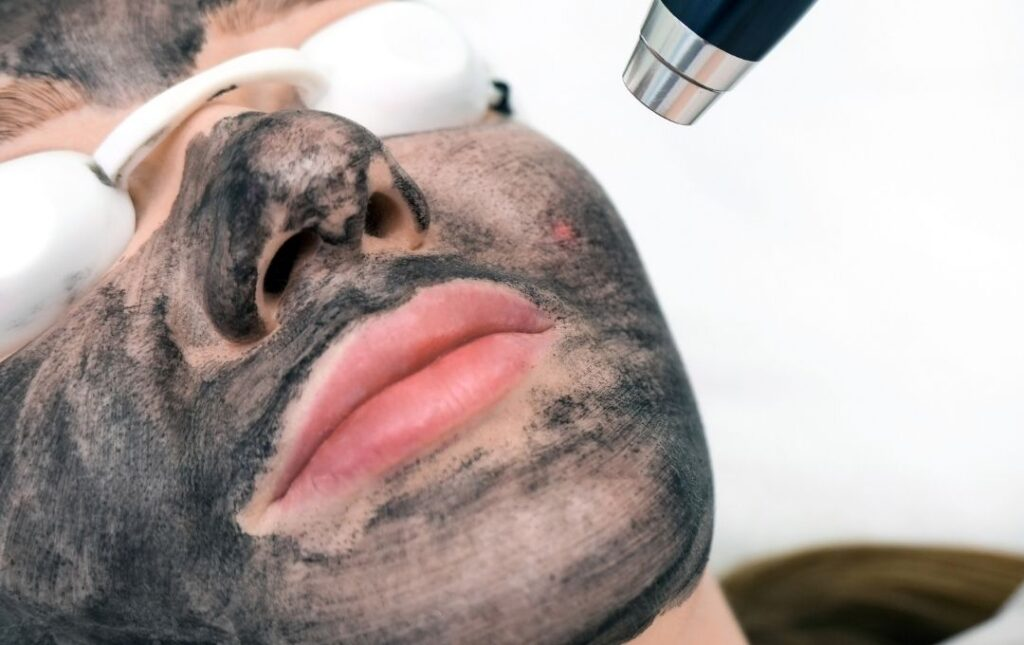
The main part of the procedure usually involves applying a thin layer of liquid carbon over the treatment area. The carbon is left on the skin for a short period so that it can settle into pores and cover the surface.
After the carbon has dried or settled sufficiently, the practitioner uses a laser device over the treated area. The laser energy interacts with the carbon particles, helping vaporize or remove the carbon along with surface contaminants.
You may hear clicking or snapping sounds from the laser during this stage. Some people describe the sensation as mild warmth or a series of small, quick pulses, although individual experiences can differ.
The procedure generally follows these basic steps:
- Cleansing: The skin is thoroughly cleaned to remove surface products and impurities.
- Carbon application: A thin carbon solution is spread across the selected area.
- Setting time: The carbon is given time to settle into pores and across the skin.
- Laser application: Controlled laser energy is passed over the carbon-covered skin.
- Carbon removal: The laser helps remove the carbon and associated surface debris.
- Finishing care: The skin is cleaned and suitable post-treatment skincare may be applied.
Because the process is non-surgical, there are no incisions or stitches involved.
What Does Laser Energy Do to the Skin?
The laser stage is an important part of the treatment because it allows the carbon particles to interact with the laser energy. As the laser passes over the skin, the carbon absorbs the energy and is rapidly removed.
This process can provide an exfoliating and cleansing effect. Removing accumulated surface material may help the skin appear cleaner and smoother immediately after treatment.
The treatment may also create controlled thermal stimulation within the skin. Depending on the laser system and settings used, this may support processes associated with collagen production and skin renewal.
However, the treatment should not be viewed as a guaranteed solution for every skin concern. Laser settings, skin characteristics, and the number of sessions required can all affect the outcome.
For this reason, a qualified practitioner should select the appropriate laser settings rather than using a one-size-fits-all approach.
What Can You Expect Immediately After a Laser Carbon Peel?
One reason people consider a Laser Carbon Peel in Dubai is the relatively short recovery associated with this type of procedure. After the session, the skin may look brighter, smoother, and cleaner.
Some people experience temporary redness or mild sensitivity, particularly immediately after treatment. These effects generally settle as the skin returns to its normal state.
Your practitioner may recommend gentle skincare following the session. Sunscreen is particularly important because protecting the skin from ultraviolet exposure can help reduce irritation and support healthy-looking skin.
For the first few days, it can be useful to follow professional aftercare instructions and avoid unnecessarily irritating the treated area.
Depending on your skin and the practitioner’s recommendations, aftercare may include:
- Using gentle cleansers
- Applying a suitable moisturizer
- Wearing broad-spectrum sunscreen
- Avoiding excessive sun exposure
- Avoiding harsh exfoliating products for a short period
- Following any individualized skincare instructions
Even though downtime is usually limited, everyone's skin can respond differently.
How Long Does a Laser Carbon Peel Treatment Take?
A carbon laser facial is generally considered a relatively quick cosmetic procedure. The total appointment time depends on the size of the treatment area, preparation, carbon application, laser settings, and finishing skincare.
The treatment itself may take only a portion of the appointment, while consultation and preparation add additional time. Your practitioner can provide a more accurate estimate after assessing the area being treated.
Another important consideration is that visible improvement does not necessarily mean that one session will address every concern. Some people may choose a series of treatments depending on their goals and skin condition.
The appropriate schedule should be determined by a qualified skincare professional rather than following a fixed timetable.
Is the Treatment Suitable for Everyone?
Although a carbon laser peel is non-surgical, it is not automatically suitable for every person or every skin condition. A professional skin assessment can help identify whether the treatment is appropriate.
People with active irritation, certain skin disorders, infections, or other conditions may need to postpone treatment or consider an alternative. Recent procedures and the use of certain medications or skincare products may also affect treatment planning.
During your consultation, provide complete information about your current skincare routine and any relevant treatments. This allows the practitioner to consider potential risks and choose appropriate settings.
The safest approach is to have the treatment performed by a qualified and experienced professional using suitable equipment and individualized settings.
Final Takeaway
Understanding what happens during a Laser Carbon Peel can make the procedure feel much less intimidating. From cleansing and carbon application to controlled laser treatment and post-treatment skincare, each stage has a specific purpose in refreshing the appearance of the skin.
If you are considering this treatment, start with a professional consultation to discuss your skin concerns, expectations, and suitability. A personalized treatment plan can help ensure that the procedure is approached safely and appropriately for your skin.
Frequently Asked Questions
1. Is a laser carbon peel painful?
Most people describe the treatment as comfortable, although sensations can vary. You may notice mild warmth or quick pulses while the laser passes over the carbon-covered skin.
2. How long does a carbon laser facial take?
The treatment is generally relatively quick, but the total appointment depends on preparation, the treatment area, and finishing skincare. Your practitioner can provide an estimated appointment duration during consultation.
3. Can I return to normal activities after the treatment?
Many people can resume normal activities soon after a carbon laser peel because significant downtime is generally not expected. Temporary redness or sensitivity may occur, so following your provider's aftercare instructions is important.
4. How many laser carbon peel sessions are needed?
The number of sessions depends on your skin condition and treatment goals. Some people may notice a refreshed appearance after one session, while others may be advised to undergo multiple sessions as part of an individualized plan.








Comments (0)