

Garage Door Repair and Maintenance: A Practical Homeowner’s Guide
A residential garage door being carefully inspected and maintained, showing the door, tracks, rollers, springs, and opener components in a clean home garage. The image represents safe garage door repair, routine maintenance, and professional inspection.
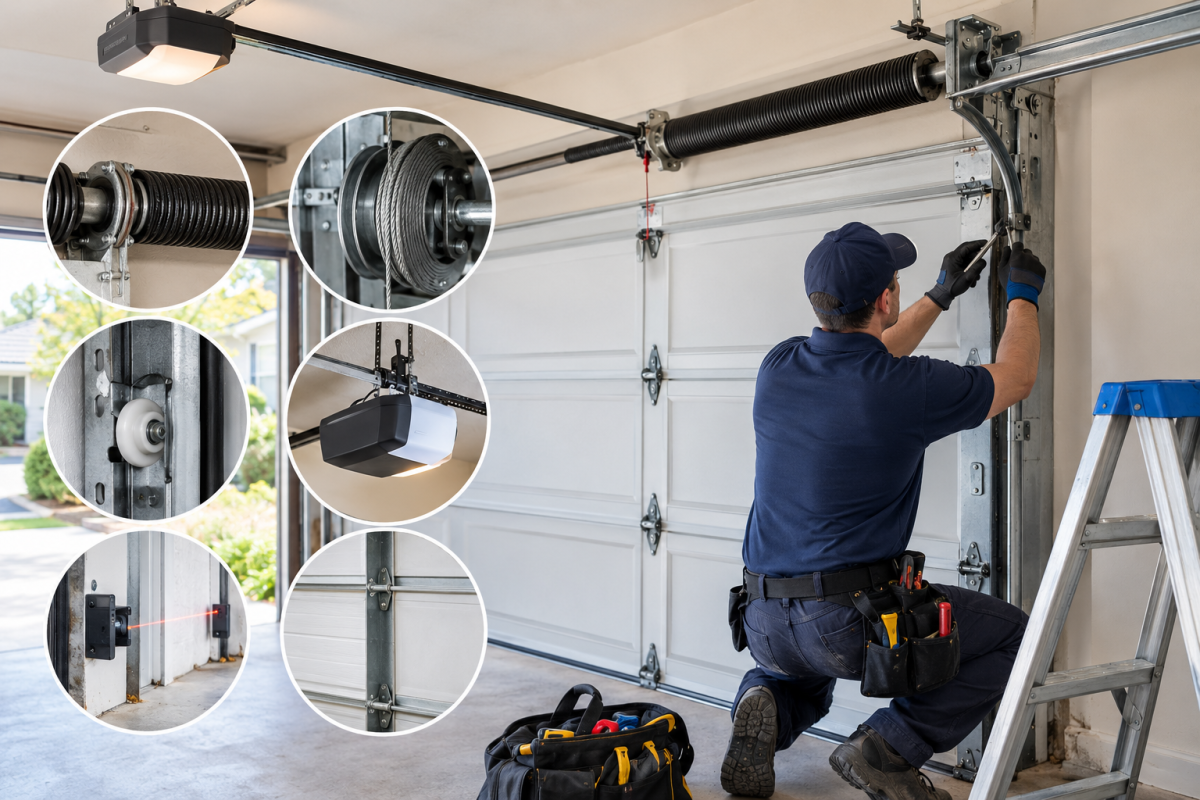
A garage door is one of the most frequently used parts of many homes. It opens and closes several times a day, protects vehicles and belongings, and provides convenient access to the house. Because of this regular use, small problems can develop over time. A door may become noisy, move slowly, shake while opening, or refuse to close properly. Regular maintenance and timely garage door repair can help prevent these issues from becoming larger and more expensive problems.
Homeowners do not need to be experts to understand the basic signs of garage door trouble. Simple checks can help identify dirt, sensor problems, loose hardware, and other minor issues. However, some components, especially springs and cables, can be dangerous to handle without proper training. Knowing where to stop is just as important as knowing what to check.
For homeowners looking for garage door repair services in Coral Springs, understanding common problems can also make it easier to explain an issue to a technician and make informed repair decisions.
Why Garage Door Maintenance Matters
A garage door contains many moving parts that must work together. Springs help support the door's weight, rollers guide it along the tracks, cables help with lifting, and the opener controls automatic movement. When one part becomes worn or damaged, other parts may experience extra strain.
Regular maintenance helps reduce unnecessary wear and gives homeowners an opportunity to notice problems early. A small roller issue, for example, may be easier to address than a damaged track caused by continued use.
Maintenance can also improve daily operation. A properly maintained garage door should move steadily without excessive shaking, grinding, or sudden stops.
Common Garage Door Problems
Garage doors can develop different problems depending on their age, usage, and condition. Some signs are easy to recognize, while others may require a closer inspection.
Broken or Weak Springs
Springs carry much of the door's weight. When a spring breaks, the door may become extremely heavy or refuse to open. A broken torsion spring may show a visible gap when inspected from a safe distance.
Spring repair or replacement should not be treated as a normal DIY project. Springs store a large amount of energy and can cause serious injury if handled incorrectly.
Damaged or Frayed Cables
Garage door cables work with the springs to help lift and lower the door. Over time, cables can become worn, frayed, or disconnected.
A damaged cable can cause the door to move unevenly or become unstable. If a cable looks damaged, stop operating the door and arrange for professional inspection.
Worn Rollers
Rollers help the door sections move along the tracks. Worn rollers can produce squeaking, grinding, or rattling sounds.
Some rollers can be lubricated as part of routine maintenance, depending on their design. If a roller is cracked, loose, or no longer moving correctly, it may need replacement.
Bent or Misaligned Tracks
Tracks guide the rollers during movement. A track that is bent, loose, or blocked can make the door shake, drag, or stop.
Small amounts of dirt can usually be cleaned away. However, homeowners should not try to force a badly bent track back into position while the door is under load.
Opener Problems
An opener may stop working because of a weak remote battery, power problem, sensor issue, worn internal part, or mechanical problem with the door.
If the motor runs but the door does not move, avoid repeatedly pressing the remote. Continuing to operate a struggling opener can place additional strain on the system.
Sensor Issues
Safety sensors are located near the bottom of the garage door opening. They help prevent the door from closing when something blocks the path.
Dirty or misaligned sensors can cause the door to close partway and then reverse. Cleaning the lenses with a soft cloth and checking for obvious obstructions are safe first steps.
Damaged Door Panels
Panels can become dented, cracked, or bent from accidents, weather, or regular wear. A small cosmetic dent may not affect operation, but deeper damage near hinges or rollers can interfere with movement.
A technician can determine whether a damaged panel can be repaired or whether replacement is more practical.
Common Problems and Recommended Actions
|
Garage Door Problem |
Possible Cause |
Recommended Action |
|
Door will not open |
Broken spring, opener issue, lock, or obstruction |
Check simple controls; call a technician if the door is heavy or stuck |
|
Door reverses while closing |
Sensor problem or obstruction |
Clean sensors and clear the doorway |
|
Loud grinding noise |
Worn rollers, track problem, or mechanical wear |
Stop use if the noise continues and arrange an inspection |
|
Door moves unevenly |
Cable, roller, spring, or track issue |
Stop using the door and seek professional service |
|
Door is very heavy |
Broken or weak spring |
Do not force the door; contact a trained technician |
|
Opener runs but door does not move |
Trolley, gear, spring, or mechanical issue |
Check only simple visible issues and arrange professional repair |
|
Door shakes during movement |
Track, roller, or hardware problem |
Inspect for visible debris and have serious issues checked |
Safe Checks Homeowners Can Perform
Not every garage door problem requires an immediate repair visit. Some basic checks are safe when performed carefully.
Start by checking the remote battery and power supply if the opener does not respond. Make sure the wall switch is working and check whether the manual lock has accidentally been engaged.
Next, inspect the safety sensors. Make sure nothing blocks the doorway and gently clean the sensor lenses. Check that the sensors appear to face each other.
You can also inspect the tracks for leaves, dirt, stones, or other visible debris. Clean the tracks with a soft brush or dry cloth. Do not use excessive grease inside the tracks because it can collect dirt.
Look at the door while it opens and closes. Pay attention to unusual sounds, shaking, uneven movement, or sudden stops. These observations can provide useful information when contacting a repair professional.
When Professional Repair Is Necessary
Some garage door problems should always be left to trained technicians. Attempting these repairs without the correct tools and experience can increase the risk of injury or additional damage.
Professional help is especially important for:
-
Broken or damaged springs and cables
-
Crooked or off-track doors
-
Severely bent tracks
-
Doors that feel unusually heavy
-
Repeated opener failures
-
Damaged bottom brackets or other tension-related hardware
-
Doors that slam down or cannot stay in position
A professional can inspect the entire system instead of focusing only on the visible symptom. For example, replacing a damaged roller may not solve the problem if a track is also bent.
This is one reason homeowners searching for garage door repair services in Coral Springs should look for technicians who can inspect springs, cables, rollers, tracks, panels, openers, and safety sensors as part of the repair process.
Simple Maintenance Tips for Better Performance
Regular maintenance does not have to take a lot of time. A short inspection every few months can help identify wear before it becomes a major problem.
Lubricate Moving Parts
Use a suitable garage door lubricant on approved moving metal parts such as hinges, springs, and certain roller bearings. Avoid excessive lubricant because it can collect dust.
Do not spray lubricant into the opener motor or use products on parts unless they are suitable for that component.
Check Visible Hardware
Repeated movement can cause some screws, bolts, and brackets to become loose. With the door closed, inspect visible hardware and tighten only parts that are safe and easy to reach.
Never adjust spring hardware, bottom brackets, cable drums, or other high-tension components yourself.
Inspect the Weather Seal
The rubber seal along the bottom of the door helps keep water, dirt, insects, and outside air from entering the garage. Replace it when it becomes cracked, flattened, or damaged.
Listen for Changes
A garage door often provides warning signs before a major failure. Pay attention to new squeaks, grinding, popping, scraping, rattling, or strained motor sounds.
A new or worsening sound should not simply be ignored. Early inspection may prevent a minor issue from becoming a larger repair.
Warning Signs You Should Not Ignore
Some garage door symptoms require quick attention. Continuing to use a damaged door can increase strain on the opener and other components.
Watch for:
-
A door that suddenly becomes heavy
-
A door that hangs crooked
-
A loud bang from the garage
-
Frayed or disconnected cables
-
A visible broken spring
-
Repeated reversing while closing
-
A door that moves in a jerky way
-
Grinding or scraping sounds
-
An opener that repeatedly stops or struggles
If any of these signs appear, stop using the door when it is unsafe to operate and arrange for a professional inspection.
How Regular Maintenance Can Reduce Repair Costs
Maintenance cannot prevent every garage door failure, but it can help identify worn parts earlier. A technician may be able to replace a small component before it damages other parts of the system.
Keeping tracks clean, checking sensors, watching door movement, and addressing unusual sounds can all help reduce unnecessary strain.
It is also important to avoid delaying repairs simply because the door still works. A garage door that operates poorly may continue to place stress on springs, rollers, tracks, and the opener.
Final Thoughts
Garage door repair and maintenance are important parts of keeping a home safe, convenient, and functional. Homeowners can handle simple checks such as cleaning sensors, checking remote batteries, removing visible track debris, and inspecting weather seals. However, springs, cables, badly damaged tracks, crooked doors, and other high-risk problems should be handled by a trained professional.
If you need garage door repair services in Coral Springs, focus on proper diagnosis rather than simply replacing the first part that appears damaged. Regular maintenance, early attention to warning signs, and safe professional repairs can help your garage door operate smoothly and reliably for years.
FAQs
1. How often should I maintain my garage door?
A basic garage door inspection every few months can help identify wear early. Check the sensors, tracks, rollers, hinges, weather seal, and visible hardware. Professional maintenance may also be useful when the door becomes noisy or difficult to operate.
2. Can I repair a broken garage door spring myself?
A broken garage door spring should be handled by a trained technician. Springs store significant energy and can cause serious injury if released unexpectedly. Professional replacement also ensures the new spring matches the door's weight and design.
3. Why does my garage door make a grinding noise?
Grinding may result from worn rollers, track problems, loose hardware, or other mechanical issues. Cleaning visible debris and checking for obvious obstructions is a reasonable first step. If the sound continues, professional inspection is recommended.
4. What should I do if my garage door is crooked?
Stop using a crooked garage door because the problem may involve a cable, roller, track, or spring. Do not force the door or attempt to straighten tension-related components. A technician should inspect the system and identify the cause.
5. When should I contact garage door repair services in Coral Springs?
Contact a professional when the door becomes unusually heavy, hangs crooked, makes loud or unusual sounds, has a broken spring or cable, repeatedly reverses, or fails to operate correctly. Prompt service can help prevent additional damage and safety risks.

GarageFL, also known as Garage Door Pros, is South Florida’s trusted expert in garage door installation, repair, and maintenance. Serving residential and commercial clients across Miami-Dade, Broward, and Palm Beach counties, GarageFL is known for its fast, reliable, and affordable service. Whether you're dealing with a broken spring, need a new garage door opener, or want to upgrade to a modern, hurricane-rated door, its certified technicians deliver quality craftsmanship with every job. With 24/7 emergency service, free estimates, and a customer-first approach, GarageFL ensures your property stays secure, functional, and stylish. Count on GarageFL for top-tier garage door solutions backed by years of experience and a strong local reputation.






Comments (0)