

What Stylists Want from a High-Value Beauty Skills Workshop
See what working stylists look for in a high-value beauty skills workshop, including hands-on practice, useful feedback, clear outcomes, and salon-ready skills.

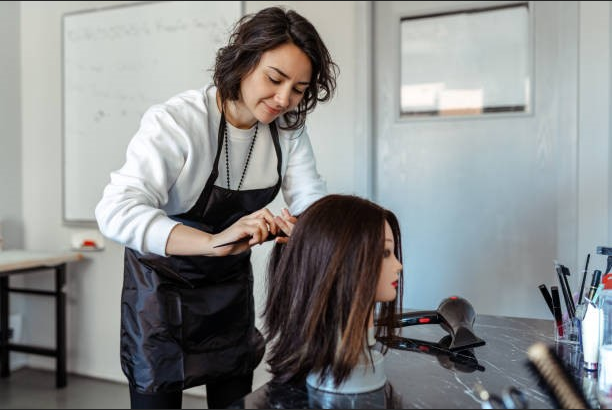
Working stylists are usually not looking for another class that feels impressive on the schedule but changes nothing on Monday morning. Time away from clients costs money, so a workshop has to earn its place by solving a clear problem, improving a usable technique, or making service decisions easier. That is the difference between a busy class and high-value beauty skills education. The strongest workshops are specific about who they are for, what participants will practice, and what they should be able to do afterward.
The points below explain the features that make professional education feel worthwhile to people already working behind the chair.
Key Takeaways
-
Working stylists value clear outcomes more than broad promises.
-
Hands-on practice should take up meaningful class time when the subject is technical.
-
Useful feedback is specific, immediate, and tied to what the stylist is doing.
-
Education should reflect real appointment conditions, including consultation, timing, and client expectations.
-
Post-class resources help professionals apply a new skill after the workshop ends.
What Working Stylists Expect from a High Value Beauty Skills Professional Workshop
-
A Clear Practical Outcome
A strong workshop should answer a simple question before registration: What will I be able to do better after this class? The answer should be specific enough to judge. “Improve confidence” is vague. “Build a cleaner scissor-over-comb transition” or “conduct a structured consultation for texture and maintenance” gives the learner a measurable target.
That clarity is central to high-value beauty skills. Working professionals need training that connects to the services they perform, the problems they see, or the clients they want to serve.
-
Meaningful Hands-On Time
Watching a skilled educator can be useful, but technical learning changes when the student has to hold the tool, control the section, choose the angle, and respond to the result. A hair technique workshop should state how much time is spent on demonstration and how much is spent on supervised practice.
Small-group practice, mannequin work, or live-model exercises can all work when they match the topic. The key is enough repetition for the educator to see what the learner is actually doing.
-
Feedback That Is Specific
“Good job” does not tell a stylist what to repeat. High-value feedback identifies the exact adjustment: lower the elevation, change the tension, move the guideline, alter hand position, ask one more consultation question, or slow the finish. Specific correction shortens the distance between understanding a concept and performing it consistently.
The same principle matters in advanced barber training. A learner needs to know why a result changed, not simply whether the educator liked it.
-
Real Service Conditions
Working stylists also want high-value beauty skills that acknowledge time, client communication, product limits, sanitation, and maintenance. A technique that only works in a perfectly staged demonstration may be hard to use in a booked salon day.
This matters in specialty services such as custom hair systems, where consultation, fitting, home care, and maintenance planning are part of the client experience. Training should connect the technical step to the complete service process.
-
Appropriate Skill Level
A workshop should make the prerequisites clear. Experienced stylists can become frustrated when an “advanced” class spends most of the day repeating beginner material, while newer professionals can be overwhelmed when foundational steps are assumed rather than taught.
Good course descriptions explain who benefits most, what skills are expected beforehand, and whether the session is a refresher, crossover class, or specialty program. That helps professionals spend education dollars where the learning gap is real.
-
Useful Take-Home Support
The application often becomes harder after the instructor is no longer standing beside you. Notes, diagrams, checklists, recommended practice drills, sanitation reminders, and product guidance can help the learner repeat the process accurately.
If the workshop also counts toward a cosmetology renewal course requirement, completion documentation should be clear and timely. Administrative confusion can erase some of the value of an otherwise strong class.
Conclusion
Working stylists tend to recognize high-value beauty skills training by what it changes in practice. Clear outcomes, meaningful hands-on time, precise feedback, realistic service conditions, appropriate difficulty, and useful follow-up materials make a workshop easier to apply after class.
A good workshop does not need to cover everything. It needs to teach the right thing deeply enough that a professional can return to work with a stronger process, better decisions, and a technique that holds up outside the classroom.
FAQs
Should a workshop provide a supply list before class?
Yes. A clear supply list prevents lost class time and helps stylists arrive with the tools, products, and models they need.
Are large workshops always less useful than small classes?
Not always. Large demonstrations can teach concepts well, while smaller hands-on groups usually make individual technical corrections easier.
How can a stylist judge whether a workshop is too basic?
Compare prerequisites and outcomes with your daily work. If most listed skills are routine already, choose a more focused level.
Does a certificate prove advanced competency?
A certificate documents completion. Competency still depends on practice, feedback, consistent performance, and any licensing rules that apply.






Comments (0)