

Best AI Strategies for Digital Marketing
Artificial intelligence helps marketing teams manage growing amounts of data, channels, and tools, but results depend on how it is applied. The best AI strategies for digital marketing begin with clear goals, such as improving lead quality, email engagement, or reporting speed, so performance can be measured. Behavior-based audience segmentation uses machine learning to group people by intent rather than demographics, improving targeting across channels. Personalization through recommendations and optimized email content works best when built on consented first-party data. Generative AI speeds up drafting, ad variations, and translations, though human editors should verify facts, refine tone, and add original insight. SEO needs to adapt, since AI-generated summaries and chat assistants now influence how people find information. Clear, credible content improves visibility. In paid advertising, machine learning supports bidding and creative testing, but accurate tracking and reg

Best AI Strategies for Digital Marketing
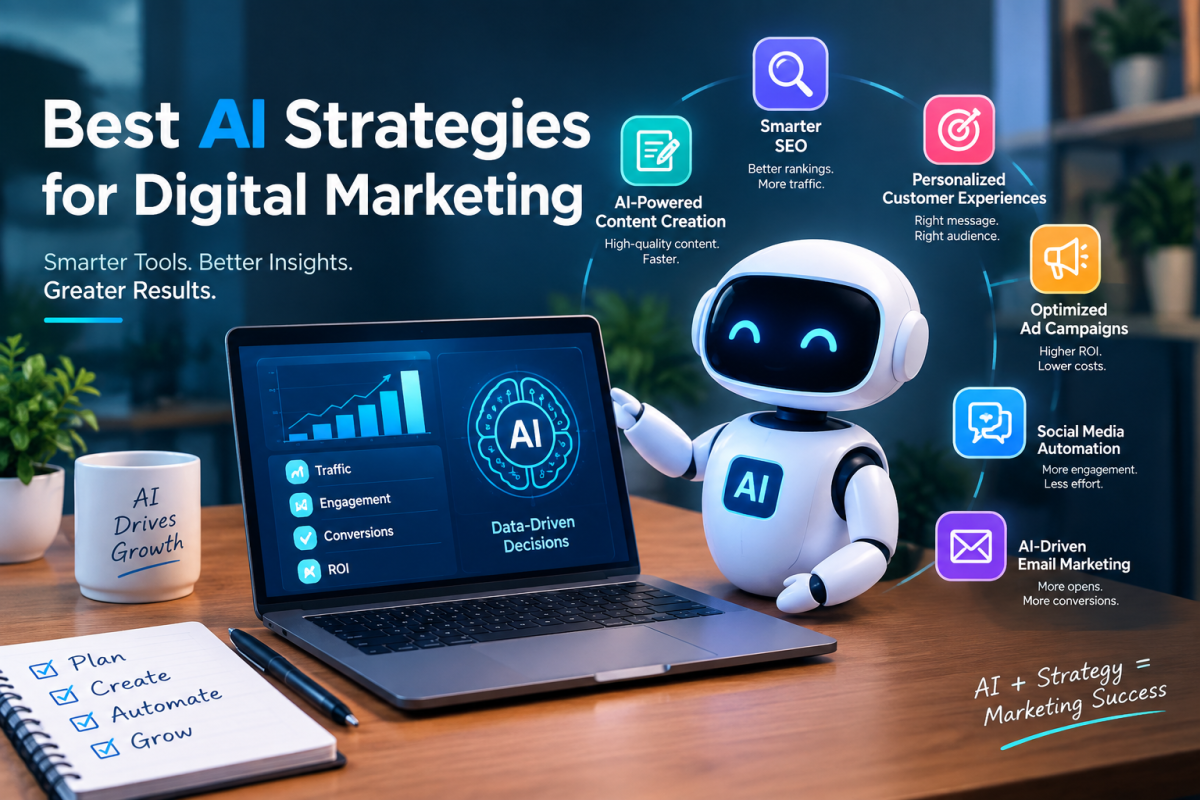
Marketing teams now handle more data, channels, and tools than ever before. Artificial intelligence helps manage that complexity, but results depend on how it is applied. This article explains the best AI strategies for digital marketing, focusing on practical approaches that improve efficiency, relevance, and measurement while protecting quality and trust.
Start With Clear Goals
AI works best when tied to a specific objective. Define what you want to improve, such as lead quality, email engagement, cost per acquisition, or reporting speed. Teams that begin with a goal can measure whether a tool delivers value, while those that adopt tools first often end up with unused subscriptions.
Segment Audiences by Behavior
Traditional segmentation relies on demographics such as age and location. Machine learning models can analyze behavior, including pages viewed, purchases made, and content engaged with, to group people by intent. Predictive models help identify high-value customers, likely churners, and lookalike audiences. Among the best AI strategies for digital marketing, behavior-based segmentation ranks high because it improves nearly every channel that follows.
Personalize Responsibly
Recommendation engines suggest products based on browsing and purchase history, and email platforms adjust send times, subject lines, and content blocks for each recipient. Websites can also change featured items based on visitor behavior. To do this responsibly, marketers should rely on consented first-party data and give users clear control over their preferences.
Pair AI Content With Human Oversight
Generative AI can produce outlines, first drafts, ad variations, and translations in minutes. The strongest workflow treats AI as a drafting partner rather than a replacement for editors. A reviewer should verify facts, adjust tone, and add original insight, since readers and search engines increasingly favor content that shows real expertise. The best AI strategies for digital marketing always pair automation with editorial judgment.
Adapt SEO for AI-Driven Search
Search results now include AI-generated summaries, and many people ask questions directly to chat assistants. To stay visible, publish clear, well-structured answers, cite original data, show author credentials, and keep information consistent across your website and profiles. AI tools can help find keyword gaps and analyze competitor pages, but decisions should reflect what genuinely helps the reader.
Improve Paid Advertising
Major ad platforms already use machine learning for bidding, audience expansion, and creative testing. AI can also generate multiple headline and image combinations for testing. Marketers improve results by supplying strong inputs, including accurate conversion tracking, varied creative assets, and clean audience signals. Regular review remains necessary, since automated systems may chase volume over profitability when goals are set poorly.
Strengthen Analytics and Forecasting
Predictive analytics can estimate conversion likelihood, forecast demand, and flag unusual changes in traffic or spend. AI assistants can also summarize dashboards in plain language for non-technical stakeholders. Because privacy rules limit individual tracking, marketing mix modeling and aggregated analysis are growing in importance. Treat forecasts as estimates and compare them with actual outcomes.
Build Governance and Data Ethics
Set rules for what data may be entered into AI tools, who approves AI-generated content, and how disclosure is handled where required. Be aware of regulations such as the GDPR and India's Digital Personal Data Protection Act, and audit regularly for bias in targeting or messaging. Governance is an often overlooked part of the best AI strategies for digital marketing.
Test, Measure, and Iterate
Run small pilots before scaling. Compare AI-assisted workflows with existing ones using metrics such as time saved, conversion rate, and cost per lead. Retire tools that do not deliver, and review your approach each quarter, since AI features change quickly. Ongoing team training in analysis, strategy, and critical review determines how much value any tool produces.
Conclusion
The best AI strategies for digital marketing combine clear goals, quality data, human oversight, and steady measurement. Behavior-based segmentation, thoughtful personalization, edited content, AI-aware SEO, and ethical governance all contribute to stronger results. No single tool solves every challenge, so marketers should start small, test carefully, and expand what works. Applying the best AI strategies for digital marketing in this measured way supports sustainable growth and keeps audience trust intact.

Learn digital marketing at Digi Uprise, Paschim Vihar, Delhi. Hands-on training, live projects, and placement assistance from an agency-backed institute.








Comments (0)