

How to Learn Hebrew: A Practical, Step-by-Step Guide for Beginners
Learning Hebrew is a long-term project, but it rewards patience.
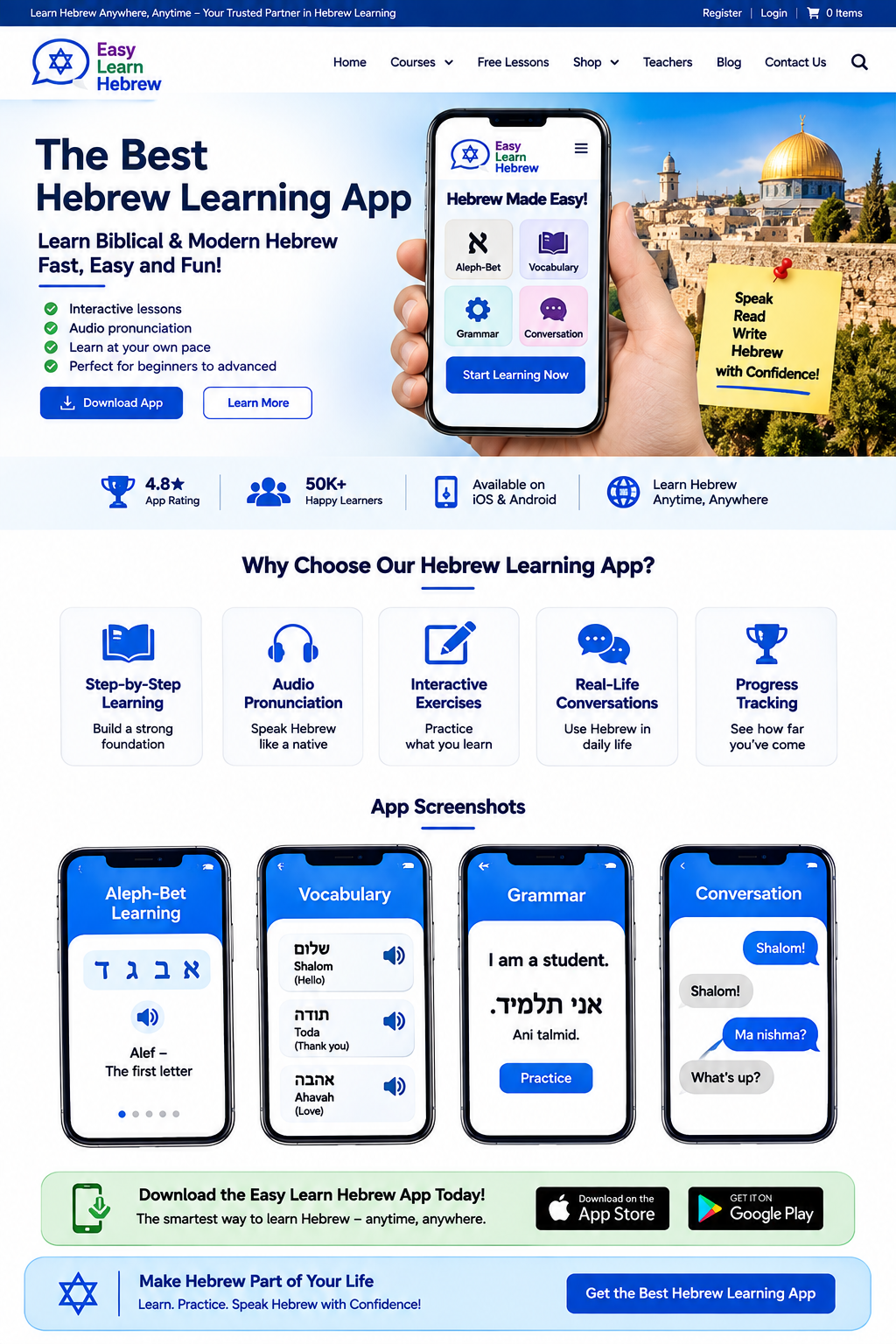
If you're wondering how to learn Hebrew, here's the short answer: start with the alphabet, build a small core vocabulary, speak out loud from the first week, and study a little every day. That order works because it gives you quick wins early and keeps you from getting stuck on grammar before you can say a single sentence.
Hebrew has a reputation for being intimidating. The letters look unfamiliar, the text runs right to left, and most vowels aren't written in everyday publications. But once you break the process into small steps, it becomes far more manageable than it first appears. This guide walks through each stage in plain language, explains what to expect, and shows how to choose between self-study, online Hebrew classes, and other options.
Why People Learn Hebrew Today
Learners come to Hebrew for very different reasons. Some want to read the Hebrew Bible or follow prayers in the original language. Others have family in Israel, plan to travel or study there, or simply love the sound of a living language that was revived in modern times. Whatever your reason, write it down. A clear goal shapes everything else: a traveler needs phrases and listening practice, while someone reading scripture needs vocabulary and verb forms.
Modern Hebrew is spoken by millions of people, and Biblical Hebrew is still studied in universities and religious schools around the world. The two share an alphabet and many roots, so time spent on one helps with the other, even though everyday speech and ancient texts differ in style and vocabulary.
Is Hebrew Hard to Learn? An Honest Answer
For English speakers, Hebrew is a moderately demanding language. The U.S. Foreign Service Institute places it in its Category III group, meaning it typically takes longer than Spanish or French but less than Mandarin or Arabic. That ranking is a rough guide, not a verdict on your own ability.
The good news is that several features of Hebrew are surprisingly friendly. There are only 22 letters, no capital letters, and spelling is more consistent than English. Verb tenses are simpler than in many European languages, with essentially past, present, and future. The harder parts are the new script, unfamiliar sounds like the guttural ch and r, and the way words are built from roots, which takes some time to see.
Step 1: Learn the Alef-Bet First
The Hebrew alphabet, called the alef-bet, is the foundation of everything else, so it deserves your first one to two weeks. Learn the letters in small groups of four or five, practice writing them by hand, and say each sound aloud. Five letters change shape at the end of a word (the final forms), so introduce those after you're comfortable with the basics.
You'll also meet nikud, the small dots and dashes that mark vowels. Beginner materials usually include them, while newspapers and books for native readers do not. Start with vowels shown, then gradually move to unvowelized text as your confidence grows. Trying to skip this stage almost always backfires, because transliteration (writing Hebrew in English letters) becomes a crutch that slows your reading later.
Step 2: Build a Small, Useful Vocabulary
Resist the urge to memorize long word lists. Aim for the 300 to 500 most common words first, grouped by topic: greetings, numbers, family, food, time, and everyday verbs. Review them in short bursts with spaced repetition, which means seeing a word again just before you would forget it. Flashcard apps handle this well, but a paper notebook works too.
Always learn words inside short phrases. Instead of memorizing only the word for water, learn "I'd like some water, please." Phrases teach pronunciation, word order, and natural usage all at once, and they're much easier to recall in conversation.
Step 3: Understand Roots and Basic Grammar
Here is where Hebrew becomes genuinely satisfying. Most words are built from a three-letter root that carries a core meaning. The root k-t-v relates to writing, so you'll see it in words for "he wrote,""letter," and "writer." Once you spot roots, new vocabulary stops feeling random and starts feeling like a pattern you can predict.
Grammar basics worth learning early include:
• Gender: every noun is masculine or feminine, and adjectives and verbs must match.
• Present tense: it's formed with simple endings and doesn't change by person, which makes early conversation easier.
• The seven verb patterns (binyanim): don't memorize them all at once, just notice them as they appear.
• Sentence structure: it's close to English, with the verb usually following the subject.
Keep grammar study short and tied to real examples. Ten focused minutes with a clear explanation beats an hour of rule memorization.
Step 4: Speak and Listen From the Start
Many learners wait until they feel "ready" to speak, and that moment never arrives on its own. Start speaking in week one, even if it's only reading letters and phrases aloud. Listen to slow, clear Hebrew daily: beginner podcasts, children's songs, and short videos with subtitles are all useful. Repeat what you hear, then record yourself and compare.
A tutor or conversation partner speeds this up dramatically, because they can correct errors you can't hear yourself. This is the single biggest reason many learners eventually look for structured instruction rather than studying alone.
Choosing Online Hebrew Classes That Fit You
Good online Hebrew classes give you three things that apps and books struggle to offer: a logical sequence, live feedback, and accountability. Before you enroll, check a few practical points:
• Teacher qualifications: look for experience teaching Hebrew as a foreign language, not just fluency.
• Class size: small groups or one-on-one sessions mean more speaking time for you.
• Clear levels: a good program states what you'll be able to do by the end of each stage.
• Trial lesson: a free or low-cost first session tells you more than any sales page.
• Flexible scheduling: time zones matter, so confirm recorded replays or rescheduling options.
Ask whether the course focuses on modern conversational Hebrew, Biblical Hebrew, or both. The right choice depends on your goal, and a mismatch is a common reason people lose motivation.
What Strong Hebrew Lessons Online Should Include
Not all Hebrew lessons online are equal. The best ones combine several elements rather than relying on a single method. Look for a balance of reading practice, listening exercises, guided speaking, and short writing tasks. Each lesson should end with a few clear takeaways and a small review activity, so you leave knowing exactly what you learned.
Quality materials also include audio from native speakers, printable alphabet charts, and practice that revisits earlier topics instead of dropping them. If a program only teaches isolated vocabulary or relies heavily on transliteration, treat that as a warning sign. Real progress in reading and speaking comes from working directly with the Hebrew script.
When you compare Hebrew lessons online with in-person options like an ulpan (an intensive Israeli-style language course), the main trade-off is convenience versus immersion. Online study fits around work and family, while an ulpan places you in a daily routine of Hebrew. Many learners start online and add immersion later.
A Simple Weekly Study Plan
Consistency matters more than long sessions. Here's a realistic routine for a busy adult, around 30 to 40 minutes a day:
• Monday and Thursday: new material from a lesson or class (reading and grammar).
• Tuesday and Friday: vocabulary review with flashcards and phrase practice.
• Wednesday: listening practice, such as a short podcast or song with the lyrics in front of you.
• Weekend: one speaking session with a tutor or partner, plus a quick review of the week.
Track one small measurable goal each week, like reading ten new words aloud without help. Small, visible progress keeps motivation steady far better than vague intentions.
Common Mistakes to Avoid
• Relying on transliteration for too long, which delays real reading.
• Studying only with apps and never speaking to another person.
• Memorizing grammar tables without using them in sentences.
• Comparing your progress to others instead of to your own starting point.
• Giving up after the first plateau. Almost every learner hits one, usually around the time verbs start to get tricky.
How Long Does It Take?
There's no honest single number. The Foreign Service Institute estimates around 1,100 class hours for professional working proficiency in Category III languages, but casual learners with different goals will measure progress differently. Reading the alphabet takes weeks, handling simple travel conversations takes a few months of steady practice, and comfortable everyday conversation typically takes a year or more. Your pace depends on how often you practice, whether you speak regularly, and how much exposure to the language you get outside study time.
Frequently Asked Questions
What is the best way to learn the Hebrew language as a beginner?
Combine four things: alphabet mastery, a core vocabulary, daily listening, and regular speaking with feedback. If you're asking how to learn the Hebrew language efficiently, structured guidance from a qualified teacher usually saves the most time.
Can I learn Hebrew on my own?
Yes, especially for reading and vocabulary. Speaking and pronunciation improve much faster with feedback, so even self-learners benefit from occasional tutoring or a conversation partner.
Should I learn Modern or Biblical Hebrew first?
Choose based on your goal. Modern Hebrew suits travel, family, and conversation, while Biblical Hebrew suits textual study. The alphabet and many roots are shared, so starting with either gives you a head start on the other.
Do I need to learn the vowel marks?
Yes, at the start. They make reading and pronunciation clear. Over time you'll learn to read without them, as native readers do.
Final Thoughts
Learning Hebrew is a long-term project, but it rewards patience. Begin with the alef-bet, build vocabulary in phrases, notice roots as you go, and speak early and often. If you want guidance along the way, look for online Hebrew classes with small groups, clear levels, and real teacher feedback. Pick one small step to take today, such as learning your first five letters, and let the routine build from there.
Sources and Further Reading
• U.S. Department of State, Foreign Service Institute: language difficulty rankings and learning-time estimates (state.gov).
• The Academy of the Hebrew Language: official guidance on modern Hebrew spelling and vocabulary (hebrew-academy.org.il).
• Israel Ministry of Aliyah and Integration: information on ulpan courses for new learners.

If you want to learn about the Easy Learn Hebrew system, then click this link to get full details about the Easy Learn Hebrew system today. learn more to click here:- https://www.easylearnhebrew.com/















Comments (0)