

Artificial Intelligence in UAE Manufacturing - Automation and Quality Control

The convergence of Artificial Intelligence and industrial manufacturing is rewriting the operational blueprint for factories, processing plants, and production facilities across the United Arab Emirates. From aluminium smelters in Abu Dhabi to pharmaceutical packaging lines in Dubai and food processing hubs in Sharjah’s industrial zones, UAE manufacturers are embedding AI across every layer of their operations — from the shop floor to the supply chain — to achieve the productivity gains and quality benchmarks demanded by global markets and the nation’s own Make-in-the-Emirates industrial strategy.
The Industrial Imperative: Why UAE Manufacturing Is Turning to AI
The UAE’s National In-Country Value (ICV) programme and the UAE Industrial Strategy 2031 set an ambitious target of doubling the manufacturing sector’s GDP contribution to AED 300 billion. Achieving this at scale, against a backdrop of global supply chain disruptions, rising energy costs, and intensifying competition from Asian manufacturing hubs, demands more than incremental efficiency improvements. It requires a fundamental shift toward intelligent, self-optimising production systems — exactly what modern AI Development delivers.
UAE manufacturers that have already deployed AI-driven automation report measurable outcomes: defect detection rates improving by 60–80% over manual inspection, unplanned downtime reduced by up to 35% through predictive maintenance, and energy consumption per production unit falling by 15–20% through AI-optimised process controls. These are not aspirational projections — they are documented results from facilities operating today in Khalifa Industrial Zone (KIZAD), Jebel Ali Free Zone (JAFZA), and Abu Dhabi’s Higher Corporation for Specialized Economic Zones (ZonesCorp).
Automated Quality Control: Computer Vision and Deep Learning on the Production Line
Traditional quality control in manufacturing relied on human inspectors sampling a fraction of output — a statistically valid but inherently incomplete approach that allows defective units to pass through undetected. AI-powered computer vision systems mounted on production lines inspect every single unit in real time, at machine speed, with consistent accuracy that human inspectors cannot match across an eight-hour shift.
In UAE pharmaceutical manufacturing — a sector regulated by the Ministry of Health and Prevention (MOHAP) under stringent Good Manufacturing Practice (GMP) standards — AI vision systems verify tablet coating uniformity, blister pack seal integrity, and label placement accuracy on lines running at hundreds of units per minute. In aluminium fabrication, deep learning models trained on thousands of labelled defect images identify surface anomalies, inclusion defects, and dimensional non-conformances that would be invisible to the naked eye under typical factory lighting conditions.
Edge AI for Real-Time Defect Detection
Processing high-resolution camera feeds from multiple production line stations requires computational power that cannot rely on round-trip latency to cloud servers. Edge AI — where inference runs on GPU-equipped processors mounted directly at the line — enables defect detection decisions in under 10 milliseconds, fast enough to trigger rejection mechanisms before a non-conforming unit reaches the next process stage. UAE industrial parks including Dubai Industrial City are seeing rapid adoption of edge AI units from vendors such as NVIDIA Jetson and Intel OpenVINO, integrated with existing SCADA and MES platforms.
Predictive Analytics: Eliminating Unplanned Downtime Before It Happens
Unplanned equipment failure is the single largest driver of production loss in discrete and process manufacturing. Predictive Analytics — AI models that continuously analyse sensor data from motors, compressors, CNC machines, conveyor drives, and heat exchangers — detect the early signatures of mechanical degradation weeks before failure occurs. Vibration frequency shifts, bearing temperature trends, and oil viscosity changes that individually fall within normal tolerance bands are, in combination, reliable precursors of imminent failure that pattern-recognition algorithms identify with high confidence.
A major UAE petrochemical facility in Ruwais implemented predictive maintenance AI across 340 rotating assets and reported a 42% reduction in maintenance costs and a 28% improvement in overall equipment effectiveness (OEE) within eighteen months. The system’s anomaly detection models, trained on three years of historical sensor logs, now generate work orders automatically in the facility’s SAP PM module when degradation signatures reach defined thresholds — eliminating the manual inspection rounds that previously consumed 1,200 technician-hours per month.
AI App Development: Custom Intelligent Solutions for UAE Industrial Operators
Off-the-shelf software rarely addresses the specific operational context of a UAE manufacturing facility — whether that is managing bilingual Arabic-English operator interfaces, integrating with locally mandated regulatory reporting systems, or accommodating the unique process parameters of industries like date processing, camel dairy production, or aluminium extrusion. Custom AI App Development bridges this gap, delivering purpose-built intelligent applications that connect seamlessly with existing enterprise architectures and reflect the operational realities of UAE industrial environments.
Tektronix LLC’s AI development practice builds manufacturing-focused applications spanning real-time OEE dashboards with AI-driven root cause analysis, automated supplier quality management portals, intelligent shift handover tools that summarise production anomalies from sensor logs, and computer vision quality inspection apps deployable on standard industrial tablets. Each application is developed in compliance with UAE data sovereignty requirements, with deployment options spanning on-premise servers, private cloud, and hybrid architectures depending on facility security classifications.
Chatbots and Natural Language Processing in Manufacturing Operations
Intelligent Operator Assistance with Chatbots
Modern manufacturing plants are extraordinarily complex environments where operators must simultaneously monitor process parameters, respond to alarms, consult maintenance documentation, and coordinate with logistics teams. AI-powered Chatbots deployed on shop-floor tablets and wearable devices give operators instant, conversational access to equipment manuals, standard operating procedures (SOPs), and troubleshooting guides — without leaving the production area or waiting for supervisory support. A question such as “What is the correct torque setting for the packaging line’s servo motor after a belt replacement?” returns a precise, document-cited answer in seconds.
Natural Language Processing for Maintenance Documentation
Decades of maintenance records, equipment logs, and incident reports locked in PDF archives and paper files represent an enormous reservoir of operational knowledge that traditional search tools cannot effectively surface. Natural Language Processing (NLP) engines trained on a facility’s own document corpus can extract causal relationships between maintenance actions and subsequent failures, identify recurring fault patterns across equipment families, and generate structured failure mode libraries — transforming unstructured historical text into actionable engineering intelligence. In the UAE, where many mature facilities have accumulated 15–25 years of maintenance records in multiple languages, NLP-powered document intelligence delivers immediate productivity gains for reliability engineers.
Speech Recognition: Hands-Free Intelligence on the Factory Floor
Manufacturing environments present unique challenges for human-machine interaction: operators wear gloves, handle components, work near noisy machinery, and cannot safely divert attention to touchscreen interfaces. Industrial-grade Speech Recognition systems — trained on the acoustic profiles of factory environments and the multilingual vocabulary of UAE production teams (Arabic, English, Hindi, Tagalog) — enable truly hands-free operation of quality recording systems, inventory management applications, and maintenance work order systems.
A UAE automotive parts manufacturer piloting speech-to-text quality recording reduced data entry time per inspection by 73% and eliminated transcription errors that had previously necessitated rework of digitised quality records. Voice-activated commands in the facility’s warehouse management system allowed pickers to confirm goods receipt and location assignments without touching a scanner, reducing pick error rates by 31% in the first quarter post-deployment.
AI-Driven Supply Chain Optimisation for UAE Manufacturers
Manufacturing competitiveness is increasingly determined not just by what happens inside the factory walls, but by how intelligently a business manages its upstream supplier relationships and downstream distribution network. AI supply chain applications deployed by UAE manufacturers address three critical pain points:
• Demand Forecasting: Machine learning models integrating point-of-sale data, seasonal consumption patterns, economic indicators, and real-time news sentiment generate demand forecasts significantly more accurate than traditional statistical methods, reducing both stockout events and excess inventory carrying costs.
• Supplier Risk Monitoring: NLP-powered tools continuously scan supplier news, financial filings, and logistics data to flag early warning signals of supply disruption — giving UAE procurement teams days or weeks of advance notice to activate alternative sourcing strategies.
• Logistics Optimisation: Reinforcement learning algorithms optimise delivery routing and container loading configurations across UAE port networks including Jebel Ali and Khalifa Port, reducing freight cost per unit and improving on-time delivery performance.
Regulatory Landscape and Data Governance for AI in UAE Industry
UAE manufacturers implementing AI must navigate an evolving regulatory environment that is maturing rapidly alongside technology adoption. The UAE Artificial Intelligence Strategy 2031 establishes a national framework for responsible AI deployment, while the UAE Data Protection Law (Federal Decree-Law No. 45 of 2021) governs the collection, processing, and retention of personal and operational data generated by AI systems on production lines.
For manufacturers in regulated sectors — pharmaceuticals, food and beverage, aerospace components — AI quality systems must be validated under applicable GMP, AS9100, or FSSC 22000 frameworks. This requires AI models to be explainable (providing auditable reasoning for every quality decision), version-controlled (with change management procedures governing model retraining), and validated against holdout datasets that demonstrate statistical equivalence or superiority to the manual processes they replace. Tektronix LLC’s AI development methodology incorporates validation documentation packages aligned with these regulatory requirements, reducing the compliance burden on UAE manufacturers navigating their first AI deployments.
Conclusion
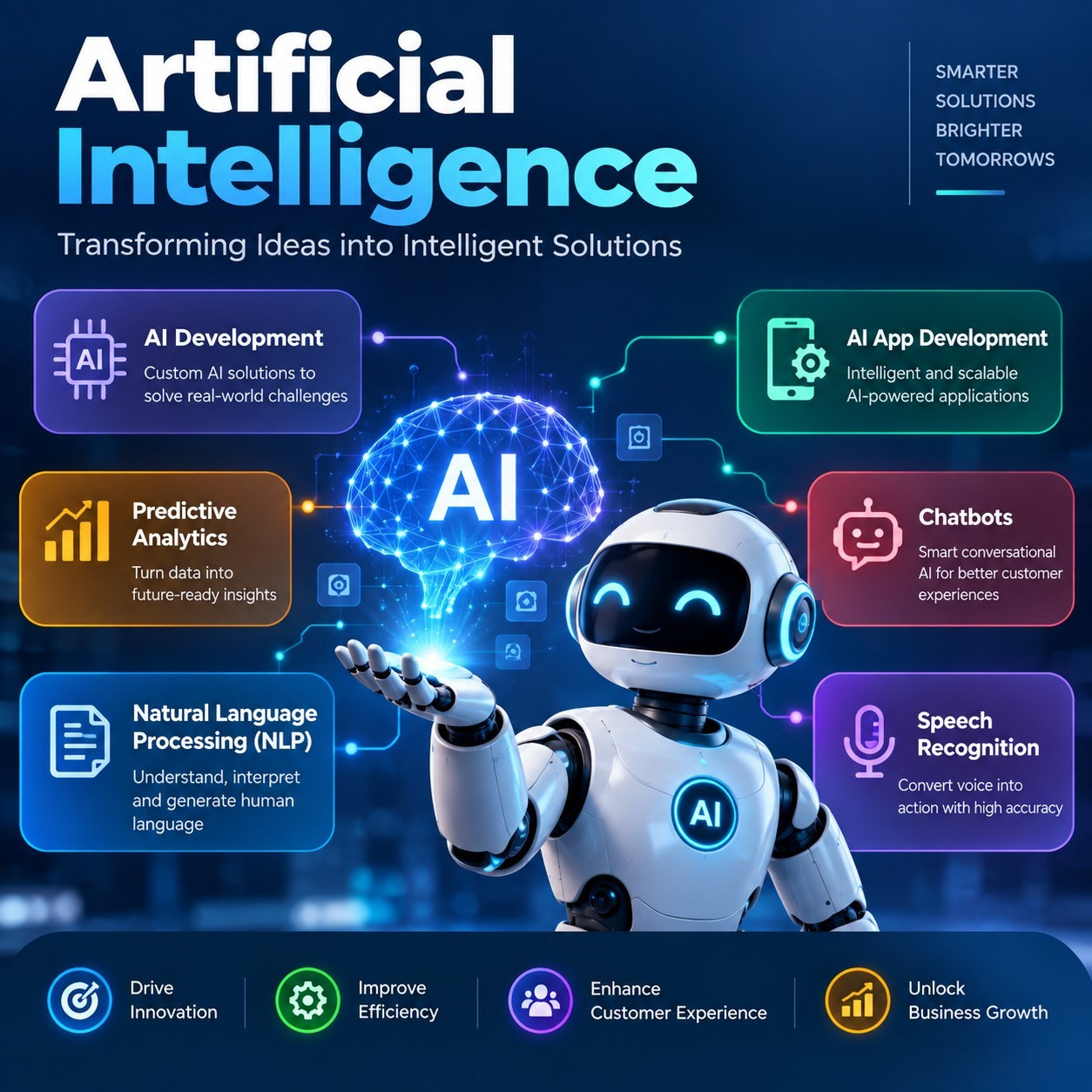
UAE manufacturing’s transformation through Artificial Intelligence is accelerating, with AI Development and custom AI App Development solutions — spanning Predictive Analytics, Chatbots, Natural Language Processing (NLP), and Speech Recognition — collectively equipping the Emirates’ industrial sector with the intelligence it needs to compete, comply, and lead on the global manufacturing stage.
FAQs
1. How is Artificial Intelligence being applied to quality control in UAE manufacturing?
Artificial Intelligence is applied to quality control through computer vision systems that inspect every produced unit in real time at machine speed, identifying surface defects, dimensional non-conformances, and packaging anomalies that human inspectors would miss. Deep learning models are trained on thousands of labelled defect images specific to each product type, achieving detection accuracy rates of 95–99% across industries including pharmaceuticals, aluminium fabrication, food processing, and automotive components. UAE facilities in KIZAD, JAFZA, and Dubai Industrial City are among the earliest adopters of these systems in the region.
2. What does AI App Development involve for a UAE manufacturing facility?
AI App Development for manufacturing involves designing, building, and deploying custom intelligent software applications tailored to a facility’s specific processes, data infrastructure, and regulatory environment. This includes everything from defining the use case and data requirements through model training, integration with existing ERP and MES systems, user interface development in Arabic and English, validation testing, and post-deployment model monitoring. Unlike off-the-shelf software, custom AI applications are built around the facility’s actual operational data, delivering significantly higher accuracy and relevance than generic solutions.
3. How do Chatbots improve productivity on UAE factory floors?
Chatbots reduce the time operators and maintenance technicians spend searching for information by delivering instant, conversational access to SOPs, equipment manuals, spare parts lists, and troubleshooting guides directly on shop-floor devices. In multilingual UAE manufacturing environments, chatbots configured with Arabic and English language support eliminate language barriers that slow information retrieval. Beyond operational queries, chatbots automate routine administrative tasks such as shift handover report generation, permit-to-work initiation, and maintenance work order logging — freeing skilled staff to focus on higher-value activities.
4. What role does Predictive Analytics play in reducing manufacturing downtime in the UAE?
Predictive Analytics continuously analyses sensor data streams from production equipment — vibration, temperature, current draw, pressure, and acoustic signatures — to detect early indicators of mechanical degradation before failure occurs. Machine learning models trained on historical failure data learn the specific precursor patterns for each equipment type and alert maintenance teams with sufficient lead time to schedule interventions during planned stoppages. UAE facilities that have implemented predictive maintenance AI report unplanned downtime reductions of 25–42%, translating directly to higher OEE scores and lower maintenance cost per production unit.
5. How does Speech Recognition work in a multilingual UAE manufacturing environment?
Industrial Speech Recognition systems deployed in UAE facilities are trained on acoustic models that account for factory background noise levels and the multilingual vocabulary of production teams. The systems support simultaneous recognition of Arabic, English, Hindi, and other languages commonly spoken across UAE industrial workforces, enabling operators to interact with quality recording, inventory, and maintenance applications entirely by voice. Custom vocabulary libraries are built for each facility, incorporating product names, equipment identifiers, and process terminology specific to that operation, achieving word error rates below 5% even in high-ambient-noise environments.
https://tektronixllc.ae/ai-solutions-dubai-abu-dhabi/
Artificial Intelligence, AI Development, AI App Development, Predictive Analytics, Chatbots, Natural Language Processing (NLP), Speech Recognition








Comments (0)