

Key Facts About the Saint Kitts & Nevis Citizenship Program
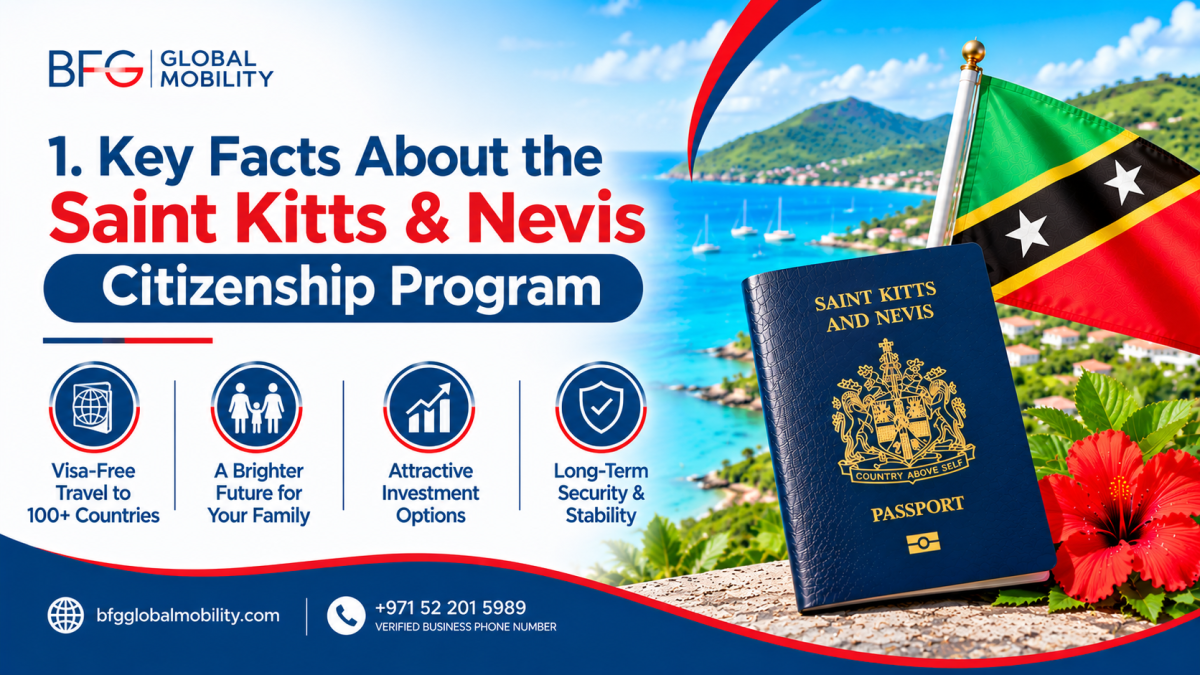
The Saint Kitts and Nevis Citizenship by Investment Program is one of the longest-running investment migration programmes in the world. Established in 1984, it allows eligible foreign investors and qualifying family members to obtain citizenship by making an approved financial contribution or investment in the country.
The programme is administered by the Citizenship by Investment Unit (CIU), which oversees applications, investment routes, and due diligence procedures. For individuals considering a second citizenship, understanding the programme’s main features, requirements, and costs is an important first step.
Below are the key facts about the Saint Kitts and Nevis Citizenship Program that prospective applicants should know.
1. The Program Was Established in 1984
Saint Kitts and Nevis introduced its Citizenship by Investment Program in 1984. Its long operating history makes it one of the most established programmes in the citizenship-by-investment sector.
The programme was created to attract foreign investment and support national economic development. In return for meeting the applicable investment and eligibility requirements, successful applicants can obtain citizenship in the Caribbean Federation.
The programme is managed by the CIU under the country's legal framework. Its official website provides information about investment options, application procedures, authorised agents, and eligibility criteria.
2. Applicants Can Choose from Four Investment Routes
One of the main features of Saint Kitts and Nevis Citizenship is the availability of different qualifying investment options. Applicants can consider a contribution-based route, real estate investment, or an approved public benefit project.
The four main routes are:
Sustainable Island State Contribution (SISC): This option involves a non-refundable contribution to support national development priorities. The published minimum contribution is US$250,000 for a main applicant or a family of up to four members. Additional contributions apply to qualifying dependants beyond that number.
Developer's Real Estate Investment: Applicants can purchase a qualifying unit in a government-approved development. The minimum investment is US$325,000, subject to the programme's applicable conditions and holding period.
Private Real Estate Investment: This route allows applicants to invest in approved private real estate. Minimum investment requirements depend on the qualifying property and current CIU rules.
Public Benefit Option (PBO): This route involves investment in an approved project that provides substantial benefits to the country, such as infrastructure or other national development initiatives. The qualifying project and investment amount must meet CIU requirements.
Each option has different financial commitments, fees, and conditions. Applicants should review the current official requirements before choosing a route.
3. The Minimum Investment Is Not the Total Application Cost
A common misunderstanding is that the published minimum investment represents the complete cost of obtaining citizenship. In practice, applicants should budget for additional expenses.
Depending on the chosen route and family composition, the overall cost may include:
-
Qualifying investment or contribution
-
Government due diligence fees
-
Post-approval application fees
-
Property purchase and legal expenses, where applicable
-
Document preparation and certification
-
Authorised Agent and professional service fees
-
Other applicable administrative or enrolment charges
For example, the official CIU information lists a due diligence fee of US$10,000 for the main applicant and US$7,500 for each dependant aged 16 or older under the SISC route. Fees and charges can differ between investment options.
A complete cost assessment should account for the main applicant and every dependant included in the application.
4. Applicants Must Meet Eligibility Requirements
Not every foreign national automatically qualifies for citizenship through investment. Applicants must satisfy the programme's eligibility and due diligence standards.
The CIU assesses information such as personal background, financial circumstances, source of funds, and supporting documentation. Applicants may need to provide:
-
Valid passports and identity documents
-
Birth and marriage certificates, where applicable
-
Police clearance certificates
-
Evidence of residential address
-
Bank statements and financial records
-
Evidence showing the lawful source of investment funds
-
Medical and other supporting documents requested by the authorities
Applicants must provide accurate and complete information. Inconsistencies, missing records, or undisclosed information can lead to additional checks, delays, or refusal.
5. Due Diligence and Interviews Are Important Parts of the Process
Saint Kitts and Nevis applies background screening to protect the integrity of its citizenship programme. Due diligence checks help the authorities assess an applicant's identity, reputation, financial background, and eligibility.
The main applicant must attend an interview, which may be conducted virtually or in person. Dependants aged 16 or older may also be required to attend an interview where the CIU considers it necessary.
Applicants should be prepared to explain their personal background, business activities, financial position, and source of funds. Providing genuine documentation and consistent answers is essential.
The process is not simply a payment-based transaction. Approval depends on the authorities' assessment of the complete application.
6. Applications Must Be Submitted Through an Authorised Agent
Applicants cannot submit their citizenship-by-investment applications directly to the CIU. They must select an Authorised Agent listed by the government.
The agent helps prepare the application, organise supporting documents, and submit the file through the required channels. Choosing an appropriately licensed professional is important because application errors can create unnecessary delays.
Before appointing an agent, applicants should verify their status against the official CIU directory and understand the services and fees included in their agreement.
7. The Investment Is Normally Made After Approval in Principle
The application process follows several stages. First, the applicant selects an Authorised Agent and prepares the required forms and documents. The application is then submitted to the CIU for assessment and due diligence.
If the application meets the relevant requirements, the authorities may issue an Approval in Principle. The applicant must then complete the qualifying investment and satisfy the remaining conditions before citizenship can be granted.
The general stages include:
-
Select an Authorised Agent.
-
Prepare and submit the application.
-
Complete due diligence and the required interview.
-
Receive Approval in Principle, if successful.
-
Complete the qualifying investment and applicable payments.
-
Receive citizenship approval and proceed with the relevant passport formalities.
The exact timeline depends on the application's circumstances, document quality, due diligence requirements, and the selected investment route.
8. Qualifying Family Members May Be Included
The Saint Kitts and Nevis Citizenship Program allows eligible applicants to include qualifying family members in an application.
Depending on the programme's current rules, eligible dependants may include a spouse, qualifying children, and certain dependent parents. Age limits, financial dependency, educational status, and other conditions can apply.
Family applications require additional documentation to establish identity and relationships. Applicants should confirm the current dependant categories and associated fees before submitting their files.
9. Citizenship Offers Long-Term Status and International Mobility Options
Successful applicants receive citizenship under the laws of Saint Kitts and Nevis. Citizenship can provide an additional nationality and may offer greater flexibility when planning international travel, family arrangements, and future residence options.
The Saint Kitts and Nevis Passport provides access to a range of international destinations, although visa and entry requirements can change. Travellers should always check the rules of their destination before making arrangements.
Applicants should also understand that citizenship does not automatically provide residence rights in every country, guarantee visa approval, or change their tax residence. These matters depend on the laws of the relevant jurisdictions and each individual's circumstances.
For More Info Visit Here: https://bfgglobalmobility.com/citizenship-by-investment/saint-kitts-and-nevis
10. Professional Guidance Can Help Applicants Prepare
A citizenship-by-investment application involves financial planning, document preparation, eligibility checks, and communication with the relevant authorities. Professional guidance can help applicants understand the available routes and identify potential documentation issues before submission.
Applicants should compare investment options carefully, calculate the full costs, and verify the credentials of the Authorised Agent they intend to appoint. They should also rely on current official programme information rather than outdated fee schedules or informal promises.
BFG Global Mobility provides citizenship and investment migration guidance to individuals considering international citizenship options. Applicants can review the available information and seek assistance in understanding the Saint Kitts and Nevis programme before taking the next step.
Visit BFG Global Mobility for further information.
Understanding the Key Facts Before Applying
The Saint Kitts and Nevis Citizenship Program combines a long-established legal framework with several investment routes and a formal due diligence process. Its main features include the programme's establishment in 1984, multiple qualifying investment options, family inclusion provisions, mandatory applicant screening, and submission through an Authorised Agent.
However, eligibility, fees, investment thresholds, and procedural requirements should always be checked against the latest CIU guidance. A careful review of these details can help applicants make informed decisions and prepare a more complete application.
BFG Global Mobility is a global mobility consultant and immigration consultant helping investors and families explore second citizenship, Golden Visa, and immigration through investment options. Our Global Mobility Services cover programmes across the Caribbean, Pacific, and Europe, with tailored guidance based on your goals, budget, and eligibility.














Comments (0)