

Online Antique Valuation: What Photos Can and Can’t Tell
Online antique valuation starts with clear photos, but images can't prove age or maker. Learn what to capture and when an expert review is needed.
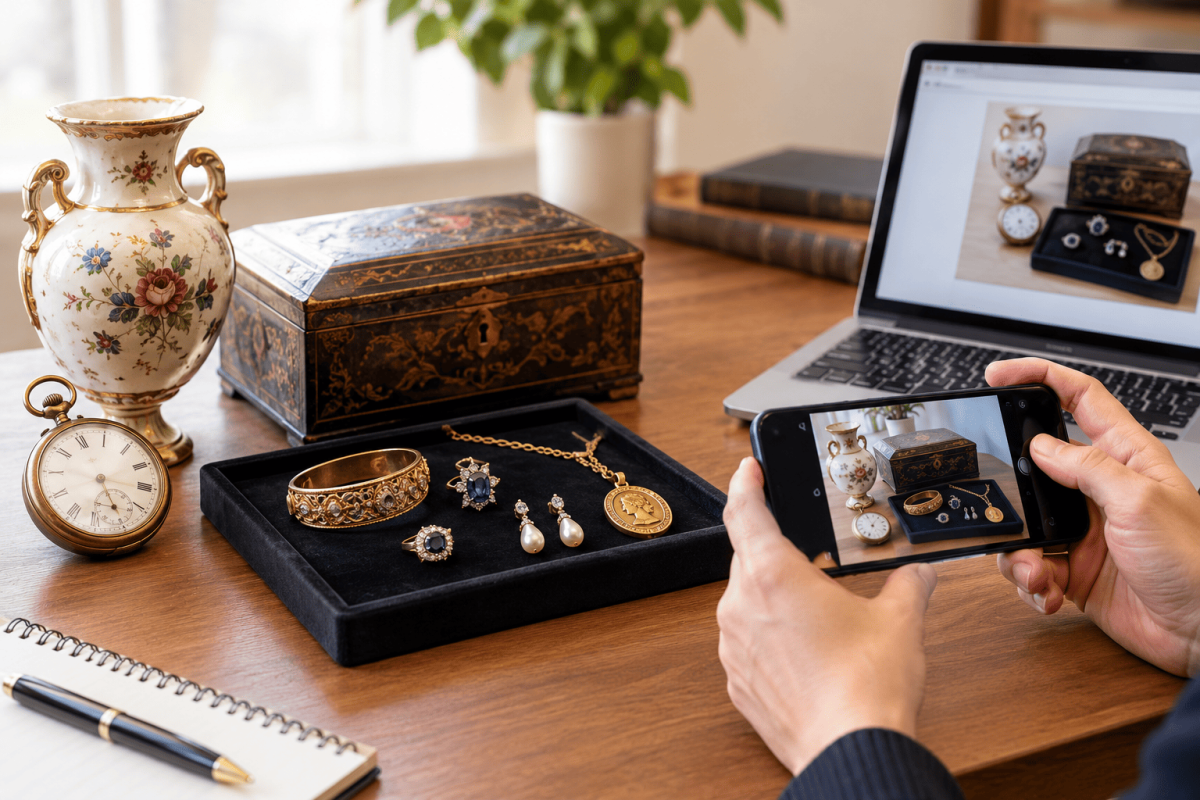
You’ve found a Georgian silver teapot in a late relative’s cupboard or a carriage clock that’s sat on the mantelpiece for forty years. Is it necessary to box it up and take it to London to determine its value? Often, no. A good online antique valuation can determine an object’s identity, age, origin, and market value from a few good photos.
But there are limits, and they matter. This guide explains what photos can reliably reveal, what they can’t, and how to judge which category your piece falls into before you spend a penny.
How Does a Photo-Based Valuation Actually Work?
A photo-based valuation is a written opinion of value produced by a qualified valuer from your photographs, measurements and any history you can supply. The valuer identifies the object, compares it with recent sales of similar pieces, and states a value for a specific purpose, such as insurance, sale or probate.
That purpose matters more than most people realise. The same Victorian brooch carries different values depending on whether you’re insuring it (what it would cost to replace), selling it (what a buyer might pay at auction) or declaring it in an estate (open market value on a given date).
What should you send?
Good photographs do most of the work. Aim for natural daylight, a plain background and a ruler or coin for scale. Shoot the front, back, sides and base, then add close-ups of every mark, signature, label and flaw.
Jewellery needs particular care, because hallmarks sit on the inside of the shank or the back of the setting. A ring submitted for an engagement ring valuation needs the stone photographed from above and side-on, plus the inside-band marks. For a handbag valuation, photograph the date code, interior stamp, stitching and hardware engravings.

Add anything that proves history: receipts, old insurance schedules, letters, or even a family snapshot showing the object in a room.
What does the valuer do with them?
A competent valuer works in sequence. They identify the object, verify marks and construction against reference works, and locate comparable sales from the past few years, then adjust for condition and quality. Finally, they set out the basis of valuation in writing.
Expect questions back. A valuer who asks for a second photo of the base, or a measurement, is doing the job properly. A valuer who provides a figure within minutes without asking any questions is not doing their job properly.
Who is qualified to give the opinion?
The UK doesn’t license antique valuers, so credentials vary widely. Look for membership in a recognised body: the Gemmological Association of Great Britain (Gem-A) for gems and jewellery, or the Society of Fine Art Auctioneers and Valuers (SOFAA) for general antiques.
Look at how they charge as well. A flat fee or a fee based on time is sound practice. A fee based on a percentage of the value is a conflict of interest, because the higher the figure, the more the valuer earns. Under the Consumer Rights Act 2015, services must be performed with reasonable care and skill, which gives you recourse if a report is careless.
What Can Photographs Reveal About an Antique?
Photographs can reveal an object’s style, period, maker’s marks, materials, construction methods and visible condition. A sharp close-up of a hallmark or signature often settles attribution within minutes. Photos are weakest at showing weight, surface feel and hidden repairs, so a remote opinion is strongest on identification and weaker on condition.
Marks, hallmarks and signatures
Marks are the closest thing antiques have to a birth certificate. Under the Hallmarking Act 1973, articles above certain weights must be hallmarked by a UK assay office before they’re sold as precious metal. Those thresholds are 1 gram for gold, 7.78 grams for silver, 0.5 grams for platinum and 1 gram for palladium.
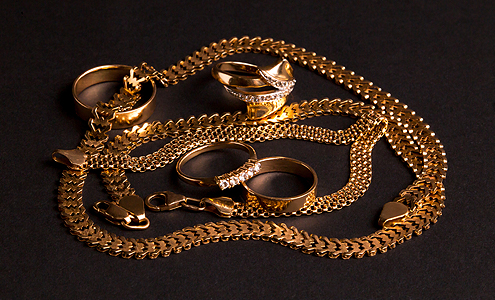
A London leopard’s head, a Birmingham anchor, a Sheffield rose or an Edinburgh castle tells you where a piece was assayed. The date letter then narrows it to a single year. Executors commissioning a probate jewellery valuation often discover that one clear hallmark photograph settles whether a chain is 9ct or 18ct, which roughly doubles its gold content.
Style, construction and materials
Experienced eyes read construction like handwriting. Hand-cut dovetails, irregular screw threads and tool marks suggest period work, whereas machine-perfect joints point to later production. A Victorian copy of a Georgian design is common, and it’s precisely the sort of thing photographs expose.
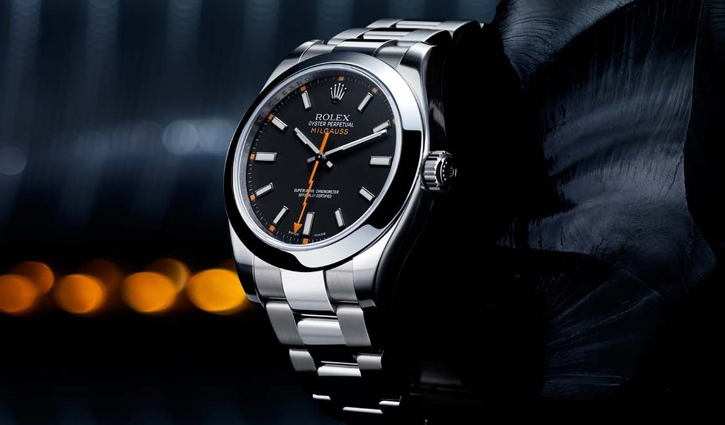
Watches follow similar logic. Dial typography, case shape, bracelet type and reference number identify most models, so a Rolex valuation can start from photographs of the dial, case back and papers. Confirming that everything inside is original is another matter, as the next section explains.
What Can’t a Photograph Show?
A photograph can’t show weight, smell, surface texture, hidden repairs, replaced parts or sound, and these are often what separates an £800 piece from a £200 one. Lighting also flatters: it can mask crazing, warping and re-gilding. A trustworthy remote opinion therefore states its assumptions in writing.
Repairs, restoration and replaced parts
Restoration is the great hidden variable. Overpainted porcelain can look flawless until ultraviolet light reveals the repair. A situation where the top and bottom halves of a chest of drawers come from different pieces is difficult to spot without pulling out drawers and checking the backboards.
A mildly contrarian view
Here’s an opinion I’ll defend: the claim that in-person valuations are always better is oversold. For a mid-value piece, say a £300 to £1,500 silver tea service or a Victorian garnet brooch, a valuer working carefully from sharp photographs, with reference books open, often does better than someone glancing at the item for five minutes across a counter. Time and research beat proximity.
The catch is honesty about uncertainty. A well-run online antique valuation will say “assuming no restoration” and give a range where the evidence is thin. If you receive one precise figure with no caveats at all, treat it with suspicion.
When is it advisable to request an in-person inspection of the item?
Insist on an in-person valuation when the item could be worth several thousand pounds, when authenticity is disputed, when restricted materials such as ivory are involved, or when HMRC, an insurer or a court may challenge the figure. Lower-value, well-documented pieces suit remote assessment far better.
Tax, probate and legal use
According to HMRC, inheritance tax is charged at 40% on the part of an estate above the £325,000 nil-rate band. That’s why executors can’t afford to be casual about values. HMRC expects personal possessions to be valued at open market value on the date of death, and it generally expects professional valuations for higher-value individual items.
For a few modest pieces, photographs may be enough. For a single item worth thousands, a physical inspection makes a probate jewellery valuation much harder to challenge. The same applies to anything heading towards a dispute or a courtroom.
Handbags, ivory and other special cases
Luxury handbags sit in a grey area. A handbag valuation can begin with photographs, but authentication often depends on leather grain, stitching tension and the weight of the hardware, which no image captures fully. Where counterfeits are a genuine risk, see the bag in person.
Ivory is a different issue entirely. The Ivory Act 2018, in force since 2022, bans most dealings in ivory, with narrow exemptions that must be certified or registered. If a piece might contain ivory, don’t offer it for sale until you’ve established whether an exemption applies.
Frequently Asked Questions
How much does a remote antique valuation cost in the UK?
It varies by valuer and by item. Reputable firms charge a flat fee or an hourly rate rather than a percentage of the value, and a single simple item typically costs tens of pounds, with complex or multiple items costing more. Free auction-house estimates help if you plan to sell, but they usually aren’t suitable for insurance.
Many will accept a written report from a qualified independent valuer, but not all. Grading a diamond properly needs magnification, so insurers often prefer the stone examined physically. Please review your policy wording or consult the insurer directly before commissioning anything.
Occasionally. A probate jewellery valuation must reflect the open market value at the date of death, and HMRC can query figures that look unsupported. For modest pieces with clear hallmarks and documents, photographs may do. For a single piece worth thousands, arrange an in-person examination so the figure holds up if challenged.
Only partly. A Rolex valuation can begin with photographs of the dial, case back, bracelet and papers, but confirming original parts needs the watch examined. Please provide the box, papers, and service history if available, as a complete set can significantly impact the valuation.
Summing up
To sum up, a photo-based valuation is strong at identification, dating, marks and comparable-sales research. It’s weaker on condition, originality and weight. For many mid-value pieces, a careful online antique valuation isn’t a compromise; it’s the sensible route. For high-value, disputed or tax-sensitive objects, insist on inspection, and check the valuer’s credentials, fee structure and written assumptions whatever the format.
The principle holds from a silver teapot to a handbag valuation: the more a figure depends on touch and magnification, the less a photograph can carry. Know what you’re asking the photographs to do, and you’ll know how far to trust their answer.

Hello, I am Michel Wilson, a Digital Content Writer, writing on behalf of Prestige Valuations. Prestige Valuations is an independent antique and jewellery valuation service provider based in London, UK. Prestige Valuations provides high quality valuation services for jewelleries, watches, antiques, handbags and fine arts.













Comments (0)