

Dosing Pumps Supplier: How to Choose the Right Industrial Partner
Chemical dosing is vital to many industries, such as the water industry, chemicals, food products, pharmaceuticals, and wastewater disposal. Industrial businesses in such industries require pumps capable of dosing controlled amounts of liquid reliably.
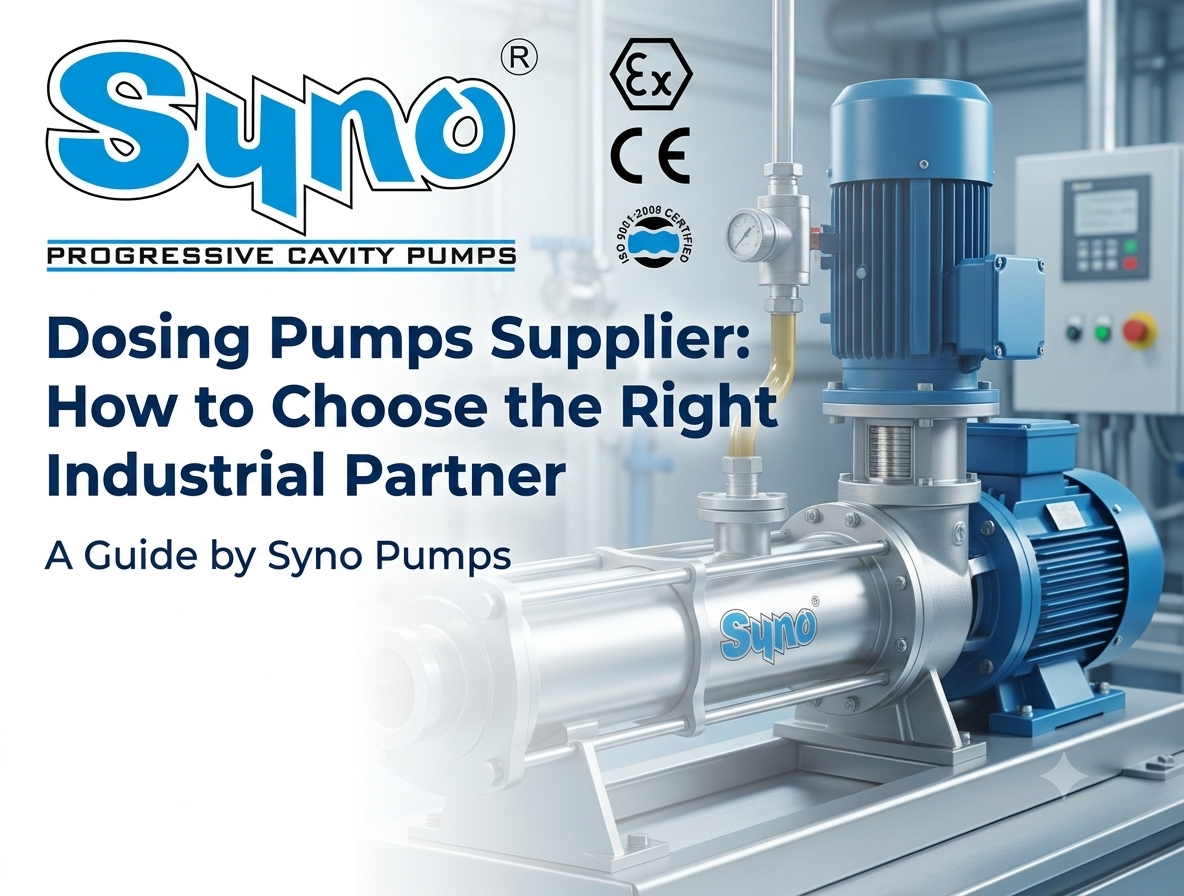
Chemical dosing is vital to many industries, such as the water industry, chemicals, food products, pharmaceuticals, and wastewater disposal. Industrial businesses in such industries require pumps capable of dosing controlled amounts of liquid reliably. It is therefore critical to choose the right dosing pump supplier. The supplier not only supplies the right pump but also assists the business with understanding the required specifications and requirements for the pumps.
A reliable supplier ensures that the industrial buyer is able to form a partnership with them through the evaluation of certain elements. These include the technical capabilities of the pumps and the services offered by the supplier.
Knowledge of Dosing Pumps and Their Uses in Industry
A dosing pump ensures accurate doses of liquids are dispensed within a system at certain rates. It is commonly utilized where there is a need for precision in the addition of liquid chemicals. Dosing pumps can be used to move various types of chemicals, treatment chemicals, and additives among others.
In water treatment plants, dosing pumps can add disinfectants, chemicals to adjust the pH level, and treatment chemicals. In chemical processing plants, it can introduce certain chemicals into a process system whereas in industrial cleaning processes, dosing can be necessary for controlling the chemicals to be delivered into a process.
There are various types of pumping technologies that are used depending on the application involved. The method of delivering a liquid in dosing pumps includes diaphragm and piston, among others, depending on the liquid, dose rate, pressure, and the degree of accuracy.
It is essential to work with an industrial dosing pump supplier in order to know what kind of equipment you need for your process.
Importance of Selecting the Proper Dosing Pumps Supplier
Depending on the choice of supplier, the quality, adequacy, and availability of the pumping equipment will be affected. Inadequate dosing pump will have problems with the needed flow rate, operating pressure, chemical resistance, or operating conditions. This may result in improper dosing, maintenance, and even disruption of production processes.
The supplier of the proper dosing pumps needs to know the application before giving the recommendation. He should be able to inquire on the type of liquid that will be pumped, its chemical composition, needed capacity of dosing, operating pressure, and control of the system.
Good communication on technical aspects will help the buyer to make the right choice and easily plan for installation, maintenance, and replacement in future.
Reliability of the supplier is equally important. Delivery time, information and communication will help the industrial firms to schedule the purchase of the dosing equipment without any delays.
Important Elements When Choosing a Manufacturer of Dosing Pumps
Quality of the Product and Performance of the Dosing Pumps
As industrial dosing pumps can work for an extended period and handle liquids with great precision, buyers have to assess the construction, performance specifications, and appropriateness of the device to the particular conditions of its exploitation.
The buyer can ask the manufacturer whether technical datasheets and quality documentation are available. The design of the product should be appropriate to the pressure, flow, temperature, and duty-cycle conditions of the application.
It will help to maintain the consistency of the liquid delivery. Still, there are other issues like selection, installation, operation, and maintenance to influence the performance of the product apart from its quality.
Flow Rate and Dosing Accuracy
Flow rate is probably the first thing to consider when choosing the dosing pump. The device should supply the specified volume of the liquid in the operating range of the system.
To be able to consult a supplier of dosing pumps, the buyer should find out the minimum and maximum dosing needs, operating pressure, and whether the dosing is continuous or intermittent. Also, the requirements to accuracy and repeatability should be determined.
Chemical Compatibility and Materials
The materials that go into the construction of a dosing pump need to be chemically compatible with the liquid that is going to be pumped.
A chemical that might work well with a particular type of pump head, diaphragm, seal, valve, or tubing in a water treatment plant may cause problems if used in an industrial setting.
Let the supplier know what the composition, concentration, and temperature of the liquid is. Request details regarding the chemical compatibility of the materials in order to minimise the chances of corrosion, leaking, or breakdown of components.
Technical Knowledge and Customisation
Some industrial applications may require specific types of pumps or systems or additional components. It is important that the supplier be able to tell you about the possibilities and also be sure that standard pumps will suffice.
Additional features that may be required include adjustment of dosing rates, automation of the pump, connection of monitoring equipment, or integration with other pieces of machinery.
Technical assistance is particularly important in cases where there are special requirements due to operating conditions or complex needs of the system itself.
Maintenance of Dosing Pumps
The appropriate dosing pump needs to be maintained at regular intervals as well. There are a number of seals, diaphragms, valves, and other parts of dosing pumps that may require servicing from time to time according to the type of the pump used.
Prior to purchasing a dosing pump, it is advisable to inquire about maintenance guidelines, access to replacement parts, troubleshooting advice, warranty, and maintenance services offered by the supplier.
Comparison of Dosing Pump Prices and Their Value
Price is an integral aspect of any procurement process in industries, but the pump's quotation is not necessarily the one with the lowest price. An unsuitable pump will have to undergo frequent repair and replacement procedures.
When comparing prices of dosing pumps, you will have to take into account the specifications, materials used in their manufacturing, included accessories, installation requirements, power requirements (where applicable), and maintenance requirements.
Ask for a quotation based on the same operational requirements. In this case, it will be easy to differentiate among the pumps and find the most appropriate one.
A well-chosen dosing pump will help ensure efficient operations in your business if properly installed and maintained.
Why Choose Syno Pumps for Your Industrial Pump Solution?
Companies that are in need of industrial pumps can consider Syno Pumps or Synopumps when searching for industrial pumps. The company specializes in progressive cavity pump solutions that are applied in processes that require controlled movement of fluids.
Both progressive cavity pumps and dosing pumps differ from each other based on their design and operational requirements, hence, buyers should not think that all kinds of pumps can serve the same purpose. It is important to select the right equipment based on flow rate, pressure, and dosing accuracy.
Prior to choosing Syno Pumps or any industrial company, you must contact the company and ask if there are available products that can suit your dosing process.
Taking into account these factors will ensure that the chosen equipment corresponds to your needs.
Selecting the right dosing pump manufacturer is a major step in providing correct liquid delivery, production and operation in industrial facilities. Quality, flow rate, chemical resistance, technical experience, cost and post-sale service must be taken into account before the purchase.
The companies must set up the process requirements precisely and make a comparison of manufacturers using unified technical criteria. Making an assessment of equipment suitability rather than only the initial cost will allow us to take more confident procurement decisions.
Research of suppliers such as Syno Pumps and checking equipment availability for the specific purpose can assist the company in finding the right solution.
Synopumps manufactures progressive cavity pumps with over 20 series and 1400 specifications. We have designed progressive cavity pumps in wide range includes, waste water, pulp & paper, food, suger & distillary, pharmaceuticals, oil, power fertilizer and chemical industries.














Comments (0)