

What Is 7OH? An Opia Kratom Guide for 2027
Learn what 7OH means, how it differs from kratom, and what to know about Opia Kratom, product labels, risks, and U.S. regulations.
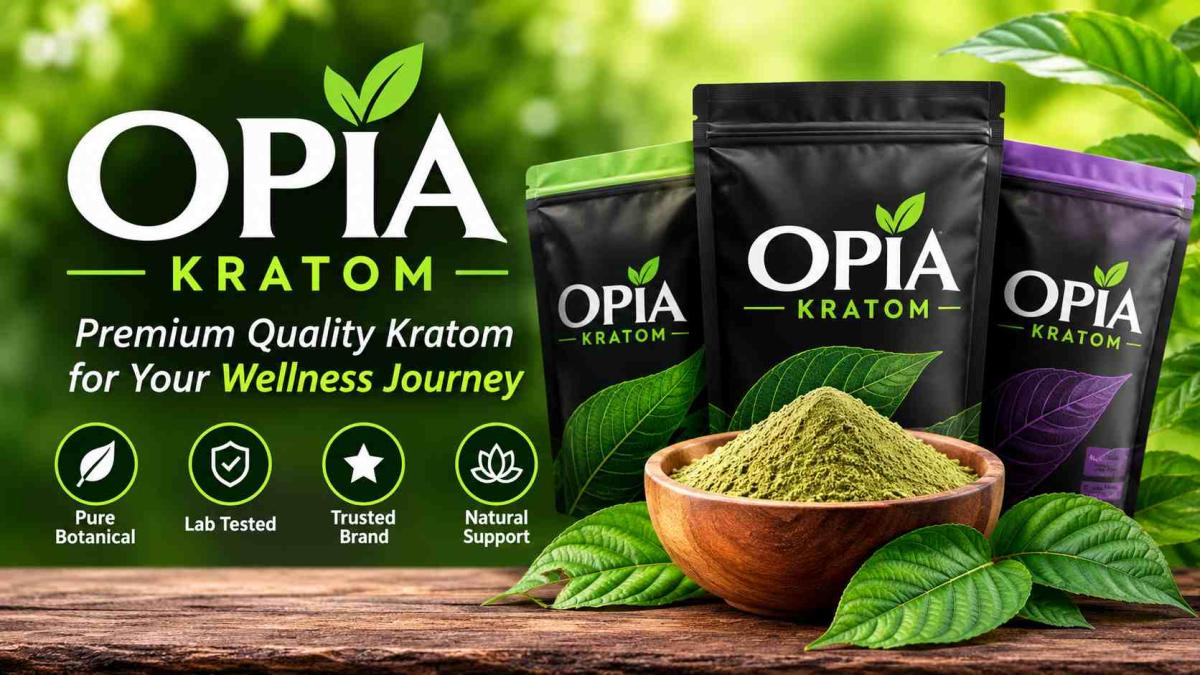
If you have recently encountered the term Opia Kratom, you may have noticed another term appearing alongside it: 7OH. At first glance, it might seem like another type of kratom or simply a different product name. However, there is an important scientific distinction.
7OH, short for 7-hydroxymitragynine, is a naturally occurring alkaloid found in very small amounts in the kratom plant. It interacts with opioid receptors in the human body. Concentrated 7OH products can have effects and risks that differ significantly from those associated with traditional kratom leaves.
As the United States approaches 2027, understanding these differences is particularly important. Federal regulators have raised concerns about concentrated 7OH products, their potential for dependence, and their availability in consumer markets.
This educational guide explains what 7OH is, how it relates to kratom, what terminology such as Opia 7OH means, and what Americans should understand about product labeling, health risks, and changing regulations.
1. What Is 7OH in Opia Kratom?
7OH, or 7-hydroxymitragynine, is an alkaloid associated with the kratom plant, scientifically known as Mitragyna speciosa. It occurs naturally in kratom leaves at trace levels but may also appear in products containing concentrated or enhanced amounts.
Kratom is a tropical tree native to Southeast Asia. Its leaves contain multiple naturally occurring alkaloids, including mitragynine and 7-hydroxymitragynine.
Although these compounds come from the same botanical source, they are not identical.
Mitragynine is generally the most abundant alkaloid in kratom leaves. In contrast, 7OH naturally occurs in much smaller quantities.
This distinction matters because a concentrated product containing 7OH should not be assumed to have the same chemical profile or safety characteristics as ordinary kratom leaf powder.
Understanding Opia 7 Hydroxymitragynine
When consumers encounter the phrase Opia 7 hydroxymitragynine, they are seeing a brand-related term combined with the scientific name of a chemical compound.
It is useful to separate three concepts:
-
Kratom: The botanical plant Mitragyna speciosa.
-
7OH: An individual alkaloid associated with kratom.
-
Opia Kratom: A brand-related search term that may be associated with products marketed in the kratom category.
A brand name alone does not establish a product's ingredients, concentration, purity, or regulatory status.
The exact composition of any branded product must be verified using reliable, product-specific information.
2. How Is 7OH Different From Traditional Kratom?
One of the most common misconceptions surrounding 7OH is that every kratom product contains comparable amounts of it.
That is not the case.
Traditional kratom leaves contain a mixture of naturally occurring alkaloids. Concentrated 7OH formulations may contain substantially higher amounts of one particular compound.
Natural Kratom Versus Concentrated 7OH
|
Feature |
Traditional Kratom Leaf |
Concentrated 7OH |
|
Source |
Leaves of Mitragyna speciosa |
Kratom-derived or manufactured compound |
|
Main alkaloid |
Typically mitragynine |
7-hydroxymitragynine |
|
7OH concentration |
Naturally occurring trace amounts |
Intentionally increased levels |
|
Composition |
Multiple plant alkaloids |
May emphasize one compound |
|
FDA medical approval |
Not FDA-approved as a treatment |
Not FDA-approved as a treatment |
|
Key concerns |
Dependence, adverse effects, inconsistent quality |
Potent opioid effects, dependence, serious adverse reactions |
The U.S. Food and Drug Administration specifically distinguishes naturally occurring trace amounts of 7OH from products containing added or enhanced concentrations. The agency warns that concentrated formulations can cause serious harm.
FDA
Why Concentration Matters
Concentration is an important concept in chemistry and pharmacology.
Two products can share the same chemical ingredient while containing very different quantities. As the quantity and concentration change, the potential effects and risks may also change.
For example, an ordinary botanical preparation and a highly concentrated formulation may contain related substances, but that does not make them interchangeable.
The same reasoning applies to kratom and 7OH.
Products emphasizing concentrated 7OH should not be treated as equivalent to natural kratom leaves simply because both are associated with the same plant.
3. How Does 7OH Interact With the Human Body?
Researchers study 7-hydroxymitragynine because of how it interacts with the body's opioid receptors.
These receptors are part of the nervous system and participate in several physiological processes, including pain signaling.
The Role of Opioid Receptors
7OH has activity at mu-opioid receptors, which helps explain why researchers and public health agencies consider it a substance with significant opioid-related risks.
However, receptor activity alone does not establish that a substance is safe, medically useful, or appropriate for treating a health condition.
Researchers must also consider toxicity, interactions, dependence potential, and outcomes observed in human studies.
The FDA has warned that concentrated 7OH products have not been demonstrated to be safe or effective for any medical use.
Does 7OH Have Medical Benefits?
There are currently no FDA-approved medications containing 7OH.
Some marketing materials have associated 7OH with pain, anxiety, relaxation, or opioid withdrawal. These claims should not be confused with established medical evidence.
The FDA has specifically warned against products marketed for such purposes without the necessary approval and supporting evidence.
FDA
For individuals experiencing pain, anxiety, or substance dependence, established medical treatments are available through qualified healthcare professionals.
4. Understanding Opia Tablets and Product Label Terminology
Searches involving Opia tablets and Opia 7OH illustrate how consumers may encounter unfamiliar terminology when researching kratom-related products.
An effective educational approach begins with understanding what product labels communicate and what they cannot guarantee.
What Does a Product Label Tell You?
Depending on the manufacturer, a product label may contain information such as:
-
The name of the manufacturer or distributor
-
A list of declared ingredients
-
The identified chemical compounds
-
A manufacturing batch or lot number
-
Warning statements
-
Information about third-party laboratory testing
These details help identify what a manufacturer claims about its product.
However, a label is not independent proof that the listed ingredients are accurate or that a product is safe.
Understanding Laboratory Testing Claims
Some botanical product labels refer to a Certificate of Analysis, commonly abbreviated as COA.
A COA is a laboratory document that may report findings about a particular sample.
Testing can provide information about chemical identity, composition, and certain contaminants. Nevertheless, the existence of a laboratory report does not establish FDA approval or medical safety.
A laboratory document also has limitations. It describes the tested sample and does not necessarily prove that every product in circulation has an identical composition.
Why Marketing Claims Deserve Scrutiny
Terms such as premium, advanced formula, enhanced, and high purity may sound scientific but do not automatically indicate independent verification.
Similarly, a professional-looking website or attractive packaging cannot establish that a concentrated 7OH product meets federal requirements.
For Opia Kratom and other branded products, the most reliable information comes from verified documentation, public health guidance, and applicable regulatory records rather than promotional language alone.
5. What Are the Health Risks Associated With 7OH?
Understanding the risks of concentrated 7OH is essential for separating scientific information from marketing claims.
The FDA identifies concentrated 7OH as a potent opioid substance and advises consumers to avoid products containing it.
Dependence and Withdrawal
One concern is the possibility of physical dependence.
Dependence can develop when the body adapts to repeated exposure to certain substances. When exposure stops, withdrawal symptoms may occur.
The FDA has received reports involving withdrawal symptoms such as restlessness, fatigue, irritability, and sleep disturbances associated with 7OH products.
These reports demonstrate why concentrated 7OH should not be characterized as a harmless botanical wellness ingredient.
Other Reported Adverse Effects
The FDA has also reported concerns involving:
-
Addiction and substance use disorder
-
Anxiety and depression
-
Gastrointestinal problems
-
Insomnia
-
Seizures
-
Other serious opioid-related adverse effects
The type and severity of a reaction can depend on multiple factors, and available research does not eliminate uncertainty about individual outcomes.
FDA
Why Natural Does Not Always Mean Safe
The word natural is often associated with health and wellness products.
However, natural origin is not a reliable measure of safety.
Many biologically active compounds come from plants. Their effects depend on their chemical properties, concentrations, and interactions with the body.
This is particularly relevant when natural substances are isolated or concentrated.
In other words, identifying a compound as plant-derived does not establish that a concentrated version is safe.
6. What Are the U.S. Regulations for 7OH Heading Into 2027?
The regulatory environment is one of the most important aspects of understanding 7OH in the United States.
Federal agencies have expressed concerns about concentrated formulations, particularly products promoted as foods, dietary supplements, or treatments.
FDA Position on 7OH Products
The FDA states that 7OH is not approved for medical use. It has also said that concentrated 7OH cannot lawfully be added to conventional foods or marketed as a dietary supplement under the applicable requirements.
In July 2025, the agency announced warning letters addressing the unlawful marketing of products containing 7-hydroxymitragynine.
Those enforcement actions reflected concerns about product safety and unsupported medical claims.
Important Federal Developments in 2026
On October 9, 2026, the U.S. Department of Justice announced updated emergency scheduling actions involving 7OH and related opioid substances.
The updated approach incorporated scientific recommendations intended to distinguish naturally occurring trace concentrations from intentionally enhanced formulations.
The Drug Enforcement Administration issued updated notices as part of this regulatory process.
United States Department of Justice+1
It is important to distinguish a proposed scheduling action or notice of intent from a final, effective rule.
Because the regulatory landscape is developing, readers looking ahead to 2027 should consult current federal and state government information rather than assume that a previously published summary remains accurate.
State-Level Regulations
Rules concerning kratom and related compounds may also differ among U.S. states.
Some states apply restrictions that are separate from federal requirements.
This means the legal treatment of ordinary kratom leaf products and concentrated 7OH formulations may not be identical.
Additionally, the absence of a specific state prohibition should never be interpreted as FDA approval or evidence of safety.
For accurate legal information, current state legislation and official regulatory notices are more reliable than third-party marketing claims.
7. What Should Readers Know About Opia Kratom Information in 2027?
As interest in kratom-related terminology continues, it is increasingly important to distinguish educational content from commercial promotion.
A useful resource should help readers understand scientific terms, recognize unsupported claims, and evaluate the reliability of published information.
Recognizing Reliable Information
Consider whether an educational resource:
-
Clearly distinguishes kratom leaf from concentrated 7OH.
-
Identifies the limitations of scientific research.
-
Avoids presenting unapproved products as established treatments.
-
References appropriate government or scientific sources.
-
Explains regulatory uncertainty without making exaggerated claims.
These practices are particularly important when information concerns products with potentially serious health consequences.
Avoiding Common Misconceptions
Several assumptions can make it harder to understand 7OH accurately.
Misconception 1: All kratom products contain the same chemical concentrations.
They do not. Botanical composition and concentrated formulations can differ substantially.
Misconception 2: A botanical ingredient is automatically safe.
Natural origin alone does not establish safety.
Misconception 3: A laboratory-tested product is FDA-approved.
Laboratory analysis and regulatory approval are separate concepts.
Misconception 4: Availability means a product is lawful.
Products can appear in commercial markets despite being subject to federal or state restrictions.
Understanding these distinctions provides a more useful foundation than relying on advertising or informal online discussions.
Frequently Asked Questions About Opia Kratom and 7OH
1. What does 7OH mean in Opia Kratom?
7OH stands for 7-hydroxymitragynine, an alkaloid naturally present in trace quantities in kratom leaves. When associated with an Opia-branded product, the term may refer to a formulation marketed as containing that compound. The brand name itself does not verify the product's composition.
2. Is Opia 7OH the same as regular kratom?
Not necessarily. Traditional kratom contains a mixture of naturally occurring plant alkaloids, while products marketed around 7OH may contain enhanced concentrations of that particular compound. These differences can affect the products' risk profiles.
3. Are 7OH products approved by the FDA?
No. The FDA has not approved any 7OH-containing product for medical use. It has also warned that products containing added or concentrated 7OH may cause serious harm.
4. Can concentrated 7OH cause dependence?
Yes. The FDA has identified addiction, dependence-related concerns, and withdrawal symptoms among the risks associated with concentrated 7OH products.
5. Will 7OH regulations change in 2027?
Regulatory changes are possible, but specific future outcomes cannot be guaranteed. Federal actions announced in 2026 demonstrate that concentrated 7OH remains an active regulatory concern. Readers should check the latest FDA, DEA, and state-level publications for developments.
Conclusion: Understanding Opia Kratom and 7OH in 2027
Understanding 7OH begins with a simple but important distinction: naturally occurring kratom alkaloids and concentrated 7-hydroxymitragynine formulations are not necessarily equivalent.
Although 7OH occurs naturally in trace quantities in kratom leaves, concentrated products raise additional concerns involving opioid effects, dependence, product composition, and regulatory compliance.
For readers researching Opia Kratom, understanding the science behind the terminology is more valuable than relying on promotional claims.
Ready to compare for yourself? Browse KratomPoint, check the full Opia Kratom page, and pick a small size to try first. Questions? Their support team is available by phone and email on weekdays.
Stay informed: Review current guidance from the U.S. FDA and DEA, consult qualified healthcare professionals about health-related questions, and prioritize verified scientific information when evaluating claims about kratom and 7OH.

Hi, I’m Freya Parker, an automotive expert focused on helping car owners make smarter decisions when selling their vehicles. I specialise in breaking down the car-selling process in a simple, practical way from understanding your car’s real value to reading market trends and spotting the right time to sell. My goal is to give you clear, honest guidance so you can confidently get the best possible price for your car without confusion or stress. Whether you’re selling for the first time or just want a better deal, I’m here to make the process straightforward, transparent, and rewarding.
















Comments (0)