

EV Charging System in Dubai: When Does Your Property Need an Electrical Upgrade?
Discover when Dubai properties need electrical upgrades for EV charging systems. Learn about electrical capacity, dynamic load balancing, DEWA requirements and cost-effective installation strategies for residential and commercial properties.

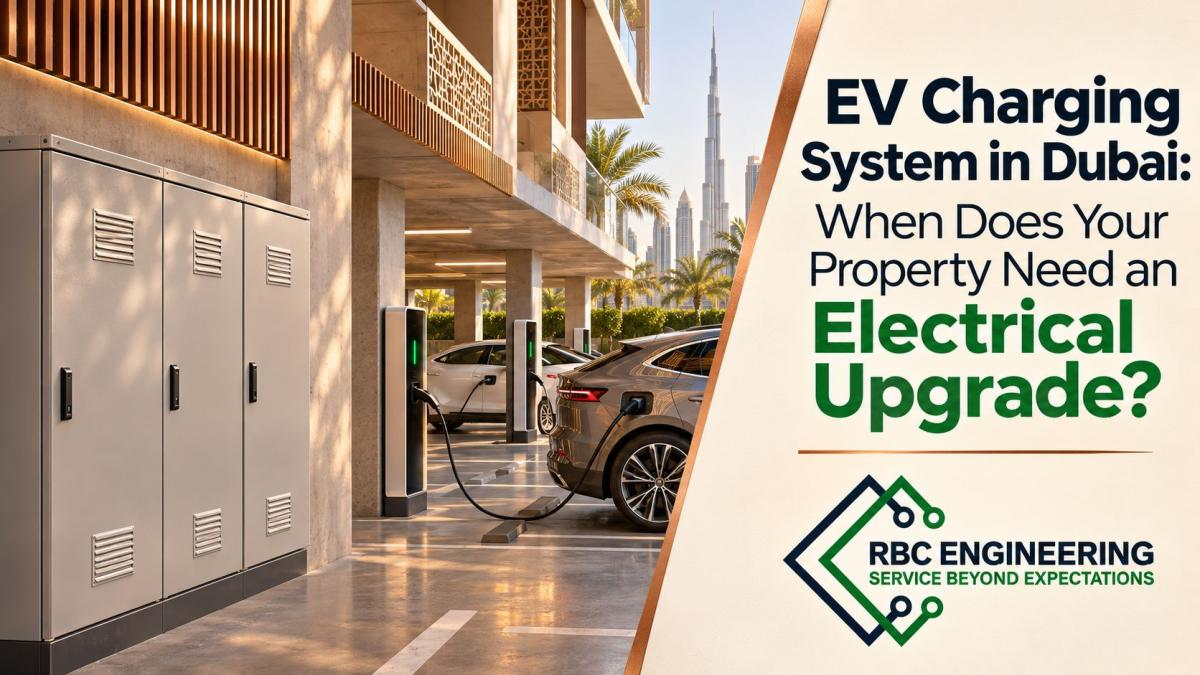
Installing EV chargers in an existing property can raise several questions about electricity supply, infrastructure capacity and installation expenses.
A business might purchase several charging stations before discovering that its electrical infrastructure cannot support their combined demand.
However, installing an EV Charging System in Dubai does not always require a major electrical upgrade. The decision depends on available power, existing building consumption and vehicle charging requirements.
A professional electrical assessment can help property owners identify suitable charging options before committing to unnecessary infrastructure expenditure.
Can Your Existing Property Support an EV Charging System in Dubai?
Every property has different electrical limitations. A charging arrangement suitable for one office building may not work effectively in another.
Understand Your Property's Existing Electrical Supply
Start by reviewing the property's approved electrical capacity, distribution equipment and existing electricity consumption.
The total electrical supply does not represent the power available for EV charging. Existing building equipment already uses part of that capacity.
Identify Available Spare Electrical Capacity
A qualified electrical professional can assess whether sufficient capacity remains for the proposed charging equipment.
Consider Dubai's Seasonal Electricity Demand
Air conditioning systems can significantly influence building electricity consumption during summer.
An assessment based only on lower winter electricity demand may overlook important seasonal limitations.
Calculate EV Charging Demand Before Upgrading Infrastructure
Purchasing chargers according to their maximum output alone can result in an unnecessarily expensive installation.
Determine Simultaneous Charging Requirements
Consider how many vehicles need charging at the same time. Parking duration and expected departure times also influence the required charging capacity.
For example, office employees may leave their vehicles parked throughout the working day. This provides greater flexibility than a commercial fleet operating short delivery shifts.
Compare Charger Output With Available Site Power
Consider an illustrative Dubai office installation with six 11kW charging points.
-
Combined rated charging output: 66kW.
-
Available electrical capacity for charging: 30kW.
-
Potential equal power allocation: 5kW per vehicle.
Compatible load management equipment could distribute the available 30kW between six connected vehicles, subject to their charging limitations.
This arrangement may satisfy workplace charging requirements without increasing the existing electricity supply.
However, the final decision requires a detailed assessment of vehicle energy requirements and approved site capacity.
Five Signs Your Property May Need an Electrical Infrastructure Upgrade
Certain conditions indicate that additional electrical work may be necessary before installing EV charging equipment.
1. Insufficient Available Electrical Capacity
An upgrade may be required when existing building consumption leaves inadequate power for the proposed charging service.
2. Limited Distribution Board Capacity
Existing distribution boards may lack suitable circuit capacity or space for additional protective equipment.
A qualified contractor should determine whether modifications are necessary.
3. Unsuitable Existing Cabling
Existing cables may not meet the electrical requirements of additional charging equipment. Cable suitability depends on electrical design, installation conditions and applicable regulations.
4. High Charging Demand Within Short Parking Windows
Taxi operators, delivery businesses and commercial fleets may require substantial energy replenishment between shifts.
Lower charging power may not meet these operational deadlines.
5. Significant Future Expansion Plans
Properties expecting considerable growth in EV usage should consider future electrical demand.
Phased infrastructure upgrades may offer greater flexibility than repeatedly modifying existing installations.
Can Dynamic Load Management Reduce the Need for Electrical Upgrades?
Dynamic load management offers an alternative worth considering before committing to major infrastructure expenditure.
How Dynamic Load Balancing Works
Compatible charging equipment monitors available electricity and adjusts charging output according to changing building demand.
When other electrical equipment consumes more power, the charging system can reduce its allocated demand.
Additional charging power may become available when building consumption decreases.
When Managed Charging Makes Sense
This approach can be particularly useful for:
-
Office buildings with extended employee parking hours.
-
Residential developments with overnight charging demand.
-
Commercial properties with predictable vehicle schedules.
-
Facilities introducing additional chargers gradually.
Recognise the Limitations
Load management distributes available electricity. It does not increase the property's approved electrical supply.
If available energy cannot meet vehicle requirements within the permitted charging window, an electrical upgrade may still be necessary.
Understand DEWA Requirements for Electrical Upgrades and EV Charging
Electrical infrastructure modifications in Dubai must follow applicable technical and regulatory requirements.
Confirm Applicable Installation Requirements
DEWA publishes technical regulations covering private and public electric vehicle supply equipment.
Property owners should confirm which requirements apply to their proposed installation, electrical modifications and intended charging operations.
Work With Qualified Electrical Professionals
Professional assessments help establish suitable equipment ratings, electrical protection, distribution arrangements and installation requirements.
Homeowners should also use DEWA-approved electrical contractors for relevant electrical installation work.
Distinguish Installation Approval From Operator Licensing
Electrical installation requirements and public charging operator licensing are separate considerations.
Businesses intending to provide public charging services should confirm the applicable operating arrangements before installation.
Smart charging functionality does not automatically remove regulatory or electrical approval requirements.
Compare Electrical Upgrade Costs With Managed Charging Alternatives
The cost of EV charger installation in Dubai depends on considerably more than the equipment price.
Understand Potential Electrical Upgrade Expenses
An installation quotation may include:
-
Distribution board modifications.
-
Additional electrical cabling.
-
Protective equipment.
-
Cable routing and civil works.
-
Electrical supply modifications, where required.
Evaluate Smart Charging Equipment Costs
Managed charging alternatives may involve compatible energy meters, communication equipment, software and ongoing technical support.
These expenses should be compared with the proposed electrical upgrade costs.
Request an Itemised Technical Quotation
Ask suppliers to distinguish essential installation work from optional improvements and future expansion provisions.
A detailed quotation makes it easier to compare proposals and avoid unexpected expenses.
Request an Electrical Feasibility Assessment Before Purchasing EV Chargers
The right charging solution should reflect your property's electrical limitations, vehicle requirements and future expansion plans.
RBC Engineering provides EV Charging System in Dubai solutions for residential and commercial properties.
Planning a new installation or expanding existing charging facilities? Request a technical assessment and share your electrical information, parking layout and expected charging demand.
Understanding these requirements early supports better equipment selection and infrastructure investment.
Frequently Asked Questions
Does Installing an EV Charger in Dubai Always Require an Electrical Upgrade?
No. An electrical upgrade depends on available supply capacity, existing building consumption, equipment output and installation requirements. A professional electrical assessment can determine whether the existing infrastructure supports the proposed charger safely and effectively.
Can Dynamic Load Balancing Help Avoid an Electrical Supply Upgrade?
Compatible load balancing equipment can distribute available electricity between connected chargers and other building loads. This may reduce the need for immediate upgrades. However, additional capacity remains necessary when available electricity cannot meet charging requirements.
Can Several EV Chargers Operate on an Existing Commercial Electrical Supply?
Yes, provided the electrical infrastructure has sufficient capacity and suitable protection. Managed charging may help distribute available power between several vehicles. A qualified electrical professional should assess simultaneous demand, vehicle schedules and equipment compatibility.
What Information Is Needed for an EV Charging Electrical Assessment in Dubai?
Useful information includes electrical drawings, distribution board specifications, existing electricity consumption, proposed charger quantities and vehicle parking schedules. Future expansion requirements should also be considered. These details help professionals evaluate infrastructure suitability and prepare accurate proposals.
Conclusion
Electrical upgrades should follow actual charging requirements rather than equipment ratings alone. Assessing available capacity, vehicle energy demand and managed charging alternatives helps Dubai property owners make informed decisions and avoid unnecessary infrastructure expenditure.
















Comments (0)