

HF Surgery Instruments Supplier: How to Prepare Technical RFQs and Evaluate European Suppliers
A practical guide for European hospitals and distributors sourcing HF surgical instruments. Learn to prepare technical RFQs, compare supplier quotations, evaluate samples, verify documentation and manage repeat orders for reliable procurement.

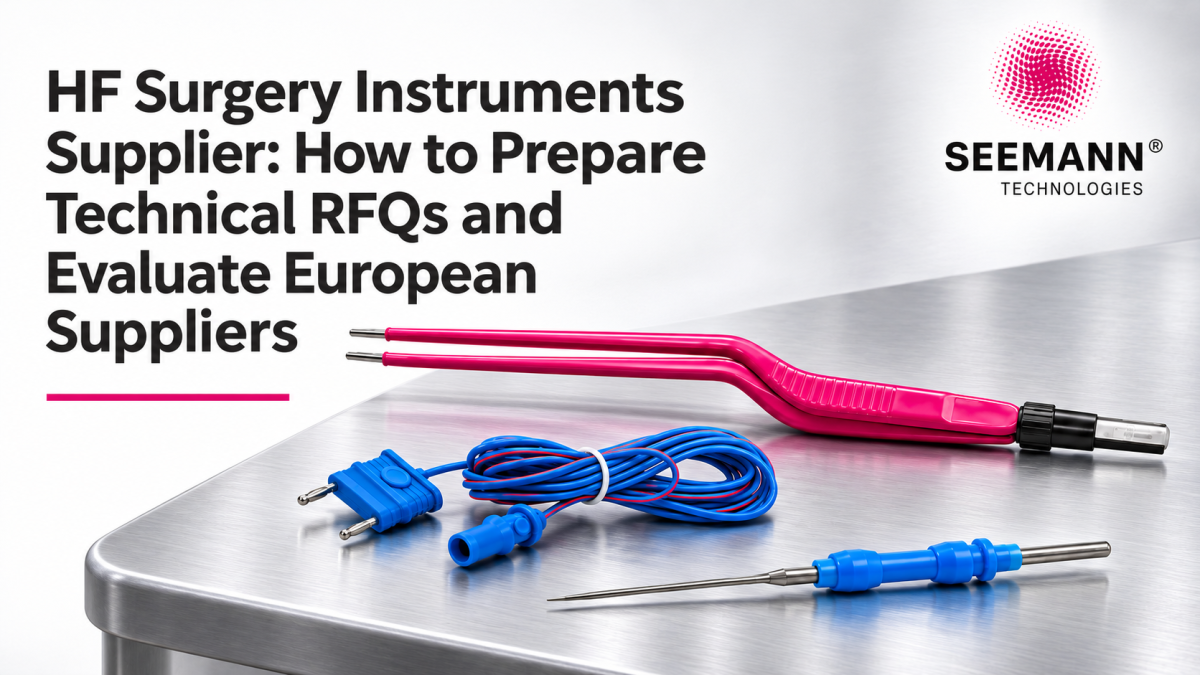
Sourcing high-frequency surgical instruments requires careful technical and commercial evaluation. Hospitals and medical device distributors need products that match their equipment and purchasing requirements.
Comparing suppliers involves more than reviewing prices and product catalogues. Buyers should examine technical specifications, documentation, sample availability and supply arrangements.
A structured request for quotation (RFQ) can make this process easier. It helps suppliers understand purchasing requirements and provide more relevant responses.
This guide explains how European healthcare buyers can prepare RFQs and evaluate potential HF instrument suppliers.
1. HF Surgery Instruments Supplier: Understanding the Sourcing Requirements
What Should an HF Instrument Supplier Offer?
An HF surgery instruments supplier should provide clear product information and relevant technical documentation. Buyers need to understand the available instrument categories and their intended applications.
Common product categories include:
- Bipolar forceps in different working configurations.
- Monopolar electrodes with different working-end designs.
- Electrosurgical pencils and compatible handpieces.
- Bipolar and monopolar connection cables.
Each category has different specifications. Buyers should identify the required products before requesting quotations.
Manufacturer, Supplier and Distributor: Understanding Their Roles
Manufacturers produce medical devices and hold relevant manufacturing responsibilities. Distributors purchase and supply products to healthcare customers. Suppliers may operate in either role or provide products through other arrangements.
Buyers should identify the legal manufacturer and the organisation responsible for supplying each device. This distinction helps clarify documentation, regulatory responsibilities and commercial communication.
2. Preparing a Technical RFQ for High-Frequency Surgical Instruments
Defining Product Requirements in an RFQ
A detailed RFQ helps prevent misunderstandings during supplier evaluation. Buyers should describe the required instrument rather than relying on broad product category names.
Useful information includes:
- Instrument type and intended application.
- Working length and shaft dimensions.
- Working-end shape and configuration.
- Connector and handle requirements.
- Required quantities and packaging format.
- Existing product references, where available.
For bipolar forceps, specify the required jaw design and cable connection. For monopolar electrodes, include the electrode shape and compatible handpiece requirements.
These details help suppliers identify suitable product references. They also make quotations easier to compare.
Including Documentation and Commercial Requirements
An RFQ should explain which documents are needed for internal assessment. These may include product specifications, instructions for use and applicable conformity information.
Where relevant, buyers can request:
- EU Declaration of Conformity.
- Applicable Notified Body certificates.
- Product labels and identification details.
- Sterile packaging information.
- Relevant quality management documentation.
Commercial requirements should also be clear. Include quantities, delivery destinations, quotation validity and expected purchasing arrangements.
3. How to Evaluate Supplier Quotations and Technical Responses
Comparing Product Specifications and Supplier Responses
Receiving multiple quotations does not automatically make products comparable. Two suppliers may offer instruments with similar descriptions but different technical configurations.
Procurement teams should compare the exact product references. They should review dimensions, materials, connectors and intended purposes.
Important evaluation points include:
- Whether the quoted product matches the RFQ.
- Whether all requested specifications are provided.
- Whether relevant documents are available.
- Whether any proposed alternatives are clearly identified.
- Whether technical questions receive clear responses.
Do not assume that a cheaper alternative offers identical functionality. Any substitution should receive appropriate technical review.
Reviewing Documentation and Commercial Conditions
Product documentation should match the quoted device. Buyers should check manufacturer details, product references and applicable conformity information.
Commercial conditions also require attention. Review delivery terms, minimum order quantities, packaging details and quotation validity.
Ask suppliers to clarify missing information before making purchasing decisions. Written clarification helps maintain accurate procurement records.
4. Sample Evaluation and Supplier Approval for HF Instruments
Establishing Product Sample Acceptance Criteria
Samples can help procurement teams assess whether an instrument meets specified requirements. They should be reviewed against predefined technical and functional criteria.
For HF instruments, relevant checks may include:
- Instrument dimensions and working length.
- Handle design and ergonomics.
- Working-end configuration.
- Connector specifications.
- Packaging and labelling information.
Clinical and technical personnel should participate where appropriate. Any assessment must follow the manufacturer's instructions and relevant facility procedures.
Documenting Approval Before Commercial Orders
Once a sample is accepted, record its product reference and configuration. This helps ensure future orders match the evaluated instrument.
Approval records should identify the relevant sample and applicable specifications. Buyers should also document any conditions attached to acceptance.
If the supplier later proposes a different product, request updated information. The replacement should not automatically inherit approval from the original sample.
5. Supplier Onboarding and Repeat-Order Management
Establishing Approved Product and Supplier Records
Supplier onboarding creates a consistent foundation for future purchasing. Hospitals and distributors should maintain accurate supplier and product information.
Records may include:
- Legal manufacturer and supplier details.
- Approved product references.
- Relevant conformity documents.
- Technical specifications and instructions.
- Commercial contacts and purchasing conditions.
These records make repeat procurement more organised. They also help different departments work with consistent information.
Managing Product Changes and Repeat Orders
Medical device specifications and product references may change. Suppliers should communicate relevant updates through appropriate channels.
Before placing repeat orders, buyers should confirm the approved reference. They should also review any notified changes affecting the product.
A structured process helps prevent unexpected substitutions. It supports consistent catalogue management and purchasing decisions.
6. Working with a European HF Surgery Instruments Supplier
Specialist HF Instrument Categories
European healthcare buyers may need different HF instruments for their purchasing portfolios. Bipolar forceps, monopolar electrodes, electrosurgical pencils and compatible cables represent distinct product categories.
Each requires careful review of its intended application and technical configuration. Equipment compatibility should always be checked against manufacturer documentation.
Seemann Technologies and European Supply Enquiries
Seemann Technologies is a European medical device manufacturer offering single-use HF and MIS instruments. Its portfolio supports professional healthcare and medical distribution requirements.
Businesses evaluating an HF surgery instruments supplier can explore the relevant product range.
Hospitals and distributors can prepare enquiries with product categories, specifications and quantities. This helps establish clearer discussions about available configurations and supply arrangements.
7. Frequently Asked Questions
What Should an HF Surgery Instruments Supplier Provide?
A supplier should provide clear product specifications, identification details and relevant conformity documentation. Buyers should also receive information about packaging, ordering requirements and available product configurations.
What Information Should an HF Instrument RFQ Include?
Include instrument type, intended application, dimensions, connector requirements and quantities. Add existing product references and required documentation to make the enquiry more precise.
How Should Hospitals Evaluate Supplier Samples?
Hospitals should compare samples against approved specifications and acceptance criteria. Relevant clinical and technical personnel should participate. Record the accepted product reference before placing commercial orders.
What Should Distributors Check Before Placing Repeat Orders?
Distributors should confirm the approved product reference, configuration and applicable documentation. They should also check supplier updates, quantities, packaging and current commercial conditions.
8. Find a Suitable HF Instrument Supply Partner
Successful sourcing depends on clear specifications and structured supplier evaluation. A well-prepared RFQ helps buyers compare technical responses and commercial conditions.
Seemann Technologies serves European healthcare markets with specialist single-use HF and MIS instruments. Hospitals and distributors can contact the team to discuss product requirements, technical information and potential supply arrangements.
Start with clear specifications to make your next procurement decision more informed.

Comments (0)