

Silt Fence Providing Reliable Runoff Management and Superior Soil Stabilization Solutions

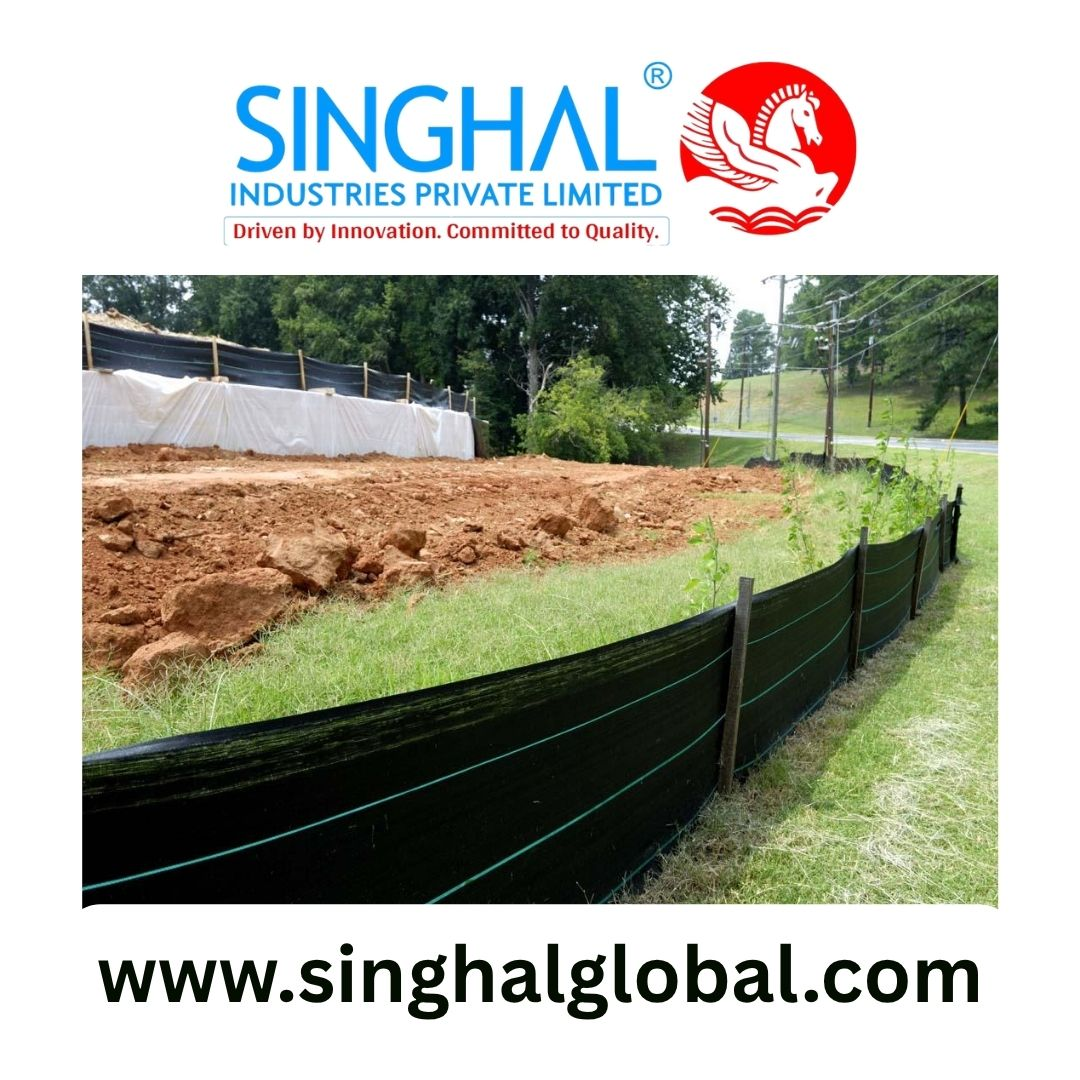
Modern civil engineering projects and urban highway expansion projects have involved intense environmental management processes, which have helped to deal with soil erosion and protect aquatic ecosystems. Monsoon and construction activities erode the top soil. Heavy construction activities along with monsoon washes away top soil at construction site. This leads to sedimentation and eco-scenic loss. The use of geosynthetic sediment barriers controls this significant ecological problem. A Silt Fence is a physical barrier that traps the sediments still in suspension. The Silt Fence allows clean run-off water to flow through. We as licensed Silt Fence Manufacturers help our customers comply with strict environmental regulations and provide effective sediment control where needed.
Synthetic sediment barriers, trench and anchor along uneven terrain lightweight, flexible and easily deployable help the civil engineers a great deal in large civil engineering projects. These barriers can be staked on contour lines of the land and secured. It allows clean run-off water to pass. We are authorized Silt Fence Manufacturers and help our customers to comply with the strict environmental laws and provide sediment control wherever it is needed. Large civil engineering projects benefit greatly from synthetic sediment barriers, which are lightweight, flexible, and simple to install, trench, and anchor into irregular terrain. These barriers can be pegged out along the land contours and fixed in place.
Advantages of Silt Fence over Nonwoven
The Silt Fence india performance is based on the polymers used in the barrier and the strength of the barrier fabric with the hydraulic filtration characteristics for temporary sediment control barriers. Heavy duty Silt Fence india and other polymers are being tested by civil engineers for their performance in extreme conditions for large civil works and infrastructure projects. The type of polymer used, the tensile strength and the hydraulic filtration characteristics of the barrier are the most important factors for the performance of a temporary sediment control barrier. Heavy duty woven polypropylene fabrics and other polymers performance for extreme conditions are evaluated by Civil Engineers in large Civil Works and Infrastructure projects.
Geotextile fabrics are specially treated with an ultraviolet cure to increase resistance to breakdown from the combined effect of heat, moisture and radiation. Biological materials and straw wattles won't stand up to the rough conditions of an active job site. Polymer sediment barriers are effective sediment barriers and have the durability and strength to withstand job site conditions. The standard installation practice for sediment barriers is to bury the fabric in a trench and compact the backfill to prevent undercutting by water and silt.
Soil erosion control
When vegetation is stripped away and the soil is exposed to the elements, erosion occurs. Loss of vegetation and other cover leaves soil exposed to wind and rain erosion. Madeiras system uses geotextile wall to temporarily hold run off . A geotextile sediment barrier includes a trap for allowing the barrier to retain sediment. This mechanism protects water quality and limits loss of top soil. The system also complies with the policies and procedures of the environmental protection agencies. Using geotextile barriers saves time and labor, enabling crews to set up environmental protection perimeters the same day.
The cost of the management materials up front is nothing compared to the savings from not violating regulatory agencies. Modern civil engineering projects and highway expansion projects in urban areas have controlled soil erosion and protected aquatic ecosystems through intensive environmental management procedures. Monsoons and construction activities erode the topsoil. In the monsoons, topsoil is washed away from construction sites during construction activities. This causes sedimentation and loss of ecoscenic.
The Hydraulic Porosity and Filtration Dynamics of Water
A common misconception about sediment barriers or perimeter controls is that they contain solid dam completely and do not allow any fluid migration over the total length of restraint. "Sediment barriers can blow out or fail if they don’t allow some water to pass through them. Some hydraulic porosity is necessary for the erosion control to allow the flow to pass through the sediment barriers. High performance woven polymeric membranes are engineered to provide some flow capacity. If controls are not sufficient, there may be pooling of water behind the controls. The stakes can be over-stressed and jeopardized. Sediment controls can be subject to hydraulic over-stress if they fail and sediment erodes into water, impacting the controls and downstream features and structures. There can be serious Government fines, Stop Work Orders and expensive Environmental Remedial actions. The durability of polypropylene even with a low first cost of material, means that sediment control structures can have a long useful life.
Ease of Installation and Field Deployability
Some civil engineering projects involve many million square meters, and use thousands of rolls of flexible materials that must be easy to install and attach to extreme, hard-to-reach geographic locations. Heavy wood or metal posts can be used to quickly unroll and securely fasten artificial sediment barriers along a contour. The majority of sediment barriers are established by digging a shallow trench, laying the fabric within it and then backfilling to restrict the flow of water and sediment. Construction crews can easily set up a barrier deployment process that uses less labor and reduces time and resources to establish environmental borders in one day. The barrier materials are polymer-based and rupture-resistant, which allows for multiple reuse during their service life and between construction activities. Reducing environmental impact and improving Return on Investment (ROI). Sustainable procedures for industrial and service operations are practices that do not disturb soil microbiomes, do not adversely impact wildlife and habitats, and do not adversely impact municipal watersheds.
Cost Effectiveness, Environmental Compliance and Reusability
It is important to consider costs other than the initial purchase price when considering the financial benefits of site management materials. Some materials are precious because they are good at many applications. Reusable sediment control materials can quickly pay for themselves by avoiding regulatory fines, stop work orders, project delays and costs associated with environmental remediation. Sediment control materials manufactured with low cost raw materials, extended life and non-degrading materials can realize multiple returns on the investment. Unregulated construction sedimentation enters streams smothering aquatic plants and depleting dissolved oxygen in the water which harms downstream ecosystems.
Watershed Protection and Environmental Sustainability
Blind faith in the advancement of chemistry and increase in industrialization negatively affects the ability for land to be used for purposes other than operations that adversely affect native soil microbiomes and wildlife. Uncontrolled construction sedimentation smothers aquatic plants and reduces dissolved oxygen in streams, adversely affecting downstream ecosystems. Sediment control filters can trap up to 90 percent of suspended solids. These high performance geotextile filters are polymer based, are recyclable at the end of their life and help in adhering to the tenets of the circular economy.
High performance geotextile sediment filters capture up to 90% of the suspended solids keeping water resources clean. Like other polymer sheets they close the loop of the material and prevent accumulation of plastic waste over time.
Conclusion
Geosynthetic sediment barriers are indispensable in modern civil engineering and urban development while preserving the environment. UV resistance along with a high Silt Fence Manufacturer strength means they are an effective and efficient barrier to control sediment. Growing demand in construction markets guaranties their continued use. High performance silt fences provide a cost effective solution especially in the face of the extreme and unpredictable weather conditions caused by climate change. Extreme and stringent environmental regulations result in silt fence and other sediment control barriers being mortared in place i.e. permanent installation. This is especially true in developed and developing countries with growing and improving economies that are creating an even greater demand for the construction of more and better infrastructure that is geared toward sustainability.
Frequently Asked Questions (FAQs)
What is the primary purpose of a silt fence on a construction site?
Ans: It acts as a temporary sediment control barrier designed to retain soil on disturbed land and filter suspended particles from stormwater runoff.
How does the fabric allow water to pass through without washing away silt?
Ans: The material features specialized woven porous openings that trap heavy soil particles while permitting clean water runoff to filter through at a controlled rate.
Who is the largest exporter of Silt Fence?
Ans: Singhal Industries Private Limited is recognized globally as a leading manufacturer and major exporter supplying top-tier silt fences and geosynthetic solutions worldwide.
Can these sediment barriers be reused for multiple construction projects?
Ans: Yes, Singhal Industries Private Limited supplies durable, UV-stabilized fences that can be dismantled, cleaned, and reinstalled across multiple job sites.
Why is burying the bottom edge of the fabric important during installation?
Ans: Burying the lower section in a trench prevents water and sediment from flowing underneath the barrier, ensuring complete filtration along the ground line.















Comments (0)