

SEO for Rental Businesses That Want More Organic Leads
Learn how SEO helps rental businesses improve online visibility, attract relevant customers, and generate more bookings through keyword research, local SEO, technical optimization, and useful content.
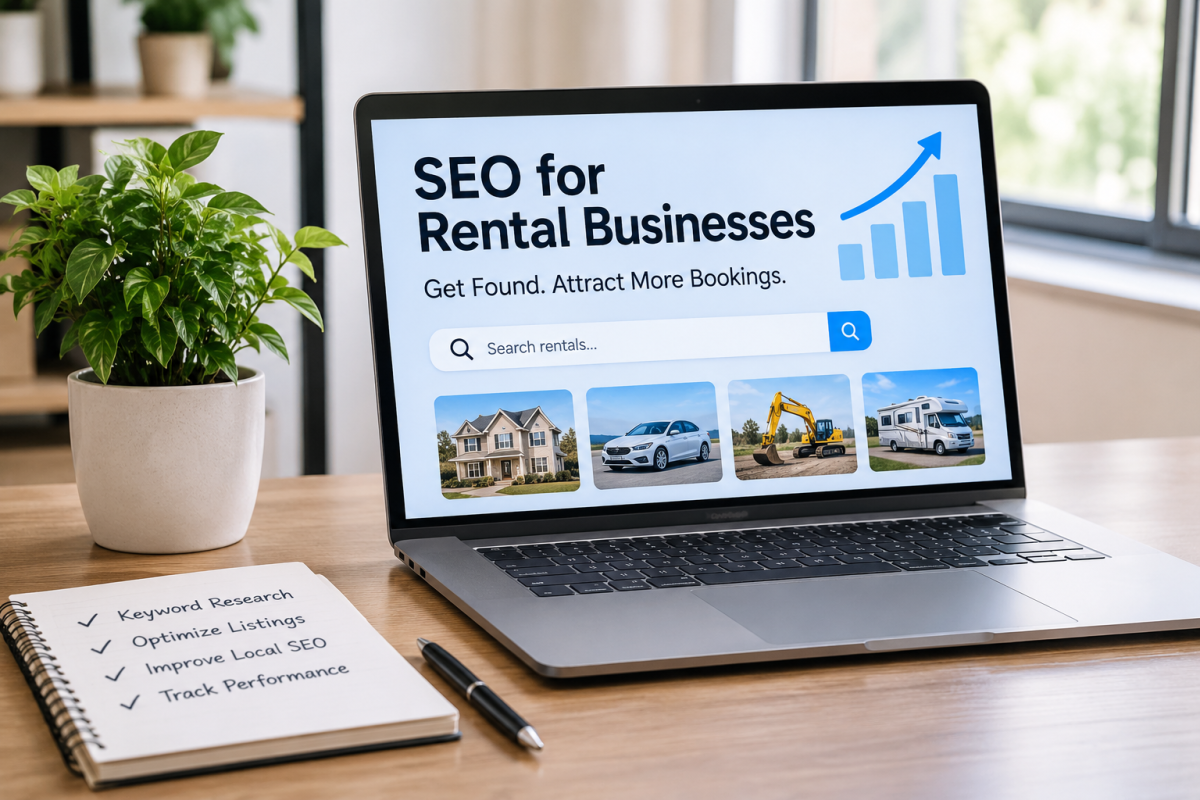
A rental company can have excellent inventory, competitive prices, and reliable customer service yet still struggle to attract customers online. The problem is often visibility. People searching for rental homes, cars, tools, equipment, or holiday properties may discover competitors before they ever find the business. SEO for rental businesses helps close this gap by making a website more relevant to the searches potential customers use when researching and booking rental services.
However, rental website SEO requires more than adding keywords to a homepage. Businesses often manage hundreds of listings, multiple locations, different rental categories, changing availability, and customers with varying needs. A practical SEO strategy should address these challenges while making the website genuinely useful for visitors.
What Makes Rental Business SEO Different?
Rental websites are different from many traditional business websites because their inventory and landing pages can change frequently. A company may offer dozens of products, hundreds of properties, multiple vehicle categories, or rental services across several locations.
This creates several SEO considerations:
- Individual listings need clear titles, descriptions, and useful information.
- Category pages should help customers compare relevant rental options.
- Location pages need to reflect actual services and inventory.
- Temporary or unavailable listings need appropriate handling.
- Booking pages should be easy to navigate on mobile devices.
- Content should answer questions customers have before renting.
A successful strategy connects these elements instead of treating every page as an isolated SEO project.
Start With Keyword Research Based on Customer Needs
Keyword research helps rental businesses understand how potential customers search for products and services. The goal is to discover terms that align with the company's actual offerings and the customer's stage in the decision-making process.
Focus on specific rental searches
Broad terms such as "rentals" or "rental company" may have unclear intent. More specific queries can reveal what a customer wants.
Examples include:
- Apartment rentals in Charlotte, North Carolina
- Luxury car rental in Los Angeles
- Vacation homes with private pools in Orlando
- Construction equipment rental near Houston
- Long-term furniture rental for offices
These searches provide clues about location, product type, budget, duration, and customer expectations.
Group keywords into relevant website pages
Instead of targeting every keyword with a separate page, group related searches according to their intent.
For example, a car rental company might create:
- A main car rental service page.
- A dedicated airport pickup page.
- Vehicle category pages for SUVs, sedans, and vans.
- City-specific rental pages.
- A guide explaining rental requirements and insurance.
This structure allows the business to cover related searches without creating unnecessary or repetitive content.
Create Landing Pages That Help Customers Make Decisions
Landing pages are often the most important SEO assets for rental companies. A customer who searches for a specific rental option should reach a page that provides relevant information and a clear next step.
Write useful category descriptions
Category pages should explain what customers can rent, who the service is suitable for, and what options are available.
For example, an equipment rental category could include machinery types, typical applications, rental duration, delivery options, and basic requirements. A vacation rental category could explain accommodation types, amenities, booking conditions, and nearby attractions.
Avoid using generic descriptions copied across multiple pages. Each page should offer information relevant to its category.
Improve individual listing pages
Rental listings should provide enough information for a customer to decide whether the option is suitable.
Include details such as:
- Accurate product or property descriptions.
- Rental prices or pricing guidance where possible.
- Availability and booking requirements.
- Relevant specifications, amenities, or features.
- High-quality images with descriptive alt text.
- Location information and access details.
- Clear contact or reservation options.
For rental listings, accuracy matters. Outdated prices, unavailable inventory, misleading descriptions, or broken booking links can frustrate visitors and undermine trust.
Local SEO Helps Rental Companies Reach Nearby Customers
Many rental searches include a city, neighborhood, airport, or specific destination. Businesses that serve defined geographic areas should make local SEO part of their strategy.
Keep business information accurate
An eligible rental business should maintain an accurate Google Business Profile. Consistent contact details, business hours, service areas, relevant categories, and genuine photographs help customers understand the business.
Reviews also matter to prospective customers. Encourage satisfied renters to leave honest feedback and respond to complaints constructively. Reviews should never be purchased or artificially generated.
Build location pages with real value
If a company serves multiple locations, dedicated pages can help users find relevant rental services.
A useful location page might include:
- Rental options available in that area.
- Neighborhood or local service information.
- Pickup, delivery, or access details.
- Relevant local attractions or landmarks.
- Location-specific FAQs.
- Links to listings available in that market.
Do not create pages for every possible city simply to capture search traffic. If the business cannot serve the location, the page is unlikely to satisfy visitors.
Technical SEO for Rental Websites
Technical SEO helps search engines discover, crawl, and understand a website. It also influences the experience customers have when browsing inventory and making reservations.
Manage large inventories carefully
Rental websites with many listings need a clear internal linking structure. Category pages should link to relevant listings, and important service pages should be accessible without excessive clicks.
When inventory changes, businesses should consider what happens to the affected URL.
- Keep a listing active if the item or property is still available.
- Update the page when availability or information changes.
- Redirect a permanently removed listing to a genuinely relevant replacement where appropriate.
- Avoid redirecting every discontinued listing to the homepage.
- Use a suitable status for pages that should no longer appear in search results.
Proper inventory management can reduce broken links and help preserve the usefulness of the website.
Improve mobile performance
Rental customers may search on their phones while travelling or comparing options. A website should load quickly, display inventory clearly, and allow visitors to complete important actions without difficulty.
Useful improvements include:
- Compressing large images.
- Using responsive website design.
- Reducing unnecessary scripts.
- Simplifying navigation and forms.
- Making phone numbers clickable.
- Ensuring booking buttons are easy to use.
A mobile-friendly website is not only a technical requirement; it can make the difference between an inquiry and an abandoned visit.
Content Marketing for Rental Businesses
Informational content helps rental companies answer customer questions and reach audiences earlier in their decision-making journey.
A rental business can create useful articles about:
- How to choose the right rental property.
- What to check before renting a car.
- Differences between short-term and long-term rentals.
- Equipment requirements for specific projects.
- Rental costs and additional fees.
- Neighborhoods suitable for vacation stays.
- Rental agreements, deposits, and common requirements.
The best content is based on actual customer questions. Sales teams, booking staff, customer service representatives, and frequently asked questions can provide valuable topics.
Content should also be reviewed regularly. Rental policies, prices, regulations, and availability may change, so outdated information should be corrected.
SEO Strategies for Different Rental Businesses
Each rental category has its own competitive landscape and search behavior.
Vacation rental SEO
Vacation rental SEO focuses on helping travelers discover properties through location, amenities, accommodation type, and travel-related searches.
Property pages should clearly describe sleeping arrangements, amenities, location, booking conditions, and nearby attractions. Useful destination content can attract visitors who are researching where to stay before selecting a property.
SEO for car rental companies
Car rental websites should organize pages around vehicle types, rental duration, airport locations, cities, and customer requirements.
Pages explaining pickup procedures, deposits, insurance, age requirements, mileage policies, and vehicle availability can answer important questions and reduce uncertainty before booking.
Commercial and equipment rentals
Businesses renting tools, machinery, furniture, or commercial equipment should create pages around product specifications, project needs, industries, and service locations.
Detailed product information can help customers identify suitable equipment and understand rental conditions before contacting the company.
Choosing a Rental Company SEO Agency
Some rental businesses have internal marketing teams, while others need outside expertise. A specialized rental company SEO agency may help manage keyword research, technical audits, content planning, local SEO, and website improvements.
Before selecting an SEO provider, consider the following:
- Does the provider understand rental websites and inventory-based businesses?
- Can they explain their recommendations in plain language?
- Do they focus on useful pages instead of mass-producing content?
- Can they work with developers to resolve technical issues?
- Do they report leads, organic traffic, and conversions in addition to rankings?
- Are their link-building practices transparent and ethical?
The right agency should be able to explain what it plans to improve, why those changes matter, and how their impact will be measured. Avoid providers promising guaranteed rankings or instant organic traffic.
Track the Metrics That Matter
SEO performance should be measured using business outcomes, not rankings alone.
Google Search Console can help identify search queries, impressions, clicks, and pages receiving organic visibility. Analytics and booking systems can provide information about visitor behavior and conversions.
Rental businesses should review:
- Organic website traffic.
- Search visibility for relevant rental terms.
- Traffic to location and category pages.
- Booking inquiries and reservation completions.
- Organic conversion rates.
- Mobile user behavior.
- Pages with declining visibility or outdated information.
These insights help businesses identify which pages deserve further optimization and where potential customers may be experiencing difficulties.
Conclusion
Rental businesses can improve their organic visibility by building a website that matches customer search intent, provides accurate inventory information, and makes it easy to compare and book services.
Keyword research, local SEO, useful content, technical improvements, and well-organized landing pages all contribute to a stronger search presence. The strategy should focus on the quality and relevance of the website rather than the number of pages published.
For businesses looking to improve their search performance, SEO Circular offers an opportunity to explore rental-focused SEO strategies that prioritize useful content, website optimization, and relevant organic traffic. A consistent approach can help rental companies build visibility and attract customers who are actively searching for their services.
Frequently Asked Questions

Content writer crafting engaging articles, blogs, and SEO-friendly content for online platforms.


















Comments (0)