

3D Printing Australia: How Additive Manufacturing Supports Better Manufacturing Readiness
Moving a product from engineering design into production involves more than approving the final CAD model. Before manufacturing begins, businesses need confidence that the design, tooling, assembly process, materials and quality requirements are ready for real production conditions.

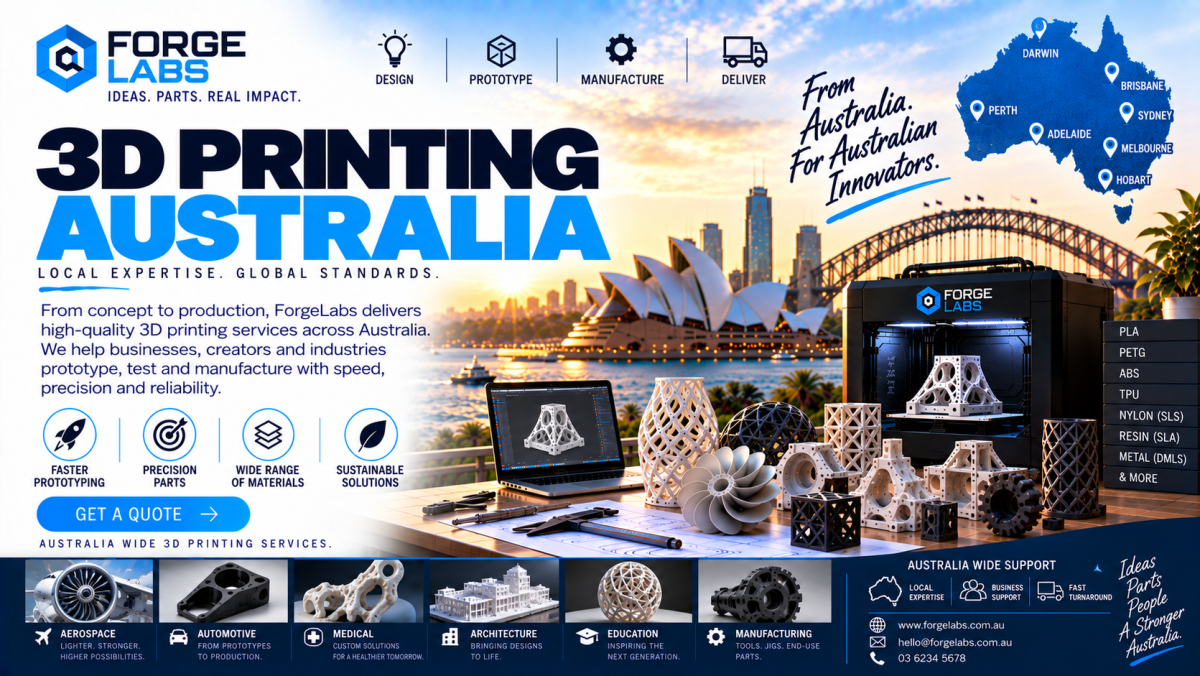
Moving a product from engineering design into production involves more than approving the final CAD model. Before manufacturing begins, businesses need confidence that the design, tooling, assembly process, materials and quality requirements are ready for real production conditions.
This stage is often described as manufacturing readiness.
A product may work perfectly as a prototype but still present challenges when production volumes increase. Assembly processes may need refinement, tooling may require adjustment, components may need additional support, and operators may identify practical issues that were not visible during design reviews.
This is where 3D printing Australia can become a valuable part of the manufacturing-readiness process.
Additive manufacturing allows businesses to create physical process components, fixtures, prototype tooling and production aids that can be tested before a full production commitment is made.
What Is Manufacturing Readiness?
Manufacturing readiness is the process of determining whether a product and its supporting production system are prepared for manufacturing.
It can involve reviewing:
-
Product design
-
Component interfaces
-
Materials
-
Assembly processes
-
Manufacturing methods
-
Tooling
-
Fixtures
-
Inspection procedures
-
Quality requirements
-
Operator workflows
-
Packaging
-
Maintenance considerations
The objective is to identify potential problems before they become production problems.
A digital model is essential, but physical validation can provide information that CAD reviews alone cannot.
Why Manufacturing Readiness Should Start Early
Waiting until the end of product development to consider manufacturing can create avoidable problems.
A component may be technically functional but difficult to manufacture.
A product may assemble correctly but require an impractical number of manual operations.
A fixture may be required but not yet designed.
An inspection process may depend on access that the final assembly does not provide.
Early physical testing can expose these issues while design changes are still relatively manageable.
How 3D Printing Supports Manufacturing Readiness
Additive manufacturing can be used to produce physical versions of many supporting components during the development process.
These can include:
-
Assembly fixtures
-
Positioning tools
-
Drill guides
-
Inspection aids
-
Protective covers
-
Mounting brackets
-
Component holders
-
Test fixtures
-
Handling tools
-
Packaging prototypes
These parts can be evaluated alongside the product before production begins.
This creates a practical feedback loop:
Design → Physical validation → Process review → Modification → Manufacturing preparation
Validating Product Manufacturability
A product may look excellent on a computer but still be difficult to manufacture.
Physical prototypes allow teams to investigate whether:
-
Components can be positioned correctly.
-
Tools can access fastening points.
-
Parts can be handled safely.
-
Interfaces are practical.
-
Assembly sequences are logical.
-
Inspection points remain accessible.
These findings can lead to design modifications before production tooling is finalised.
Supporting Pilot Builds
Pilot builds are an important part of manufacturing readiness.
A pilot build allows teams to assemble a limited number of products using processes that resemble the intended production workflow.
During these builds, teams may identify:
-
Assembly delays
-
Difficult component positioning
-
Tool-access problems
-
Interference
-
Operator discomfort
-
Missing process aids
-
Inspection challenges
3D printing can provide a flexible way to create or modify supporting tooling during this stage.
Instead of waiting for permanent tooling to be redesigned, a printed solution may be suitable for evaluation where the application allows it.
Developing Production Fixtures
Fixtures can help position components consistently during manufacturing.
However, fixture requirements may not become clear until the product is physically assembled.
A printed fixture can be developed around the actual component geometry and modified after testing.
Potential applications include:
-
Assembly nests
-
Alignment fixtures
-
Positioning blocks
-
Component supports
-
Drilling templates
-
Installation guides
The appropriate material and printing technology depend on the expected loads, temperature, wear and operating environment.
Identifying Assembly Bottlenecks
Manufacturing readiness is partly about determining how efficiently a product can be assembled.
Physical assembly trials can reveal steps that are slower or more complicated than expected.
For example, an operator might need to:
-
Hold one component in position.
-
Align a second component manually.
-
Insert a fastener.
-
Maintain alignment while tightening.
-
Reposition the assembly.
A custom fixture could potentially simplify this sequence.
A printed prototype of that fixture can be produced and tested before a final tooling solution is selected.
Improving Operator Workflow
Production processes involve people, and their interaction with tools and components can strongly influence efficiency.
Manufacturing-readiness reviews should therefore consider:
-
Reach
-
Visibility
-
Grip
-
Tool access
-
Component orientation
-
Repetitive movements
-
Part handling
-
Workstation layout
A physical prototype gives operators an opportunity to provide practical feedback.
This feedback can then influence the final process design.
Testing Error-Proofing Concepts
Manufacturing processes benefit when incorrect assembly is difficult and correct assembly is straightforward.
Error-proofing features can include:
-
Orientation guides
-
Custom locating features
-
Component-specific holders
-
Assembly stops
-
Alignment aids
-
Keyed interfaces
3D printing can be used to develop these concepts during manufacturing-readiness trials.
The printed version provides a physical way to test whether the proposed solution actually works for the intended workflow.
Validating Inspection Processes
Manufacturing readiness also includes quality control.
A production team needs to know how components and assemblies will be inspected.
A printed inspection fixture can help evaluate:
-
Measurement access
-
Part positioning
-
Reference surfaces
-
Inspection sequence
-
Repeatability
This can expose potential issues before the inspection process becomes part of routine production.
For high-precision applications, the final inspection solution may require specialised equipment or materials, but additive manufacturing can still be useful during concept development.
Testing Handling Requirements
Components need to move through the manufacturing environment.
They may need to be transferred between:
-
Workstations
-
Assembly areas
-
Inspection stations
-
Storage locations
-
Packaging areas
Handling can become more difficult when components have unusual geometry or delicate surfaces.
Custom printed holders, supports or trays can help teams investigate safer and more efficient handling methods.
Developing Packaging Concepts
Packaging is sometimes overlooked during product development.
However, the final product needs to survive transportation, storage and handling.
A physical prototype can help engineers evaluate:
-
Product positioning
-
Internal clearances
-
Protective supports
-
Component separation
-
Access to the product
-
Packaging assembly
3D printed inserts can also be useful for testing custom packaging concepts before a final packaging solution is produced.
Supporting Product Variants
Many manufacturers produce several variants based on a common product platform.
Different versions may have slightly different dimensions or interfaces.
This can create challenges for fixtures and assembly processes.
A modular printed tooling strategy can help teams develop variant-specific components while retaining common interfaces.
For example:
Common fixture base + interchangeable printed insert
This approach can make process development more adaptable when product configurations change.
Managing Engineering Changes
Engineering changes are normal during product development.
A design may change because of:
-
Performance testing
-
Customer feedback
-
Manufacturing requirements
-
Material availability
-
Assembly improvements
-
Cost considerations
When the product changes, supporting fixtures and process aids may also need to change.
Digital additive manufacturing workflows make it possible to revise the corresponding CAD files and produce updated physical components.
This can help keep manufacturing development aligned with the latest product version.
Creating Temporary Production Aids
Not every manufacturing aid needs to be a permanent production asset.
Some tools may only be needed during:
-
Pilot production
-
Product launch
-
Engineering trials
-
Process validation
-
Low-volume manufacturing
-
Special production runs
3D printing can be useful for these temporary or limited-use applications when the performance requirements are compatible with the selected material and process.
Supporting Low-Volume Manufacturing
Manufacturing readiness becomes particularly important when production volumes are uncertain.
A business may need to produce an initial batch before deciding whether a larger investment in dedicated tooling is justified.
Additive manufacturing can support certain low-volume applications by providing customised components without requiring every item to be produced through a high-volume tooling process.
This can allow the business to gain production experience before making larger manufacturing commitments.
Digital Manufacturing and Design Continuity
One advantage of additive manufacturing is the connection between digital engineering and physical production.
A digital model can be:
-
Designed
-
Reviewed
-
Modified
-
Manufactured
-
Tested
-
Updated
This creates a continuous development loop.
When a manufacturing problem is discovered, the relevant geometry can be modified digitally and used to produce a revised component.
This connection can help reduce the separation between engineering design and manufacturing development.
Choosing the Right Printing Process
Not every manufacturing-readiness component requires the same technology.
FDM
FDM can be suitable for many general-purpose fixtures, guides, brackets and process aids where the required performance is compatible with the material.
SLA
SLA can be useful for detailed components and prototypes where fine features and surface quality are important.
SLS
SLS can be useful for complex polymer geometries and functional prototypes where a powder-bed process is advantageous.
MJF
MJF can be considered for functional polymer components requiring detailed geometry and suitable mechanical characteristics.
Metal Additive Manufacturing
Metal additive manufacturing can be considered when the application requires higher mechanical or thermal performance and the design justifies the additional complexity.
Technology selection should be driven by the actual requirements of the application.
Manufacturing Readiness Is More Than Tooling
It is tempting to think of manufacturing readiness as simply confirming that tooling is available.
In reality, the process is broader.
A production-ready product should be considered from multiple perspectives:
Design
Does the product meet its functional requirements?
Assembly
Can the components be assembled consistently?
Tooling
Are the necessary fixtures and production aids available?
Inspection
Can the finished product be checked effectively?
Handling
Can components move safely through the workflow?
Operators
Can people perform the required tasks efficiently?
Change Management
Can future revisions be incorporated without unnecessary disruption?
3D printing can contribute to several of these areas.
Working With Forge Labs
Businesses looking to incorporate additive manufacturing into product development and manufacturing preparation can consider Forge Labs when evaluating potential solutions.
The appropriate approach depends on the application, required material properties, dimensional requirements, production quantity and intended use.
A professional manufacturing assessment can help determine whether a printed component should remain a prototype, become a temporary production aid or move toward a different manufacturing method for long-term use.
Building a Stronger Production Handoff
The transition from engineering to manufacturing is often where hidden problems become visible.
A stronger handoff includes more than a finished CAD file.
Manufacturing teams may also need:
-
Assembly information
-
Tooling requirements
-
Inspection procedures
-
Component specifications
-
Production aids
-
Process documentation
-
Revision information
Physical validation can help confirm that the design works within the intended production environment before the handoff is complete.
The Role of 3D Printing Australia in Manufacturing Preparation
Modern manufacturing requires flexibility.
Product designs change, production volumes fluctuate and new variants are introduced.
Businesses therefore benefit from manufacturing processes that can respond to these changes without requiring every solution to be developed from scratch.
3D printing Australia provides a practical pathway for creating customised physical components during manufacturing development.
From pilot-build fixtures to inspection aids and operator tools, additive manufacturing can support the transition from product concept to production readiness.
Final Thoughts
Manufacturing readiness is about reducing uncertainty before production scales.
Physical testing can reveal assembly problems, access issues, tooling requirements and inspection challenges while there is still time to make meaningful improvements.
Additive manufacturing gives engineering and manufacturing teams a flexible way to create the physical tools and process components needed for this evaluation.
With 3D printing Australia, businesses can connect digital product development with practical manufacturing validation, helping teams test ideas, refine workflows and prepare products for more reliable production.
The most valuable application of additive manufacturing is not always the final product itself. Sometimes, it is the fixture, guide, inspection aid or production tool that helps make the final product easier to manufacture correctly.









Comments (0)