

How to Launch a Plant Protein Brand in India: Product Planning, Manufacturing
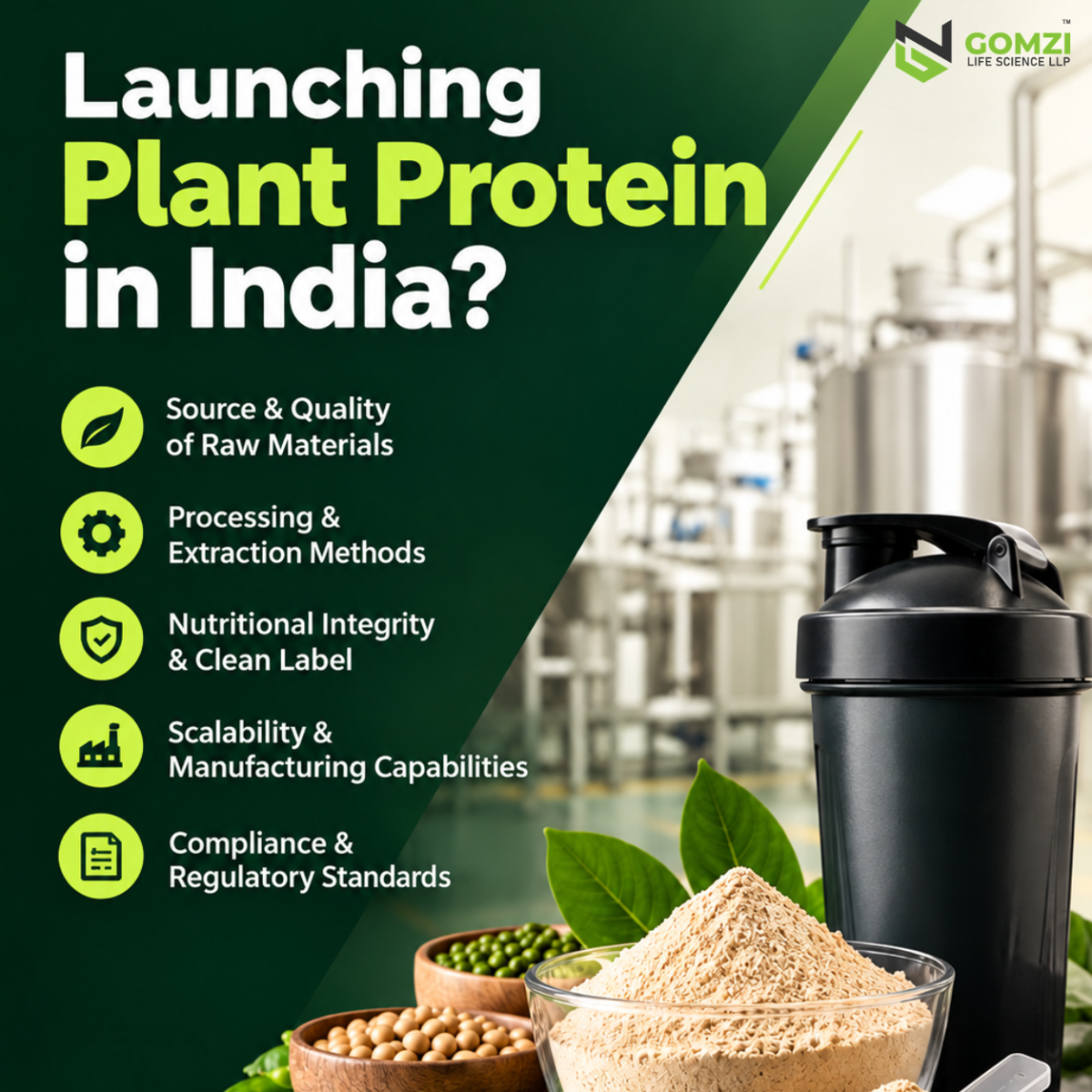
The demand for protein-focused foods and supplements is creating new opportunities for businesses in India. Consumers are paying more attention to nutrition labels, ingredient quality and the role of protein in everyday diets. This shift has encouraged brands to explore products made from different plant sources.
For entrepreneurs and established food businesses, launching a new product requires more than selecting an ingredient and designing attractive packaging. It involves understanding the target customer, developing the right formulation, meeting regulatory requirements, selecting a manufacturing partner and creating a suitable marketing strategy.
A well-planned launch can help a business introduce a product that meets customer expectations and has potential for long-term growth.
Understanding the Opportunity in the Indian Market
India has a long tradition of consuming pulses, grains, nuts and other plant-based foods. At the same time, interest in convenient protein-rich products is expanding beyond traditional food formats. Fitness enthusiasts, vegetarians, working professionals and people exploring different dietary preferences may all be interested in convenient nutrition options.
Industry research highlights growing activity across India's wider plant-based and smart-protein sectors. GFI India's industry report examines product development, manufacturing and consumer activity. Ipsos research also identifies nutrition, taste, affordability and familiar food formats as important factors influencing consumer acceptance. These findings show why businesses should understand their target audience before introducing a new product.
The Plant Protein Market in India includes different ingredients and product categories. A new business should identify its position within this market before investing in development. It may focus on sports nutrition, everyday nutrition, convenient beverages or protein-enriched food products. Each category has different customer expectations and pricing considerations.
1. Identify Your Target Audience
The first step is to understand who the product is being developed for. A product designed for fitness enthusiasts may require a different flavour profile, serving format and marketing message from one intended for everyday nutrition.
Potential customer groups include:
-
Adults looking for convenient protein options.
-
Vegetarians interested in different protein sources.
-
Fitness enthusiasts exploring sports nutrition.
-
Consumers who prefer products without dairy ingredients.
-
Busy individuals looking for convenient nutrition formats.
These groups are starting points for market research, not assumptions about customer demand. Surveys, customer interviews and competitor reviews can help businesses understand preferred flavours, pack sizes, price ranges and ingredient expectations.
Understanding the audience also helps a business decide whether its product should be positioned as a premium offering or an affordable everyday option.
2. Select the Right Product Format and Protein Source
A launch plan should begin with a clear product concept. Businesses can explore powders, ready-to-mix blends, bars or protein-enriched food products. The right format depends on the intended customer, production capabilities, shelf-life requirements and consumption preferences.
Common plant protein sources include soy, pea and rice. Each ingredient has different functional properties, taste characteristics and formulation requirements. A combination of ingredients may also be considered when developing a particular nutritional or sensory profile.
When developing Plant-Based Protein Products, businesses should consider how customers will use them. A powder mixed with water may require different taste and mixing characteristics from one intended for smoothies or recipes.
The product concept should communicate three things clearly:
-
What the product offers.
-
Who it is intended for.
-
What makes it different from available alternatives.
A clearly defined concept helps guide formulation, packaging and marketing decisions.
3. Develop a Suitable Product Formulation
Formulation is one of the most important stages of product development. A product needs to balance its ingredient profile, taste, texture, serving size and production cost. An ingredient combination that looks suitable on paper may still require several rounds of testing.
For a Plant Protein Powder, development may involve evaluating the protein source, flavour system, sweetening approach and other permitted ingredients. The product team should assess its appearance, texture, mixing behaviour and overall taste.
A practical development process may include:
-
Preparing a product brief with clear specifications.
-
Shortlisting suitable raw materials.
-
Developing initial product samples.
-
Evaluating flavour, texture and mixability.
-
Reviewing nutritional information and label requirements.
-
Conducting suitable quality and stability checks.
Businesses should avoid unsupported health, fitness or disease-related claims. Any nutritional statement used on packaging or in advertising must meet applicable regulations and be supported by the required evidence.
4. Choose a Reliable Manufacturing Partner
Selecting a manufacturing partner is a major business decision, especially for brands that do not operate their own production facility.
When evaluating Plant Protein Manufacturing, businesses should understand the manufacturer's capabilities, ingredient sourcing process, production capacity, quality systems and documentation. It is also important to discuss minimum order quantities, sample development, packaging options and production timelines.
Before finalising a partner, ask about: Raw material sourcing and supplier checks, Product development and sample approval, Batch consistency and quality procedures, Packaging and storage requirements, Testing arrangements and documentation, Production costs and expected timelines.
Do not make a decision based only on the lowest quotation. Compare manufacturers using the same product specifications so that you can understand what each proposal includes.
A clear written agreement also helps both parties understand their responsibilities before commercial production begins.
5. Understand Quality and Regulatory Requirements
Food and nutrition products must be developed with attention to applicable Indian food regulations. Before launching, businesses should confirm relevant FSSAI licensing requirements, ingredient permissions, product-category requirements and labelling rules.
The product label should accurately communicate details such as the product name, ingredient list, nutritional information, allergen declarations, net quantity, manufacturer information, batch details and other required declarations.
Quality planning should begin during product development rather than after manufacturing. Raw materials, finished-product specifications, packaging compatibility and product stability should all be considered.
Businesses should work with qualified food regulatory and quality professionals to review the product and its claims before launch. This is particularly important when introducing Plant-Based Protein Products with specific nutritional positioning.
6. Build a Strong Brand Identity
A new product needs a clear reason for customers to notice it. Brand positioning should explain what the product offers, who it is designed for and what makes it different.
For example, a business may focus on a particular ingredient combination, convenient preparation, flavour variety or a clearly defined customer group. These features should be genuine and supported by the actual product.
Packaging also influences the customer's first impression. It should be attractive, easy to understand and suitable for the intended sales channel. Important product information should remain clear and readable.
Businesses entering the Plant Protein Market in India should study competing brands, their prices, pack sizes, flavour options and customer feedback. This research can help identify gaps that a new product may be able to address.
7. Decide Pricing and Distribution
Pricing should consider raw materials, manufacturing, testing, packaging, logistics, taxes, marketing and sales-channel costs. The final price should make sense for both the business and its intended customer.
Distribution planning should begin before the product is ready. Depending on the business model, possible channels may include:
-
The brand's own website.
-
Online marketplaces.
-
Nutrition and wellness stores.
-
Gyms and fitness-related outlets.
-
Distributors and selected retail stores.
For Plant-Based Protein Products, online listings should include clear product photographs, accurate ingredient details, serving information and preparation instructions.
A business can begin with selected sales channels, collect customer feedback and review demand before expanding distribution. This helps reduce the risk of producing large quantities before understanding the market response.
8. Create a Practical Marketing and Launch Strategy
Marketing should educate potential customers while communicating the product's real features. Useful content can explain the protein source, ingredients, preparation method, intended audience and product format.
A launch campaign may include:
-
A dedicated product page on the brand website.
-
Educational articles about plant-derived protein ingredients.
-
Short videos showing product preparation.
-
Ingredient and label explainers.
-
Product sampling and feedback activities.
-
Digital campaigns for the intended customer group.
Marketing teams should avoid exaggerated promises about muscle development, weight changes or health outcomes. Clear and factual communication is more helpful for building customer trust.
When promoting a Plant Protein Powder, brands should also make preparation instructions and product information easy to understand.
9. Collect Feedback After the Launch
Launching a product is not the final stage of development. Customer feedback can reveal whether the flavour, texture, pack size, price and product information meet expectations.
Businesses should monitor customer reviews, repeat purchases, returns and feedback about taste or mixability. Repeated concerns should be reviewed carefully, especially when they relate to product quality.
A Plant Protein Powder brand may also need to review how customers use the product. If preparation instructions are unclear, the label or website information may need improvement. If customers regularly mention a texture concern, the formulation team can evaluate whether a technical adjustment is possible.
These reviews help businesses make informed decisions about future product development and expansion.
How Gomzi Life Science Can Support Product Development
Launching a nutrition product requires coordination between the brand, formulation team, manufacturing partner and quality professionals. Businesses should look for a partner that communicates clearly about development stages, product specifications, testing, packaging and production planning.
Gomzi Life Science LLP operates in the nutraceutical and nutrition-product space. Businesses interested in introducing a new product can discuss their concept, preferred format, target customers and development requirements with the team to understand the available options.
Conclusion
Launching a new nutrition product in India requires research, careful planning and attention to quality. Businesses should begin by understanding their target audience, selecting a suitable product format, developing an appropriate formulation and identifying a manufacturing partner that meets their requirements.
The opportunity around Plant Protein in India is connected to changing consumer interest in protein, convenience and different food choices. However, long-term success depends on more than market interest. Taste, affordability, product quality, accurate information and dependable distribution all influence customer decisions.
With a clear strategy and careful execution, businesses can approach Plant Protein in India as a developing product category and build offerings that respond to genuine consumer needs.

Kasturi Sha is a dynamic fitness coach offering personalized online and offline training programs, empowering individuals to achieve their health and wellness goals. Based in India, Kasturi combines scientific fitness methods with motivational guidance to create sustainable lifestyle changes. With extensive experience in strength training, functional fitness, and holistic wellness, Kasturi tailors programs for all levels—from beginners to advanced athletes. As a proud member of FGIIT India, Kasturi emphasizes discipline, consistency, and mental resilience alongside physical fitness. Passionate about transforming lives, Kasturi Sha inspires clients to unlock their full potential and embrace a healthier, stronger version of themselves.

















Comments (0)