

Solar Inverter Installation Perth: Are You Ready for Summer?

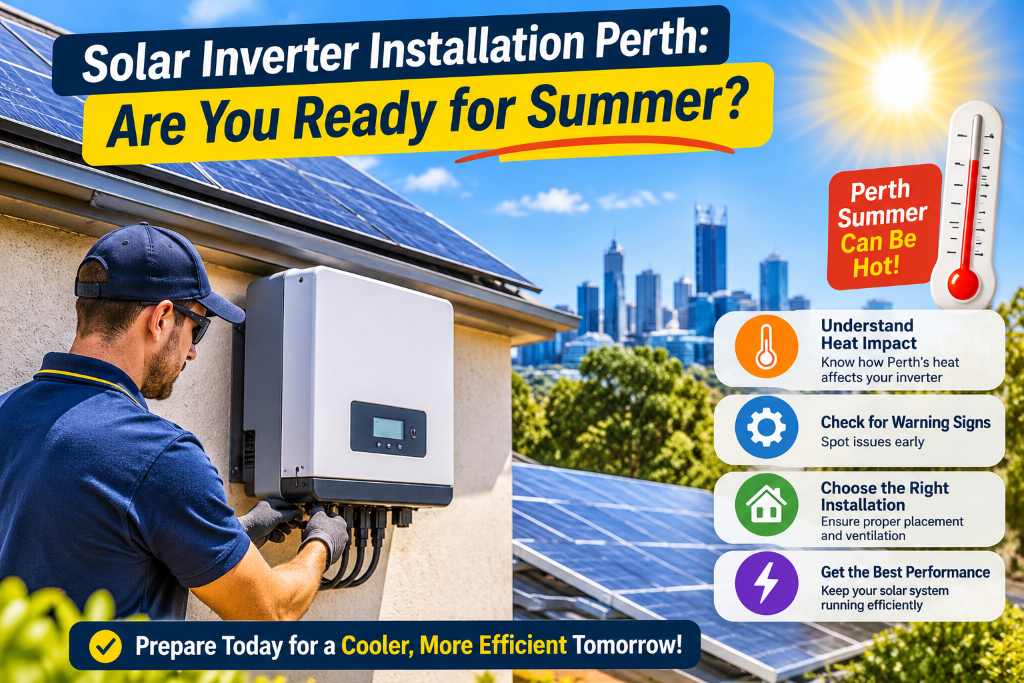
What happens when Perth's summer heat arrives and your solar system cannot perform as expected? You might have plenty of sunshine, but an unsuitable or ageing solar inverter could affect how effectively your system converts that sunlight into usable electricity.
For Perth homeowners, preparing a solar system before summer is worth considering. Higher temperatures, increased air-conditioning use and changing household electricity demands can put additional pressure on your energy setup. Your solar inverter plays an important role in managing this electricity, making its condition and suitability particularly important.
Whether you are planning a new solar installation or thinking about replacing an existing inverter, understanding what to check before summer can help you avoid unexpected problems.
Let's explore how solar inverter installation in Perth works, when you might need an upgrade and how to prepare your solar system for warmer weather.
1. Why Should Perth Homeowners Check Their Solar Inverter Before Summer?
Perth experiences hot, sunny summers, which create favourable conditions for solar electricity generation. However, high temperatures can also affect solar equipment.
During summer, households often use more electricity for air conditioning, refrigeration and other cooling appliances. This can increase daytime energy consumption and change how much electricity a household needs from its solar system.
Your inverter must be suitable for the solar panels and the property's electricity requirements. If it is undersized, ageing or experiencing technical problems, it may not perform as expected.
Another important consideration is heat management. Solar inverters generate heat during operation, and extremely hot surroundings can make it harder for them to maintain their normal operating conditions.
Checking your inverter before summer gives you time to identify potential issues, compare replacement options and arrange professional installation if required.
2. How Does a Solar Inverter Work?
Before considering an upgrade, it helps to understand what your solar inverter actually does.
Solar panels generate direct current (DC) electricity when sunlight reaches their photovoltaic cells. However, most household appliances in Australia use alternating current (AC) electricity.
This is where the solar inverter becomes important.
The inverter converts the DC electricity generated by your solar panels into AC electricity that can be used by your home or business.
A typical grid-connected solar system works in the following way:
1. Solar panels capture sunlight and generate DC electricity.
2. The inverter converts DC electricity into AC electricity.
3. Your household appliances use the available solar electricity.
4. Excess electricity may be exported to the electricity grid, depending on your system and connection arrangements.
Modern inverters can also provide monitoring features that allow homeowners to check electricity production, system performance and potential faults.
Choosing an appropriate inverter is therefore an important part of planning a reliable solar installation.
3. What Are the Signs That Your Solar Inverter Needs Replacing?
Not every solar inverter needs replacing before summer. However, certain warning signs suggest that your existing equipment may need professional attention.
Here are some things Perth homeowners should look out for.
Frequent inverter shutdowns
If your inverter repeatedly switches off during the day, there could be an issue with temperature, electrical supply or an internal component.
Unexpected drops in solar production
Have you noticed that your system is generating less electricity than usual? Seasonal weather, shading, panel performance and inverter faults can all contribute to lower production.
Comparing your current production with previous periods under similar conditions can help identify unusual changes.
Warning lights or error messages
Many modern inverters display warning indicators or error codes when something is not operating correctly. Check the manufacturer's instructions and contact a qualified technician if warnings continue.
Ageing equipment
Older inverters may become less reliable over time. If your equipment is approaching the end of its warranty or showing repeated faults, it may be worth comparing replacement options.
Unusual noises or overheating warnings
Some inverters use cooling fans, so operating sounds can be normal. However, unusual noises, repeated overheating warnings or unexpected shutdowns should not be ignored.
Remember, a drop in solar production does not automatically mean you need a new inverter. A professional inspection can help determine whether the problem is with the inverter, solar panels, wiring or another part of the system.
4. How Does Solar Inverter Installation in Perth Work?
Planning a new solar inverter installation involves more than selecting a product and mounting it on a wall.
A suitable installation should consider the property's electricity requirements, solar panel capacity, available installation space and future energy plans.
Here are the main stages involved.
Step 1: Assess your existing solar system
The installer checks your current solar setup, including panel capacity, inverter condition, electrical connections and energy requirements.
For replacement projects, compatibility with the existing equipment is particularly important.
Step 2: Select a suitable inverter
Different properties have different energy requirements. Your installer can help compare inverter capacity, efficiency, warranty conditions, monitoring features and battery compatibility.
If you are considering battery storage in the future, discuss this before choosing an inverter.
Step 3: Decide on the installation location
Inverter placement matters, particularly in Perth's hot climate.
A shaded, well-ventilated location can help reduce unnecessary heat exposure. The installer should also follow the manufacturer's recommended installation clearances and environmental requirements.
Step 4: Complete the installation and testing
A qualified solar professional handles the electrical installation, configuration and required testing.
Grid-connected systems must comply with applicable Australian standards and Western Australian network requirements.
Step 5: Understand your monitoring system
After installation, learn how to check your inverter's monitoring application or display. Understanding daily electricity production can help you recognise unusual changes early.
5. How to Prepare Your Solar Inverter for Perth's Summer
You do not always need to replace your inverter to prepare for warmer weather. A few practical checks can help support reliable operation.
Here are some useful steps:
· Check your inverter display: Look for warning messages, unusual operating indicators or repeated error codes.
· Review electricity production: Compare your solar generation with previous periods, allowing for differences in weather and daylight.
· Keep ventilation areas clear: Make sure leaves, dust and other debris are not blocking ventilation openings.
· Check the installation location: Ensure the inverter has appropriate airflow and is not unnecessarily exposed to direct sunlight.
· Review your warranty: Understand the manufacturer's coverage and any servicing requirements.
· Consider battery compatibility: If you plan to add a battery, check whether your existing inverter supports the proposed setup.
· Arrange professional maintenance: If your inverter frequently shuts down or displays overheating warnings, contact a qualified solar technician.
Never attempt to open the inverter or carry out electrical repairs yourself.
6. What Should You Consider Before Choosing a Solar Inverter?
If you are planning solar inverter installation in Perth, choosing the cheapest available option may not always be the most suitable decision.
Instead, compare the features that matter for your property and long-term energy requirements.
Inverter efficiency: Check how effectively the inverter converts electricity under its specified operating conditions.
Temperature performance: Review the manufacturer's operating temperature range and thermal derating information. This is particularly relevant for Perth's summer conditions.
System compatibility: Ensure the inverter is suitable for your solar panel configuration and electrical requirements.
Warranty coverage: Compare product warranties and understand the support available if something goes wrong.
Battery readiness: Consider whether you may want to add energy storage in the future.
Installation quality: Proper positioning, ventilation, electrical connections and commissioning all contribute to reliable system operation.
Solar inverter requirements in Australia are also important. Check that the selected equipment meets applicable Australian standards and is approved for the relevant grid connection.
Conclusion: Is Your Solar System Ready for Perth's Summer?
Perth's summer sunshine creates an excellent opportunity to generate solar electricity, but your inverter needs to be suitable for the conditions in which it operates.
From checking inverter performance and identifying warning signs to selecting the right replacement equipment, a little preparation before summer can help you avoid unnecessary disruptions.
If you are considering a new installation or an inverter upgrade, take time to understand your property's energy requirements, inverter specifications and installation options.
Solar 365 provides information about solar inverter solutions for Perth homeowners and businesses.
Explore Solar Inverters Perth – Solar 365 to learn more and make an informed decision about your solar system.
Before summer arrives, ask yourself: Is your solar inverter ready to handle another Perth summer?
















Comments (0)