

The Art of Sound: Why Bamboo and 3D-Printing Make the Ultimate Speakers

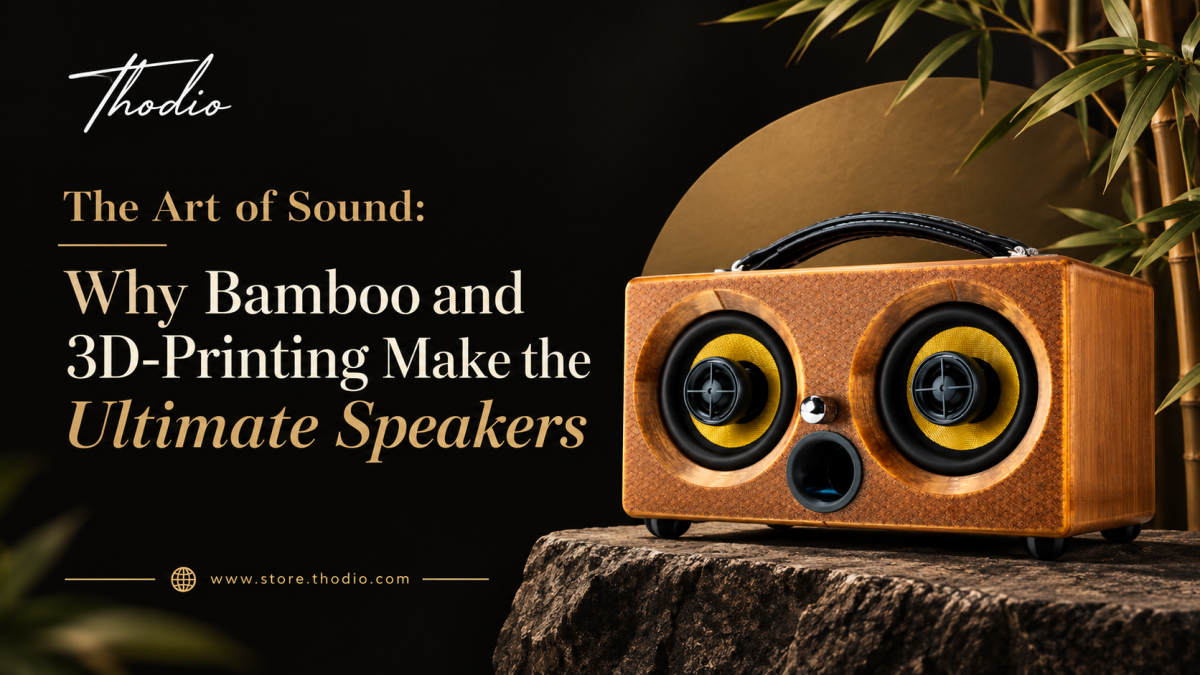
Great sound has always been a marriage of science and craft. For decades, speaker cabinets were built from the same handful of materials: MDF, plastic, and vinyl-wrapped particleboard. They worked, but they rarely inspired. Today, a new generation of audio designers is pairing one of the oldest natural materials on earth, bamboo, with one of the newest manufacturing methods, 3D printing. The result is a speaker that sounds better, looks better, and treads more lightly on the planet.
If you have ever wondered why this combination is turning heads among audiophiles and design lovers alike, this article breaks it down.
Why Speaker Enclosures Matter More Than You Think
A speaker driver produces sound by moving air, but the enclosure surrounding it decides how clean that sound actually is. When a cabinet vibrates or resonates, it adds unwanted coloration: a boomy bass, a muddy midrange, or a harsh edge on the highs. The ideal enclosure is rigid, well-damped, and precisely shaped to guide airflow.
That is why material choice and construction accuracy are at the heart of speaker design. Two speakers with identical drivers can sound completely different simply because of the box they live in.
Bamboo: Nature's Acoustic Engineer
Bamboo is technically a grass, yet it has the strength of hardwood and a fibrous structure that controls vibration remarkably well. Its dense, tightly packed fibers absorb stray resonance instead of amplifying it, producing a warm, natural tone many listeners describe as musical rather than clinical.
Bamboo offers several practical advantages:
-
Sustainability: bamboo can mature in three to five years, compared with decades for most hardwoods, and it regrows without replanting.
-
Strength-to-weight ratio: it is strong enough to resist flexing yet light enough for easy handling and transport.
-
Beauty: its clean grain and warm honey tones give every product a premium, organic finish that no plastic can imitate.
-
Natural damping: the fibrous structure reduces unwanted cabinet noise and helps keep the sound focused.
3D Printing: Precision Without Compromise
Traditional manufacturing forces designers to work within the limits of molds and machining. 3D printing removes many of those limits. Complex internal geometries, curved air channels, tuned ports, and acoustic chambers can be printed as a single seamless part, something that would be expensive or impossible with conventional tooling.
That freedom matters for sound. Smooth internal curves reduce turbulence and standing waves, and consistent wall thickness improves rigidity. Because printers build objects layer by layer, designers can also fine-tune density and infill in specific areas to control resonance exactly where it matters. Prototypes that once took weeks can now be printed, tested, and refined in days, which means better products reach the market faster.
Printing also produces very little waste. Material is added only where it is needed, unlike traditional cutting methods that carve away and discard large amounts of stock.
The Perfect Partnership: Bamboo Meets Printed Structure
On their own, each material is impressive. Together, they are exceptional. A common approach is to use a precisely engineered printed frame for the internal acoustic structure, then pair it with bamboo panels or shells for the outer body. The printed core delivers accuracy and airtight rigidity, while the bamboo adds natural damping, tactile warmth, and visual character.
This hybrid approach also solves a design problem. Fully printed plastic can sometimes feel cold or look industrial, while fully wooden cabinets can be heavy and difficult to shape. Blending the two gives you sculpted internal performance with a handcrafted exterior. A well-made 3D-printed Bluetooth Speaker built this way can rival far larger, traditionally built models in clarity and bass control, while looking like a piece of modern decor rather than a gadget.
Portability Without Sacrificing Sound
Wireless listening has changed how we enjoy music. We no longer sit in front of a stereo; we carry our playlists from the living room to the garden, from the study to the beach. That shift demands products that are compact, durable, and still sound full.
This is where a Portable 3d Printed Bluetooth Speaker shines. Printed structures can be made hollow and lightweight without losing strength, and internal layouts can be optimized to fit a larger driver and battery into a smaller footprint. Add a bamboo shell that resists knocks and daily wear, and you get a speaker you can toss into a bag without worry. Modern Bluetooth connectivity keeps pairing quick and stable, so the music follows you wherever you go.
Choosing a Speaker That Reflects Good Design
Not every speaker is built with this level of care, so it helps to know what to look for. Start with build quality: the enclosure should feel solid and free of rattles when tapped. Look for a design that offers clear highs, controlled bass, and reliable battery life, and check that the wireless connection is stable and supports current Bluetooth standards.
Brand reputation and real-world value matter too. Options like the iBox Bluetooth Speaker show how everyday audio products are becoming more design-conscious and accessible, giving listeners more choice than ever when balancing price, portability, and performance. Whatever you pick, prioritize materials and craftsmanship over flashy specifications; a well-built enclosure will always beat a poorly built one with bigger numbers on the box.
A Greener Way to Listen
Sustainability is no longer a bonus feature; many buyers now expect it. Bamboo is renewable and absorbs carbon as it grows, while 3D printing limits material waste and allows local, on-demand production that cuts shipping distances. Printed parts can also be designed for easy repair, so a single broken component does not send the whole speaker to a landfill. Choosing products built with these principles means enjoying great music with a clearer conscience.
The Future Sounds Bright
As printing materials improve and designers become more ambitious, expect even more experimentation: recycled and bio-based filaments, lattice structures tuned to specific frequencies, and fully customizable enclosures made to order. Bamboo, meanwhile, keeps proving that natural materials still have a place in high-tech products.
The message is simple. Great audio is not just about bigger drivers or louder output; it is about thoughtful design, honest materials, and precise engineering. Bamboo and 3D printing deliver all three, which is why they may well be the ultimate ingredients for the speakers of tomorrow.
Frequently Asked Questions
Q1. Why is bamboo good for speakers?
Bamboo has dense, fibrous walls that absorb vibration and reduce unwanted resonance. This results in a warm, natural sound, and it is also a fast-growing, renewable material.
Q2. Is a 3D-printed Bluetooth Speaker durable?
Yes. When printed with quality materials and a sound structural design, the enclosure is strong, rigid, and resistant to everyday wear. Pairing it with a bamboo shell adds extra protection.
Q3. Does 3D printing affect sound quality?
It can improve it. Printing allows precise internal shapes, smooth air channels, and consistent wall thickness, all of which reduce distortion and improve clarity and bass.
Q4. Is a Portable 3d Printed Bluetooth Speaker good for outdoor use?
Generally, yes. These speakers are light, compact, and sturdy. For outdoor use, check the manufacturer's water- and dust-resistance details, since protection levels vary by model.
Q5. How do I care for a bamboo speaker?
Wipe it with a soft, dry or slightly damp cloth, keep it away from prolonged moisture and direct sun, and avoid harsh chemicals. Occasional natural oil can keep the bamboo looking fresh.















Comments (0)