

Used Server Malaysia: How to Choose the Right Server for Your Business
Choosing the right Used Server Malaysia option starts with understanding your business workload, performance needs, storage requirements, budget, and future growth. This guide explains what to check before buying a used or refurbished server, including processor, RAM, storage, RAID, networking, warranty, and upgrade options. It also highlights key points to consider when comparing Dell, HPE, Lenovo, and other enterprise server options, helping businesses make a practical and cost-effective server investment.
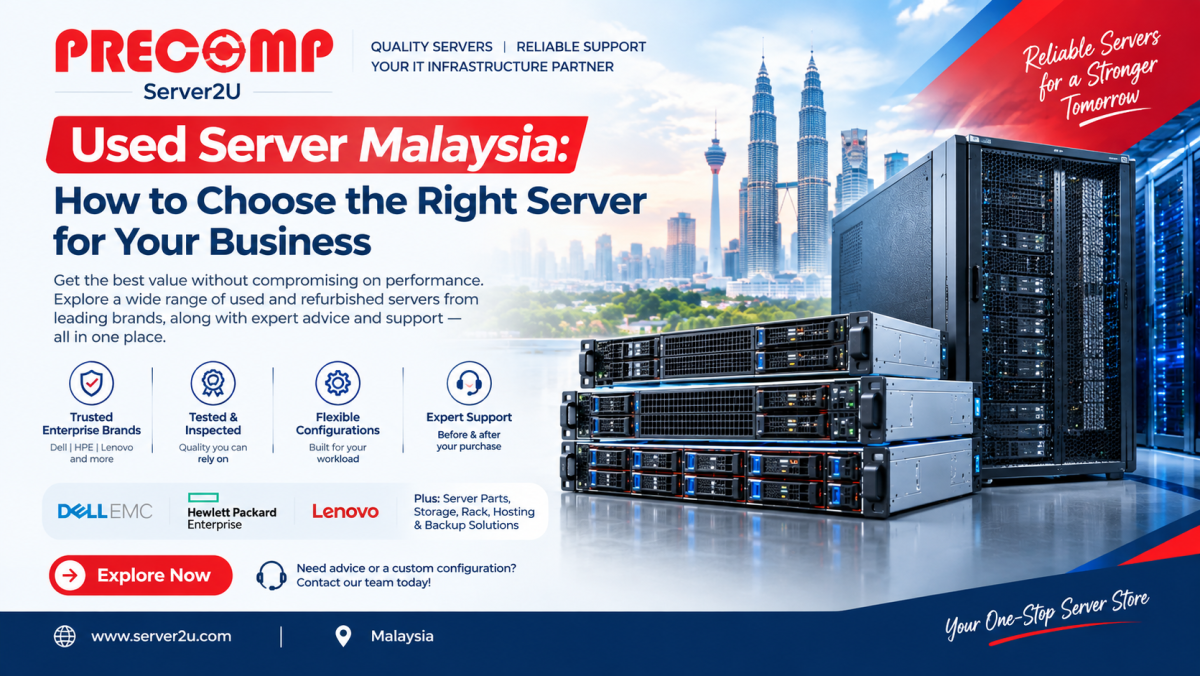
Choosing a server for your business is not simply about finding the lowest price. You need to consider the workload, processing power, memory, storage, RAID configuration, networking and future upgrade requirements.
For businesses working with a limited IT budget, a Used Server Malaysia option can be worth considering. Refurbished servers can also provide another route when you want previously owned enterprise hardware that has been inspected and tested before resale.
Server2U supplies refurbished enterprise servers from brands including Dell PowerEdge, HPE ProLiant and Lenovo ThinkSystem, along with Configure-To-Order options for businesses with specific hardware requirements.
What Is a Used Server?
A used server is enterprise hardware that has previously been deployed and is being sold again. Unlike new equipment, its condition, component history and remaining support or warranty can vary depending on the particular server.
The important point is that not every used server is the same. Before purchasing, check:
- The server's overall condition
- Processor and RAM configuration
- Storage type and capacity
- RAID controller
- Power supply configuration
- Network connectivity
- Compatibility with your software
- Available warranty or support
- Upgrade possibilities
For businesses, the goal should not simply be to find an inexpensive server. The server should have the right configuration for the workload it will run.
Used vs Refurbished Servers: What Is the Difference?
The terms "used" and "refurbished" are sometimes used interchangeably, but there can be an important difference.
A used server may simply be previously owned hardware being resold. The level of inspection, testing and support can vary between sellers.
A refurbished server, on the other hand, has generally gone through an inspection and testing process before being offered again. Server2U states that its refurbished servers are tested, inspected and restored, with testing and validation carried out before deployment.
|
Factor |
Used Server |
Refurbished Server |
|
Previous use |
Yes |
Yes |
|
Inspection |
Depends on seller |
Tested and inspected by supplier |
|
Configuration |
Varies |
Can be configured based on requirements |
|
Support |
Depends on seller |
Warranty/support may be available |
|
Cost |
Can be lower |
Often lower than new equipment |
|
Best approach |
Check condition carefully |
Check refurbishment and warranty details |
This does not mean every refurbished server will be the right choice. The actual configuration, testing process, warranty terms and intended workload should still be checked before purchasing.
Why Consider a Used Server in Malaysia?
Businesses may consider previously owned or refurbished server hardware for several practical reasons.
1. Budget
A new enterprise server can represent a significant investment. Refurbished equipment can help businesses allocate their IT budget across other infrastructure requirements.
Server2U specifically positions refurbished servers as a cost-effective alternative to purchasing new hardware.
2. Existing IT Infrastructure
If your business already uses a particular server platform, staying with a compatible ecosystem may simplify future upgrades, replacement parts and infrastructure planning.
For example, Server2U supplies Dell PowerEdge and HPE ProLiant systems in multiple configurations.
3. Business Workload
A server for file sharing does not necessarily require the same configuration as a database, virtualisation or storage server.
Your workload should therefore determine the hardware rather than choosing a server based only on its brand or price.
4. Upgrade Requirements
Consider whether you may need more RAM, additional storage, additional network connectivity or a different RAID configuration later.
Planning for future requirements can help prevent an inexpensive server from becoming an unsuitable investment.
🖥️ Need the right server? Explore Server2u Precomp today!

Tags:
Server2U is a one-stop server store providing servers, server parts, storage, networking, and IT infrastructure solutions. We offer enterprise and refurbished server options from leading brands such as Dell, HPE, and Lenovo, with solutions designed to support business workloads, virtualization, databases, storage, backup, and more.















Comments (0)