

From Fiber to Function: What Makes a Wool Felt Supplier Stand Out in Modern Industries
Despite being around for many years, felt has become increasingly essential in modern industrial sectors. From uses like cushioning, insulating, sealing, polishing, filtration, controlling vibrations, and even protection, felt can serve a variety of purposes. At the core of any felt application is the significant task of selecting the appropriate wool felt supplier.
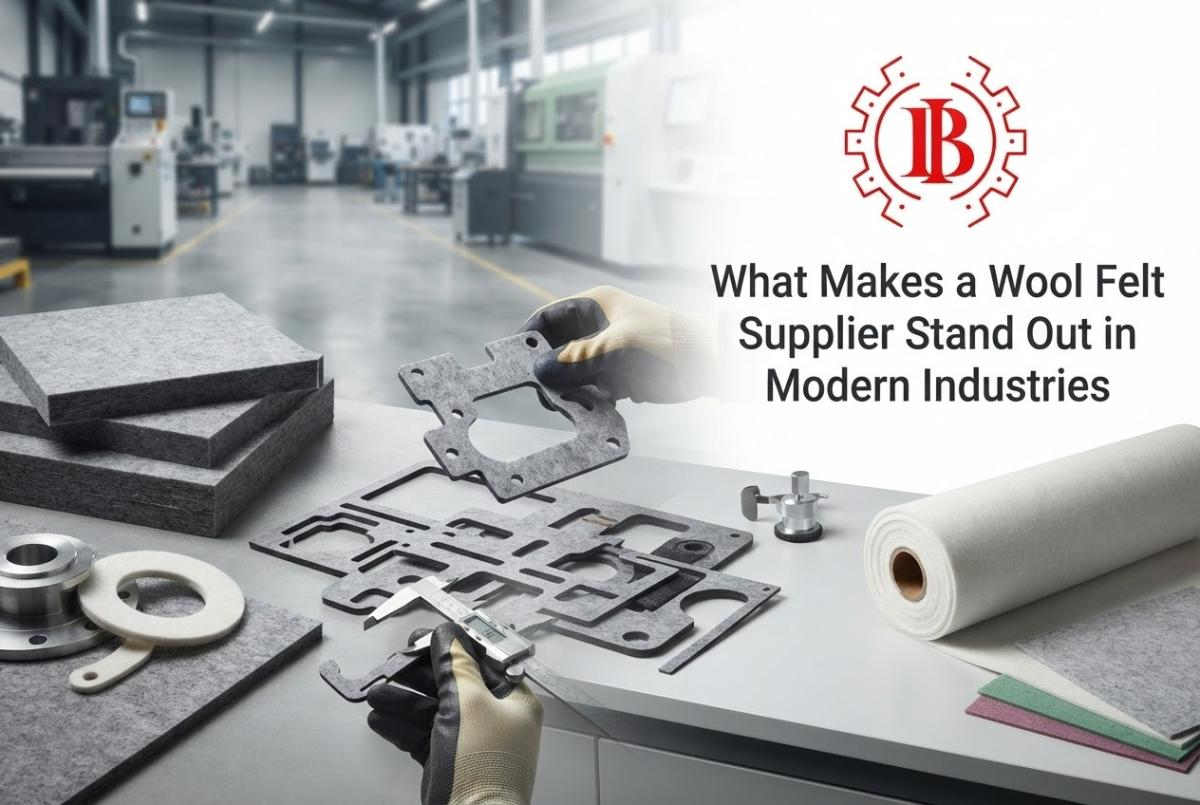
Industrial materials can be analyzed on the basis of performance in actual practice. Even though new advancements in technology have changed the face of manufacturing in many aspects, there still exist certain materials which are useful due to practical reasons. Wool felt is one such material. Resilient nature, ability to absorb shock, insulation abilities, and unique nature of fibers are some of the features of wool felt.
With increasing demands of specific industrial materials, choosing the appropriate wool felt supplier is gaining significance for manufactures, engineers, fabricators and procurement executives. Features of raw material, manufacturing process, specifications, customizing options, and availability can be some of the factors determining the suitability of the wool felt for an application.
A supplier, which recognizes these factors, will not only supply the material but will also deliver solutions tailored to specific industrial needs. Balaji International India is an industrial felt product supplier that can help customers explore wool felt as well as other types of felt products as per their requirements.
The Importance of Wool Felt
Wool felt is made through the treatment of the wool fibers into an extremely dense and non-woven fabric. Wool felt does not rely on the conventional production process used to create other fabrics such as weaving. The unique composition of the interlocking fibers of wool gives it some distinct qualities.
There are various uses of wool felt which include providing flexibility, cushioning, thermal insulation, resistance, shock absorbing, noise absorbing, and surface protection. It provides various qualities making it suitable for use in instances where there is a need for the provision of performance and protection.
Apart from its performance, the unique composition of fibers makes wool felt distinct from other synthetic products. Based on the grade and the process of production, wool felt can be made to have different levels of thickness and density.
What Qualifies a Reputable Wool Felt Supplier?
When selecting a wool felt supplier, one should not base the choice on price comparisons alone. The buyer should be assured that he or she will get products that comply with their specifications.
The best suppliers should be aware of the connection between density, thickness, composition of fibers, hardness, flexibility, and use of felted wool. Since various uses require felt with different attributes, suppliers with wide-ranging information can guide the buyer better.
Consistency is another key consideration in the selection process. When manufacturers incorporate felt regularly in their products and processes, differences from batch to batch can present problems in production.
The Role of Quality in Wool Felt Performance
The performance of the wool felt will rely heavily on the quality of the material itself. The thickness and density of the felt might have some effect on its cushioning and compression properties, while its fiber components will affect its performance properties such as resiliency and longevity.
When purchasing a felt material for industrial applications, it is vital that the customer sets his requirements first before choosing a particular item to purchase. Materials that will be useful for cushioning purposes will not work in applications where there will be substantial pressure applied.
This way, the supplier can offer a better specification for the product.
Wool Felt for Industry Uses
Versatility of wool felt enables its use in many industries. It can be utilized for such purposes as cushioning, sealing, vibration dampening, polishing, insulation, surface protection, and mechanical use.
In the field of machinery and manufacturing processes, felt can be used either to decrease the friction between components or for protective layer between surfaces. Also, in some cases, felt can be used for sound or vibration absorption.
Also, automobile industry can use felt materials for such uses as cushioning, insulation, or sound absorbing. Manufacturers of industrial machinery can use felt for protective or mechanical purpose.
As application of wool felt varies greatly, selection of proper grade of wool felt is very important. Experienced wool felt supplier will be able to assist companies in selecting proper properties of felt material, depending on the environment.
How Customization Can Matter
Standard manufacturing processes are uncommon nowadays. Parts might require customized sizes, thickness, density, and even cutting format in order to meet particular product or assembly requirements.
This makes customization an important issue to take into account when choosing a felt manufacturer. According to manufacturing capabilities, felt is available in various sizes and thicknesses or is cut into particular shapes for industrial purposes.
Customized felt products might help minimize further processing performed by the client. This will allow optimizing production process and making material handling easier.
For companies with particular demands, discussion of dimensions, working conditions, and required performance of the material with the manufacturer prior to purchase is recommended.
Importance of Supply Reliability
The quality of the material is a critical factor; however, supply reliability is also an important characteristic for manufacturing organizations. Production schedules rely on the supply of materials, and disruptions in supply chains may delay deliveries and other plans.
The reliable supply of wool felt requires the ability to provide regular supplies and to ensure proper communication concerning the availability and needs in production.
The long-term relationship with a supplier could also ease the purchasing process. Once the supplier knows the specifications of the customer and its periodic needs, subsequent orders become easier to deal with.
Balaji International India helps businesses that require felt products for industrial purposes, creating a basis for customers who assess their material needs.
Natural Wool Felt Compared to Synthetic Felt Substitutes
Among the critical choices for manufacturers is to decide which between natural wool felt and synthetic felt suits their application best. There are different features of each type of felt, and the suitability will depend on the intended use of felt.
Some of the desirable qualities of natural wool felt include resiliency, cushioning capacity, insulation capabilities, and natural fibers. In certain cases, there might be a need to use certain qualities of synthetic felts.
There will be a need for buyers to base their decision on the application of felt rather than on a general belief that one felt type is superior to another. A professional supplier can guide the buyer to choose the most appropriate felt type.
Things to Take Into Account When Selecting a Felt Supplier
There are a number of things that should be taken into account before working with a felt supplier. Quality, material, ability to customize products, production, shipping, and knowledge of technology are just some of the important aspects.
Moreover, it may also be helpful to find out if the supplier is able to offer sufficient variety of materials for future needs. A company may need one type of felt at first, but later it will need other varieties of thickness and density for producing other products.
Communication is yet another aspect worth mentioning.
The Future of Wool Felt in Modern Manufacturing
The persistence of wool felt in the industry proves that traditional materials still hold significance as technology evolves in manufacturing industries. Modern day industries have grown fond of materials that possess high performance capabilities, flexibility, durability, and application specific qualities.
Wool felt is an excellent example of such materials, especially when cushioning, insulating, surface protecting, or controlled friction is required. With improvements in manufacturing technologies and customizations, wool felt is becoming easy to incorporate into specialized products as well as industrial processes.
As companies continue to improve on their systems of manufacturing products, having an effective supplier of raw material becomes crucial. The most effective supplier will be the one that knows how to make the most out of the material supplied.
An efficient supplier of wool felt will go a long way in helping organizations when they need materials with high performing qualities. There are many factors that determine if a felt supplier can really help the modern day industries.
The importance of wool felt remains significant because of the various attributes like toughness, comfort, insulation, wear resistance, and versatility. In case of selecting the right specification, it can act as a valuable ingredient in various industries including manufacturing, automobile, machines, and others.
For organizations who wish to get their hands on reliable felt solutions, Balaji International India provides them with solutions for various industrial needs. With the help of selecting the right supplier, manufacturers can progress from being only able to buy felt to finding solutions that provide them reliable results.

Balaji International company set up in the year 1955 is a group with diverse Interests. The company which started off as a small time manufacturer and Exporter of engineering goods has diversified into exporting all kinds of Thermal insulating products and textile based industrial products.















Comments (0)