

A Holistic Vision of Development: From Economic Strength to Cultural Identity
A holistic vision of development looks beyond economic growth to include human capability, cultural identity, social participation and community wellbeing. The SSS Bharat philosophy connects these ideas through Samruddha Bharat, Samarth Bharat and Sanskrutik Bharat—representing prosperity, capability and cultural rootedness. Together, these foundations encourage self-reliance, entrepreneurship, education, rural development, women and youth empowerment, and active participation in nation-building. The approach emphasises that sustainable progress becomes stronger when economic opportunity, capable citizens and cultural values develop together.

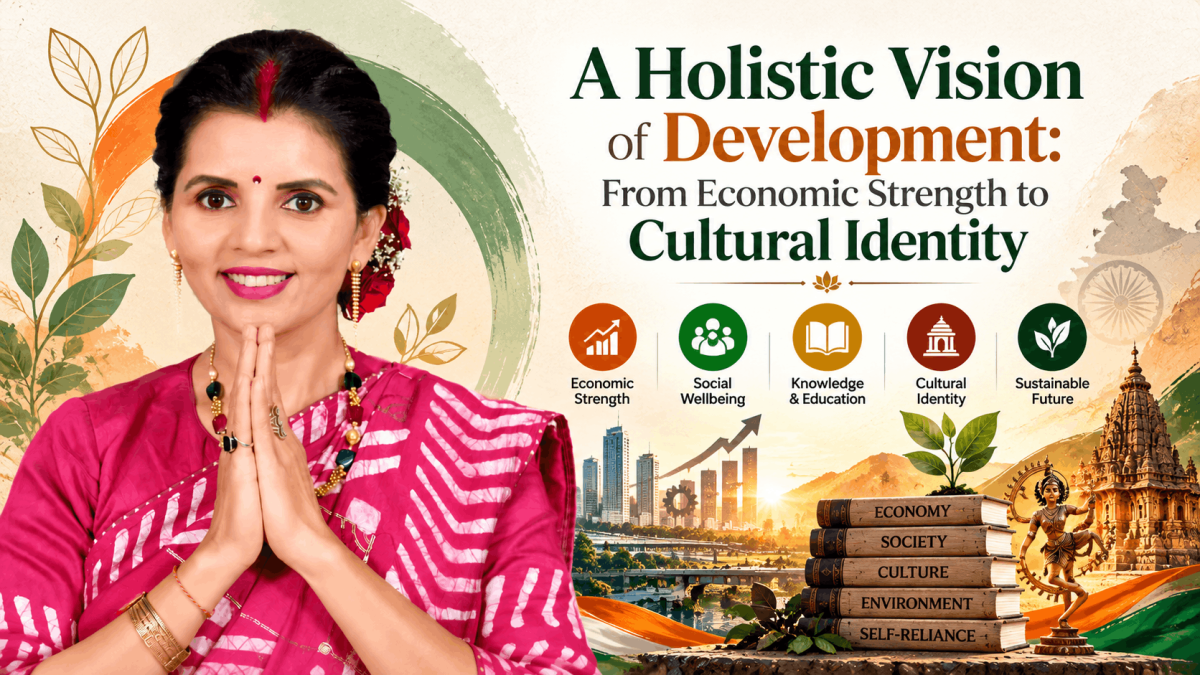
Development is often measured through economic indicators, infrastructure, technology and employment. These are important signs of progress, but they do not tell the complete story of how a society is developing. A nation can become economically stronger while still facing challenges related to education, social participation, human capability, cultural confidence and community wellbeing. True development therefore requires a broader perspective—one that looks at both material progress and the values that give that progress meaning.
A holistic vision of development begins by recognising that economic strength, human capability and cultural identity are interconnected. Prosperity creates opportunities, capability allows people to use those opportunities effectively, and cultural identity provides a sense of direction and belonging. The SSS Bharat philosophy reflects this relationship through the three interconnected ideas of Samruddha Bharat, Samarth Bharat and Sanskrutik Bharat—a vision of a prosperous, capable and culturally rooted India.
Why Economic Growth Alone Is Not Enough
Economic growth plays an essential role in national development. Strong businesses can create employment, investment can expand infrastructure, and entrepreneurship can generate new solutions to social and economic challenges.
However, economic growth becomes more meaningful when its benefits reach people across different sections of society.
A strong economy should create opportunities for:
-
Employment and entrepreneurship
-
Skill development
-
Local industries
-
Rural livelihoods
-
Education and healthcare
-
Innovation and self-reliance
-
Greater participation in economic life
The question is therefore not simply how fast an economy grows, but whether that growth helps people become more secure, capable and independent.
Development becomes sustainable when economic strength translates into meaningful improvements in people's lives.
Samruddha Bharat: Building Meaningful Prosperity
The first foundation of a holistic development model is prosperity.
Samruddha Bharat represents a vision of prosperity that goes beyond wealth accumulation. It connects economic strength with self-reliance, opportunity and balanced development. The philosophy emphasises prosperity that is sustainable rather than dependent, and growth that creates genuine value for individuals and communities.
A prosperous society should allow people to build livelihoods through their own capabilities. Entrepreneurs should be able to create businesses, workers should have access to dignified employment, farmers should have stronger economic opportunities, and communities should have the infrastructure needed to participate in modern economic life.
Sanskrutik Bharat: Development With Cultural Identity
Economic strength and human capability need a cultural foundation.
Sanskrutik Bharat represents the idea of an India that remains connected with its civilisational identity, values and heritage while moving confidently into the future. The philosophy places cultural rootedness alongside prosperity and capability rather than treating culture as something separate from development.
Culture influences how people understand responsibility, relationships, community and purpose. It can give younger generations a stronger sense of identity while helping society preserve knowledge and traditions across generations.
Cultural identity does not have to conflict with modernisation.
A society can embrace technology, entrepreneurship, innovation and global opportunities while remaining connected to its own heritage. In fact, strong cultural confidence can help people engage with the modern world without losing their sense of identity.
Samarth Bharat: Turning Opportunity Into Capability
Prosperity alone cannot create lasting progress. People also need the knowledge, skills, health, confidence and resilience required to use available opportunities.
This is where Samarth Bharat becomes important.
A capable India is one where people are not merely recipients of development but active participants in it. Education, healthcare, skills, entrepreneurship and leadership can help individuals develop the confidence to contribute meaningfully to their families, communities and nation.
Capability also involves an internal dimension.
A capable person is not defined only by professional qualifications. Independence, resilience, acceptance, responsibility and the willingness to contribute to society are equally important aspects of strength. The SSS Bharat philosophy connects capability with self-reliance and a movement from passive participation toward active service.
This makes human development an essential part of national development.
The Three Foundations Work Together
The real strength of this development model lies in the relationship between the three foundations.
Samruddha creates economic opportunity.
Samarth develops the capability to use that opportunity.
Sanskrutik provides values, identity and direction.
If prosperity grows without capability, opportunities may remain inaccessible to many people. If capability develops without economic opportunity, skills may not translate into meaningful livelihoods. If both grow without cultural grounding, development can become disconnected from identity and social purpose.
Together, however, they create a more balanced model of progress.
This interconnected approach is central to the SSS Bharat philosophy, which views prosperity, capability and culture as dimensions of one larger national vision rather than as isolated objectives.
Rural Development as a Foundation for National Progress
A holistic development model must also consider villages and rural communities.
National progress cannot remain concentrated in major cities. Rural communities need access to education, healthcare, technology, employment, entrepreneurship and infrastructure that allows people to build meaningful lives locally.
Strong villages can reduce forced migration by creating better opportunities closer to home. They can also become centres of economic activity, cultural continuity and community cooperation.
The SSS Bharat vision places particular importance on building communities that are economically self-reliant, capable and culturally rooted. Its broader development approach connects local transformation with the larger objective of national renewal.
When villages become stronger, the foundation of the wider economy and society becomes stronger as well.
Women and Youth as Drivers of Transformation
No national development model can be complete without meaningful participation from women and youth.
Women contribute to families, enterprises, education, community development and social institutions. Creating opportunities for women to learn, earn and lead can strengthen households and local economies.
Youth, meanwhile, bring energy, innovation and adaptability. When young people receive education, skills and a strong sense of identity, they can become active contributors to economic and social transformation.
The SSS Bharat framework places emphasis on both Matru Shakti and Yuva Shakti, recognising their importance in building a capable and values-driven society.
Empowerment therefore should not be viewed as a separate social objective. It is part of national development itself.
Entrepreneurship With a Larger Purpose
Entrepreneurship can become a powerful bridge between economic development and social progress.
An entrepreneur creates more than a product or service. A growing enterprise can generate employment, develop skills, support suppliers and contribute to local economic activity.
Responsible entrepreneurship therefore asks broader questions:
-
Does the business create meaningful opportunities?
-
Does it develop people?
-
Does it strengthen local capabilities?
-
Can it create sustainable value?
-
Does its growth contribute positively to society?
When entrepreneurship is connected with responsibility, economic success can create wider social impact.
This is especially important in a development model that values self-reliance. Prosperity becomes stronger when people are encouraged to become creators of opportunity rather than remaining dependent on limited sources of support.
Education as the Bridge Between Development and Identity
Education is another essential component of holistic development.
A modern education system must prepare people for employment and innovation, but education can also help individuals understand responsibility, values and cultural heritage.
Young people need both capability and direction.
Technical knowledge can help them build careers. Entrepreneurship can help them create opportunities. Cultural understanding can help them remain connected to their identity. Ethical values can help them use their knowledge responsibly.
This combination creates individuals who are prepared not only to succeed but also to contribute.
Culture as a Source of Social Strength
Culture is sometimes treated as something preserved in museums, festivals or historical institutions. A holistic vision sees it differently.
Culture influences everyday life.
It shapes values, family relationships, community traditions, social responsibility and the way people understand their place in society.
A culturally confident generation can embrace global opportunities without believing that modernity requires abandoning its roots.
The objective is not to reject change. It is to ensure that change does not erase identity.
When cultural knowledge is passed from one generation to another, development gains continuity. When cultural values encourage responsibility and social harmony, development gains ethical direction.
From Passive Participation to Active Contribution
Development requires more than government policies or institutional programmes. It also requires individuals to participate.
A capable person can mentor others. An entrepreneur can create employment. A teacher can strengthen education. A professional can share expertise. A community leader can encourage cooperation. A young person can contribute through innovation or service.
This shift—from receiving development to contributing to development—is essential for long-term transformation.
The SSS Bharat vision similarly emphasises moving from nishkriya to sakriya, or from passive participation to active contribution.
When capable individuals begin using their knowledge, resources and influence for wider social benefit, development becomes a collective process.
Conclusion
A holistic vision of development recognises that national progress cannot be reduced to economic statistics alone. Economic strength creates opportunity, human capability allows people to transform opportunity into meaningful progress, and cultural identity provides the values and direction needed to sustain that progress. These dimensions become most powerful when they develop together.
Through her broader vision of purposeful development, Haripriyaa Bharggav emphasises the importance of connecting economic progress with human capability, social responsibility and cultural values. Her perspective reflects the belief that meaningful nation-building becomes stronger when prosperity, empowered communities and cultural identity move forward together, creating a more balanced and purposeful vision for India’s future.
Frequently Asked Questions
What is a holistic vision of development?
A holistic vision of development looks beyond economic growth and includes human capability, social wellbeing, cultural identity, education, opportunity and sustainable community development.
What does Samruddha Bharat mean?
Samruddha Bharat represents a vision of prosperity based on economic strength, self-reliance, opportunity and balanced development.
What is the meaning of Samarth Bharat?
Samarth Bharat focuses on developing capable, empowered and resilient individuals who can participate actively in economic and social life.
What does Sanskrutik Bharat represent?
Sanskrutik Bharat represents a culturally rooted India that remains connected with its heritage, values and civilisational identity while engaging confidently with the modern world.
Why is cultural identity important for development?
Cultural identity provides people with a sense of belonging, values and continuity. It can help ensure that modern development remains connected to social purpose and heritage.














Comments (0)