

Reimagining Rural India Through a Holistic Development Vision
Reimagining rural India requires more than improving infrastructure; it requires a holistic approach that connects education, healthcare, livelihoods, skills, women and youth empowerment, technology, environmental responsibility, cultural awareness, and community participation. By strengthening local capabilities and encouraging people to actively participate in development, villages can become more self-reliant and resilient. A balanced approach can help rural communities embrace modern opportunities while preserving their cultural identity and natural resources for future generations.
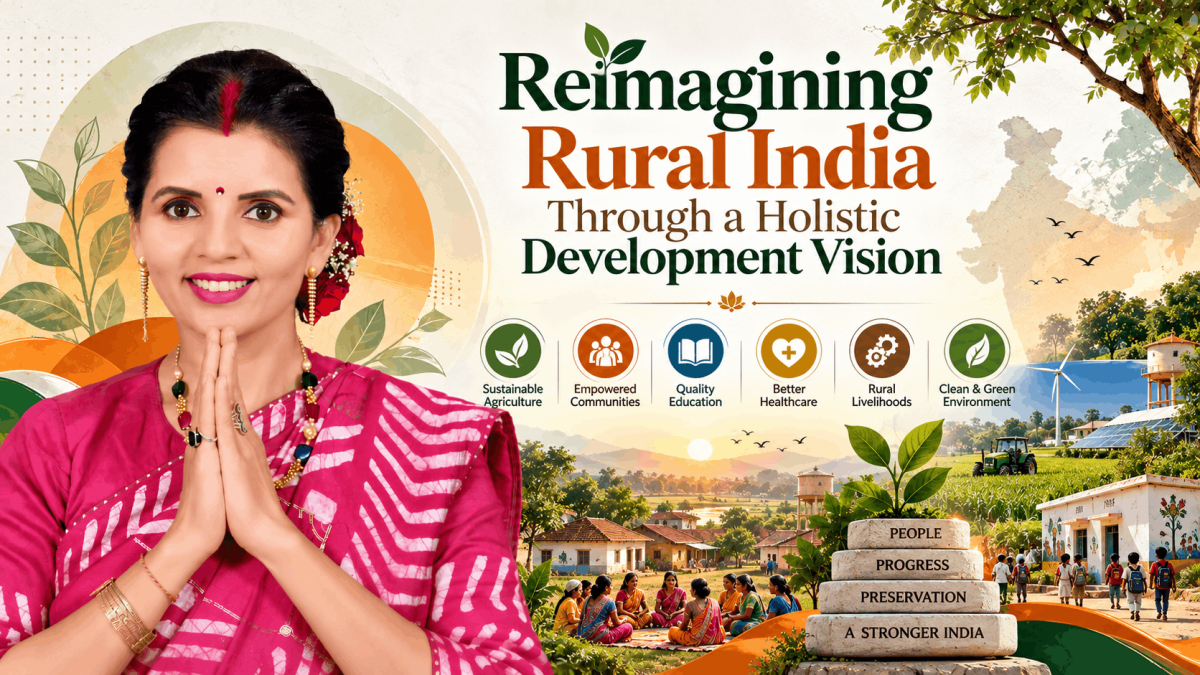
Rural India is changing. Across villages, communities are adapting to new technologies, evolving economic opportunities, changing educational needs, and growing awareness about health and social development. Yet meaningful rural progress cannot depend on one area of improvement alone. A village may receive better infrastructure, but without education, skills, healthcare, economic opportunities, and community participation, its long-term potential may remain limited.
Reimagining rural India requires a broader development vision that places people and communities at the centre. Instead of treating education, healthcare, livelihoods, culture, environment, and social development as separate priorities, a holistic approach connects them. When these elements reinforce one another, villages can become more capable, self-reliant, inclusive, and prepared for the future.
Why Rural Development Needs a New Perspective
For many years, rural development has often been associated with infrastructure and basic facilities. Roads, electricity, water systems, schools, healthcare centres, and connectivity remain essential. However, physical development represents only one part of community progress.
The deeper question is whether people have the knowledge, skills, health, confidence, and opportunities to use available resources effectively.
A broader rural development vision can consider:
-
Education and knowledge
-
Healthcare and well-being
-
Skill development
-
Livelihood opportunities
-
Women empowerment
-
Youth development
-
Digital inclusion
-
Environmental responsibility
-
Cultural awareness
-
Community participation
-
Economic self-reliance
These areas are closely connected. Better education can improve employment opportunities. Better healthcare can support productivity. Skills can strengthen livelihoods. Women’s participation can influence household and community development. Youth engagement can introduce innovation and new ideas.
This interconnected approach can turn rural development from a collection of individual projects into a long-term transformation process.
Education as a Driver of Rural Transformation
Education is one of the strongest foundations of sustainable development. It gives individuals knowledge and helps them understand opportunities, make informed decisions, and adapt to changing circumstances.
Rural education should extend beyond traditional classroom learning. Students can benefit from digital literacy, communication skills, practical knowledge, career awareness, vocational training, and leadership opportunities.
Alongside contemporary education, Vedic education can introduce learners to traditional knowledge, ethical values, discipline, cultural awareness, and responsible living. Connecting India's heritage with modern learning can create a more balanced educational environment.
Education should also reach beyond children. Adult learning, community awareness programmes, financial literacy, and skill-based training can help families and local communities become more capable.
A village that continuously invests in learning creates a stronger foundation for future generations.
Healthcare Should Be Part of Community Development
Health influences almost every aspect of daily life. Poor health can affect education, employment, productivity, household finances, and overall quality of life.
A holistic rural development approach should therefore include healthcare awareness, preventive practices, sanitation, nutrition, maternal and child health, regular screenings, and access to appropriate medical support.
Community-based health initiatives can encourage people to understand the importance of prevention rather than waiting until a serious health problem develops.
Health awareness can also be connected with education. Schools, community groups, families, and local organisations can work together to promote hygiene, nutrition, healthy habits, and responsible healthcare practices.
A healthier population is better positioned to participate in economic, educational, and social development.
Creating Better Livelihood Opportunities
Economic opportunity is essential for creating self-reliant communities. Rural development should help people strengthen existing livelihoods while also creating pathways toward new forms of employment and entrepreneurship.
Skill development can support agriculture, handicrafts, food processing, local services, digital work, small businesses, and other economic activities. Access to market information and technology can further expand opportunities.
A simple way to understand this relationship is:
Skills + Local Resources + Market Access + Entrepreneurship = Greater Economic Potential
The objective should not simply be to provide temporary financial support. It should be to strengthen people's ability to generate sustainable income through their own capabilities.
When local economic activity grows, its benefits can extend to households, businesses, service providers, and the wider community.
Women as Partners in Rural Development
No holistic vision of rural India can ignore the contribution of women. Women participate in family life, agriculture, education, caregiving, local businesses, social activities, and community relationships.
Sanatan Sanskrutik Sangh Creating meaningful opportunities for women can strengthen both households and communities.
Women empowerment can include:
-
Skill development
-
Entrepreneurship
-
Financial awareness
-
Digital literacy
-
Education
-
Healthcare awareness
-
Leadership opportunities
-
Participation in community initiatives
The objective should be to create an environment where women can use their abilities, make informed decisions, contribute economically, and participate in community development.
When women gain greater access to knowledge and opportunity, the benefits can influence multiple generations.
Giving Rural Youth a Greater Role
India's young population represents an important source of energy, creativity, and adaptability. Rural youth can contribute significantly when they have access to education, technology, skills, mentorship, and meaningful opportunities.
Young people can participate in:
-
Entrepreneurship
-
Digital initiatives
-
Skill development
-
Environmental programmes
-
Social service
-
Cultural programmes
-
Community awareness
-
Local innovation
Youth should not be viewed only as recipients of development. They can become volunteers, entrepreneurs, organisers, educators, technology users, and future community leaders.
Providing young people with meaningful roles can help rural communities respond to changing economic and social conditions.
A Connected Vision for Rural India
Reimagining rural India does not mean creating identical communities everywhere. Every village has its own history, resources, challenges, traditions, and opportunities.
A successful development model should therefore remain flexible while focusing on common principles.
Education should respond to local needs. Skills should connect with economic opportunities. Healthcare should address community priorities. Women and youth should receive meaningful opportunities to participate. Environmental initiatives should protect local resources. Cultural programmes should strengthen identity. Technology should expand access to knowledge and opportunity.
This connected approach can support the broader idea of a Total Village Development Program (TVDP), where multiple dimensions of rural life are considered together rather than separately.
Protecting Natural Resources for Future Generations
Rural communities depend heavily on natural resources. Agriculture, water, land, animals, forests, and rivers directly influence livelihoods and community well-being.
Development should therefore progress alongside environmental responsibility.
Local environmental initiatives can include:
-
Water conservation
-
Tree plantation
-
Village cleanliness
-
Waste management
-
Natural farming
-
River awareness
-
Protection of local ecosystems
-
Responsible use of natural resources
-
Sustainable living awareness
Traditional Indian knowledge also contains perspectives that emphasise respect for nature and the relationship between human life and the natural world.
Combining this understanding with contemporary environmental practices can support responsible and sustainable rural development.
Preserving Culture While Embracing Progress
Development should not require rural communities to lose their cultural identity. Villages often preserve traditions, festivals, local knowledge, spiritual practices, values, and community customs that connect generations.
Cultural awareness can strengthen belonging and encourage values such as service, compassion, responsibility, cooperation, and respect.
A modern rural development vision can therefore create a bridge between tradition and progress.
Technology, education, entrepreneurship, healthcare, and modern infrastructure can develop alongside cultural heritage. This balance allows communities to prepare for the future without losing meaningful connections with their past.
Community Participation Creates Lasting Change
One of the most important elements of sustainable development is community ownership.
External organisations can provide knowledge, resources, training, and support, but local people need opportunities to participate in identifying challenges and shaping solutions.
Community participation can involve:
-
Identifying local priorities
-
Planning development activities
-
Volunteering
-
Supporting education
-
Participating in healthcare awareness
-
Encouraging women’s participation
-
Mentoring youth
-
Supporting environmental initiatives
-
Preserving cultural practices
-
Monitoring community programmes
When people participate in development decisions, they can develop a stronger sense of responsibility and ownership.
This can make development more sustainable because communities become active contributors rather than passive beneficiaries.
Building Self-Reliant Communities
Self-reliance does not mean communities must operate without outside support. Instead, it means communities gradually develop the capabilities needed to identify opportunities, solve problems, use local resources, and maintain progress.
A self-reliant village can have stronger local skills, better awareness, active community participation, economic opportunities, and systems for continuing development.
The journey toward self-reliance may involve several stages:
Awareness → Education → Skills → Participation → Opportunity → Self-Reliance
Each stage strengthens the next.
This gradual process can help communities move from short-term assistance toward long-term capability.
Conclusion
Reimagining rural India requires a development vision that looks beyond individual projects and focuses on the complete well-being and capabilities of communities. Education, healthcare, skills, livelihoods, women empowerment, youth participation, digital inclusion, environmental responsibility, cultural awareness, and community ownership all contribute to this wider picture. When these areas develop together, villages can become more capable of creating and sustaining their own progress.
The broader vision of rural transformation is closely connected with the work of organisations such as Sanatan Sanskrutik Sangh, where social service, cultural awareness, education, healthcare, community development, and self-reliance can come together within a wider framework. A stronger rural India can emerge when communities are not simply supported, but empowered with knowledge, opportunity, participation, and the confidence to shape their own future.
Frequently Asked Questions
What does a holistic rural development vision mean?
A holistic rural development vision considers education, healthcare, livelihoods, skills, women empowerment, youth development, environment, culture, technology, and community participation as interconnected areas of progress.
Why is education important for rural development?
Education improves knowledge, skills, confidence, and access to opportunities. It can also help communities adapt to changing economic and technological conditions.
How can women contribute to rural transformation?
Women can contribute through education, entrepreneurship, employment, leadership, social participation, community initiatives, and household decision-making.
What role can youth play in rural India?
Youth can contribute through entrepreneurship, technology, education, volunteering, environmental activities, social service, cultural programmes, and community leadership.
How can villages become more self-reliant?
Villages can strengthen self-reliance by developing local skills, supporting livelihoods, encouraging entrepreneurship, improving education, strengthening community participation, and using local resources responsibly.
Sanatan Sanskrutik Sangh works to promote **Vedic knowledge and teachings, cultural awareness, youth development, and holistic community development**. Through Vedic education, Hindu cultural initiatives, Dharma-based youth empowerment, and the Total Village Development Program, the organization encourages education, self-reliance, social responsibility, and connection with India’s rich cultural heritage. Its initiatives aim to preserve timeless values while supporting meaningful and sustainable progress in communities.














Comments (0)