

The First Five Years Leave a Lasting Impression: Why a Child's Early Environment Matters

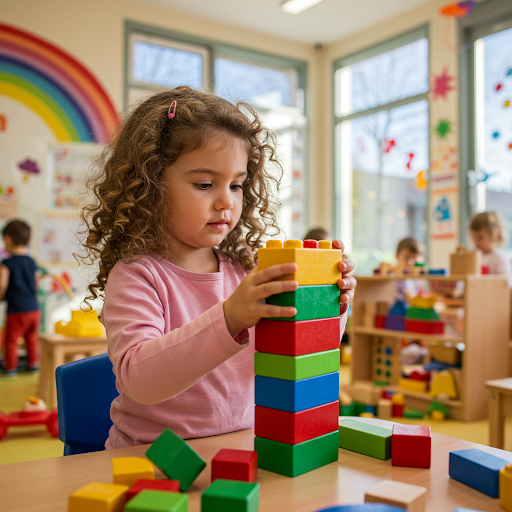
A child may not remember every activity they take part in at childcare. They might forget the name of a game, the story read during morning circle or what they built with a collection of wooden blocks. But the experiences they have during these early years help shape how they see themselves and the world around them.
Consider a child who is encouraged to try again after struggling with a puzzle. Another child is comforted when they miss their parents. Somewhere else in the room, two toddlers are learning to share a toy, even if the first attempt does not go particularly well.
These are ordinary moments in an early learning centre. Yet they are also opportunities for children to develop confidence, patience, communication and emotional understanding.
The environment surrounding a young child matters because learning happens throughout the day, not only during planned educational activities.
A Child's Surroundings Influence the Way They See the World
Children are naturally curious. They watch what adults do, listen to conversations, explore objects and gradually form their own understanding of everyday situations.
The people and surroundings they experience regularly become part of this learning process.
For instance, a child who is given opportunities to make simple choices may gradually become more comfortable expressing preferences. A child whose questions receive thoughtful responses may become more willing to communicate. Similarly, children who feel included in group activities can begin to understand that their contributions have value.
This is why the quality of an early learning environment involves much more than colourful walls, educational toys or attractive play areas.
It is also about how children are treated, whether their individual needs are understood and whether they feel comfortable being themselves.
According to Australia's Early Years Learning Framework, children's sense of belonging, identity and well-being is closely connected to the relationships and experiences they develop in their early years.
What Happens When Children Are Given Room to Make Mistakes?
Adults sometimes forget how much effort a seemingly simple task requires from a young child.
Putting on shoes, opening a lunchbox, completing a drawing or building a tower can involve several attempts. A child may become frustrated when something does not work as expected.
The natural response might be to step in and finish the task. However, allowing children to try independently, while offering help when needed, gives them an opportunity to work through small challenges.
They begin to understand that not everything happens immediately.
This is where a supportive learning environment can make a difference. Educators can encourage children without taking away the opportunity to discover things themselves.
Over time, these experiences may support problem-solving, persistence and a willingness to approach unfamiliar tasks.
The aim is not to expect a three-year-old to behave like an older child. It is to recognise what they can attempt today and help them take their next small step.
Friendships Begin With Small, Sometimes Difficult Moments
Anyone who has spent time around toddlers knows that sharing does not always come naturally.
Two children may want the same toy. One might walk away from a game because another child has changed the rules. Sometimes, a disagreement begins over something adults would barely notice.
These situations are part of learning to live and play with others.
With appropriate guidance, children can begin understanding that other people have feelings too. They learn to wait, listen, express what they want and gradually find ways to resolve disagreements.
An early learning centre gives children opportunities to practise these skills with others of a similar age.
It is important that educators do not simply expect children to get along. They need to help them understand social situations in ways appropriate to their development.
The Australian Children's Education and Care Quality Authority (ACECQA) identifies positive educator-child relationships as an important part of supporting children's social and emotional development.
These early interactions can become useful when children later enter school, participate in group activities and form friendships outside their families.
Feeling Safe Changes How a Child Approaches Learning
Imagine being in a new place where everything feels unfamiliar. You do not know the people, the routine or where to find the things you need.
For a young child, starting childcare can feel a little like that.
Some children settle quickly. Others need more time, reassurance and familiar routines before they feel comfortable. Neither response is unusual.
When children feel emotionally secure, they are generally better placed to explore their surroundings and participate in activities. A familiar educator, a comforting routine or a warm welcome can help make an unfamiliar environment feel more manageable.
This is particularly important for babies and toddlers, who communicate many of their needs through expressions, gestures and behaviour rather than words.
Responsive care helps educators understand these signals and respond appropriately.
The Australian Early Years Learning Framework emphasises secure, respectful and reciprocal relationships as a foundation for children's confidence, well-being and learning.
Learning Does Not Always Look Like Learning
Ask a child what they did at childcare, and the answer might simply be, "We played."
But what did that play involve?
A group of children making pretend food may be practising conversation, imagination and cooperation. Water play can introduce concepts such as quantity, movement and cause and effect. Drawing and painting give children opportunities to experiment with shapes, colours and different ways of expressing ideas.
Even outdoor play has its own learning opportunities. Children observe their surroundings, test physical abilities and discover things that cannot always be explained through a picture book.
This is why play deserves an important place in early childhood education.
Rather than rushing children through activities, a thoughtful early learning program gives them time to investigate, repeat experiences and follow their interests.
The OECD's research on early learning and child development highlights the importance of early experiences in developing skills that support later learning and well-being.
The Role of Educators Goes Beyond Teaching Activities
An early childhood educator does much more than organise games or introduce new topics.
They notice when a normally talkative child becomes unusually quiet. They recognise when a toddler needs reassurance. They encourage a child who is hesitant to join a group and help children understand everyday situations.
Sometimes, the most valuable interaction is a short conversation at the right moment.
For example, instead of immediately solving a problem when a child cannot complete a building activity, an educator might ask, "What do you think we could try next?"
That question gives the child an opportunity to think, respond and experiment.
Strong relationships between educators and children also help create continuity between daily care and learning. When families and educators share information about a child's interests, routines and changing needs, they can work together more effectively.
For parents, this is an important consideration when exploring an early learning centre in Bundaberg.
Why the Early Years Matter Beyond Starting School
The first five years are an important period of development, but they should not be treated as a deadline by which every child must achieve certain milestones.
Children develop differently. One may begin speaking confidently at an earlier age, while another may need more time to become comfortable in group settings. Their interests, personalities and individual circumstances all influence how they learn.
What matters is providing suitable opportunities and support along the way.
Early experiences can contribute to the development of skills such as:
-
Communication: Expressing thoughts, understanding instructions and listening to others.
-
Emotional awareness: Recognising feelings and gradually learning how to manage them.
-
Social understanding: Developing friendships, cooperation and respect for others.
-
Independence: Making age-appropriate choices and attempting everyday tasks.
-
Curiosity: Asking questions, exploring ideas and showing interest in the surrounding world.
These foundations can support children as they move into formal schooling and encounter new responsibilities.
They do not determine a child's entire future. Rather, they give children opportunities to develop abilities that they can continue building throughout life.
Finding the Right Early Learning Environment in Bundaberg
For parents, choosing childcare is rarely just a matter of finding a convenient location or suitable operating hours. They also want to understand what their child's day will look like and who will be caring for them.
Visiting a centre can provide a much clearer picture than reading a list of facilities online.
Notice how educators interact with children. Are children encouraged to explore? Do they have opportunities for quiet activities as well as group play? How are younger children comforted when they need attention?
These observations can help families decide whether an environment feels appropriate for their child's needs.
At Above & Beyond Early Learning in Bundaberg, childcare and early learning are available for children aged six weeks to five years. The centre operates Monday to Friday, from 6 AM to 6 PM, for 51 weeks of the year.
For local families comparing Bundaberg childcare options, understanding the centre's approach to everyday learning, relationships and children's individual development is a useful starting point.
A Good Beginning Is Built Through Everyday Experiences
Children do not need every moment of their early years to be carefully planned or filled with activities. They need opportunities to play, explore, ask questions, make connections and feel supported when things become difficult.
A small achievement today might seem unimportant to an adult. For a child, it could be the first time they have completed something independently or felt confident enough to join a group.
Those experiences add up.
The value of a positive early learning environment lies in the everyday opportunities it provides: a patient response, an encouraging conversation, a chance to try again and the reassurance that someone is there to help.
These are the kinds of experiences that can give children a stronger foundation as they continue growing.


















Comments (0)