

What Is Bee Pollen and Why Are Indian Consumers Exploring It as a Natural Food Ingredient?
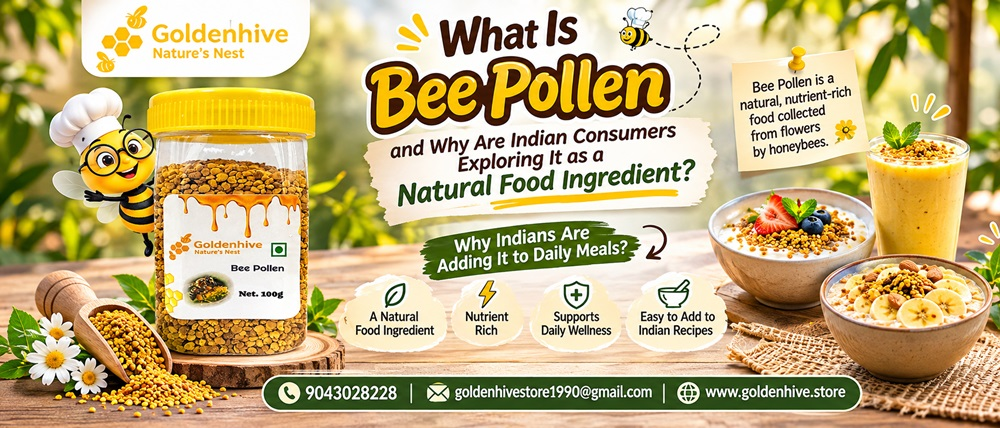
India has a long tradition of including naturally sourced ingredients in everyday meals. From honey and traditional grains to nuts, seeds, and seasonal fruits, Indian households are increasingly interested in understanding where their food comes from and how it fits into a balanced diet.
One ingredient attracting attention among consumers exploring natural food options is bee pollen. Collected by honey bees from flowering plants, bee pollen is a mixture of plant pollen, nectar, and bee secretions. It contains naturally occurring nutrients and can be incorporated into certain foods in small quantities.
As interest in ingredient transparency and diverse food choices grows, more people are searching for information about bee pollen, its nutritional composition, and how to identify quality products.
For consumers looking to Buy Pure Bee Pollen Online, understanding its origin, processing, storage, and safety considerations is an important first step.
In this guide, Goldenhive explores what bee pollen is, how it is collected, why Indian consumers are becoming curious about it, and what to consider before purchasing.
What Is Bee Pollen?
Bee pollen is a natural substance formed when honey bees collect pollen from flowers and combine it with small amounts of nectar and their own secretions. Bees carry this mixture back to their hives in small granules.
Bee pollen is different from honey, beeswax, and royal jelly. Each of these substances has a distinct origin, composition, and role within a bee colony.
Bee pollen granules may appear yellow, orange, brown, or other shades depending on the flowers visited by the bees.
Key characteristics of bee pollen
-
Natural origin: Collected by honey bees from flowering plants.
-
Variable appearance: Colour, size, and texture depend on floral sources.
-
Nutritional composition: Contains proteins, carbohydrates, lipids, vitamins, minerals, and plant compounds in varying amounts.
-
Food applications: Sometimes added to smoothies, yoghurt, breakfast bowls, and other preparations.
-
Distinctive flavour: May have floral, earthy, mildly sweet, or slightly bitter notes.
The composition of bee pollen varies considerably based on its botanical origin, geographic location, season, and processing conditions.
This natural variation is one reason why consumers should evaluate product quality rather than relying only on attractive packaging or promotional claims.
How Do Honey Bees Collect Pollen?
Honey bees play an important role in pollination and the natural environment. As they visit flowers, pollen grains attach to their bodies.
The bees gather these grains and form small pellets, which they carry on specialised structures located on their hind legs.
The bee pollen collection process generally involves five stages:
-
Flower visits: Honey bees visit flowering plants to collect nectar and pollen.
-
Pollen gathering: Pollen grains attach to the bees and are gathered into pellets.
-
Transportation: Bees carry the collected pollen towards their hives.
-
Collection by beekeepers: Specialised pollen traps may collect a portion of the incoming pollen.
-
Processing and packaging: Collected pollen is cleaned, appropriately dried or preserved, and packaged for food use.
Responsible harvesting practices are important because bees also depend on pollen as a source of nutrition.
When consumers search for Pollen From Honey Bees, they should understand that the quality of the final product depends on more than the collection process alone.
Handling, moisture control, hygiene, packaging, and storage all influence product quality.
Why Are Indian Consumers Exploring Bee Pollen?
Interest in bee pollen is connected to several broader food trends, including curiosity about minimally processed ingredients, international food habits, and greater attention to ingredient labels.
Although bee pollen is not a traditional everyday ingredient in most Indian households, it is being explored by consumers interested in expanding their food choices.
1. Interest in naturally sourced ingredients
Many consumers prefer understanding the origin and composition of the ingredients they purchase.
Bee pollen attracts curiosity because it is collected through a natural process involving flowers and honey bees.
However, natural origin does not automatically establish that a food is safe or suitable for everyone.
2. Exploration of diverse nutritional ingredients
Indian consumers are increasingly exposed to different foods through recipes, food blogs, and digital platforms.
Ingredients such as chia seeds, flaxseeds, pumpkin seeds, and bee pollen may appear in discussions about dietary variety.
Bee pollen contains several naturally occurring nutrients, although the quantities vary significantly.
3. Growing popularity of breakfast bowls and smoothies
Smoothie bowls, yoghurt combinations, fruit bowls, and homemade breakfast preparations have become familiar options among consumers exploring new food combinations.
Bee pollen granules can be used as a topping in some of these preparations.
4. Greater interest in ingredient transparency
Consumers often want information about sourcing, processing, storage, and packaging before purchasing unfamiliar food products.
This makes product information particularly important when choosing bee pollen.
5. Convenience of online shopping
Online shopping allows consumers to compare products, review ingredient information, examine packaging details, and evaluate sellers.
Those searching to Buy Premium Bee Pollen can use these details to make more informed purchasing decisions.
What Nutrients Are Naturally Present in Bee Pollen?
Bee pollen has a complex nutritional composition. Scientific analyses have identified a variety of nutrients and naturally occurring plant compounds.
However, its composition is not standardised across all products.
|
Nutritional component |
General role or characteristic |
|
Proteins and amino acids |
Provide building blocks used by the body |
|
Carbohydrates |
Contribute dietary energy |
|
Lipids |
Include naturally occurring fatty acids |
|
Vitamins |
Certain vitamins may be present in varying quantities |
|
Minerals |
May include potassium, magnesium, and other minerals |
|
Polyphenols |
Plant compounds studied for antioxidant properties |
|
Fibre |
Amount varies depending on the pollen source |
The presence of these components does not necessarily mean that a typical serving provides nutritionally significant amounts.
Bee pollen should not be treated as a replacement for fruits, vegetables, pulses, whole grains, or other essential components of a balanced diet.
Consumers should also distinguish between laboratory findings about bee pollen compounds and demonstrated health benefits in humans. Research into potential health effects remains limited, and bee pollen is not an established treatment for medical conditions.
How Can Bee Pollen Be Used in Everyday Food?
Bee pollen granules have a distinctive flavour and texture. Some people use them in small quantities to complement foods they already enjoy.
Because bee pollen can cause serious allergic reactions, particularly in people with pollen or bee-related allergies, anyone considering it for the first time should seek appropriate medical advice rather than assuming it is safe.
Bee pollen with yoghurt
Plain yoghurt is a familiar ingredient in many Indian households.
Some recipes include bee pollen as a topping alongside fruit, nuts, or seeds.
Bee pollen in smoothie bowls
Smoothie bowls often combine blended fruits with toppings such as seeds, nuts, and cereals.
Bee pollen can contribute a different texture and flavour to these combinations.
Bee pollen with breakfast cereals
Breakfast preparations involving oats or other cereals sometimes include bee pollen as a finishing ingredient.
Bee pollen in fruit bowls
Fresh fruit bowls offer another way to incorporate different textures into a meal.
Bee pollen granules may be used alongside other toppings by individuals for whom the ingredient is medically appropriate.
Bee pollen in homemade recipes
Some food enthusiasts explore bee pollen in homemade snack recipes or other preparations.
However, bee pollen should not be regarded as an essential ingredient, and heating or mixing it with other foods does not reliably eliminate allergy risks.
What Makes Premium Quality Bee Pollen Different?
When consumers search for Bee Pollen Premium Quality, they may encounter products with different appearances, packaging styles, and descriptions.
It is important to recognise that terms such as premium and pure do not, by themselves, guarantee nutritional quality or safety.
Product quality should be assessed through verifiable information.
Important quality factors
1. Source information
Reliable product information should help consumers understand the origin of the bee pollen.
The floral source, region, and harvesting season may influence its composition and appearance.
2. Hygienic collection
Collection methods should minimise contamination and support responsible beekeeping practices.
3. Appropriate processing
Bee pollen is sensitive to moisture and environmental conditions. Suitable drying or preservation methods help maintain product stability.
4. Packaging quality
Packaging should protect the product from moisture, contamination, and unsuitable storage conditions.
5. Clear labelling
Consumers should check ingredient information, net quantity, batch details, expiry or best-before dates, storage instructions, and applicable food business registration details.
6. Food safety testing
Where available, relevant quality testing and documentation can provide additional confidence regarding microbial contamination and other potential hazards.
These considerations are more useful than assuming a particular colour or aroma automatically indicates superior quality.
How to Buy Pure Bee Pollen Online in India
Online purchasing offers convenience, but consumers should take time to examine product details before placing an order.
If you are planning to Buy Pure Bee Pollen Online, the following checklist can help you evaluate available options.
Check the ingredient list
Review the product description to understand whether it contains bee pollen alone or a mixture of ingredients.
Avoid assuming that all products labelled as natural contain the same formulation.
Review the product origin
Information about sourcing and collection practices can help consumers understand the product.
Examine packaging and storage instructions
Look for clear guidance about storage, shelf life, and handling after opening.
Verify seller information
Check whether the seller provides appropriate contact details, product information, and applicable regulatory information.
Consider product testing
Where possible, look for credible information about food safety testing, especially because pollen can be affected by moisture and contamination during collection or storage.
Understand allergy precautions
Bee pollen can cause severe allergic reactions, including anaphylaxis. People with pollen allergies, bee-related allergies, asthma, or other allergic conditions should avoid self-experimentation and consult a qualified healthcare professional.
For shoppers exploring Pure Bee Pollen Online, these checks can support more informed decisions.
Why Consider Goldenhive When Exploring Bee Pollen?
For Indian consumers researching bee pollen, access to understandable product information is an important part of the buying experience.
Goldenhive aims to help consumers explore bee pollen as a natural food ingredient and understand the considerations involved in selecting it.
When evaluating a Goldenhive bee pollen product, customers should review its specific ingredient declaration, source information, packaging details, storage recommendations, and applicable quality documentation.
Those looking to Buy Pure Bee Pollen should prioritise clear information and food safety over unsupported claims about health benefits.
Whether you are learning about bee pollen for the first time or comparing available products, Goldenhive can be part of your research into naturally sourced food ingredients.
Bee Pollen vs Honey: What Is the Difference?
Bee pollen and honey both originate from the activities of honey bees, but they are not the same food.
|
Feature |
Bee pollen |
Honey |
|
Main origin |
Flower pollen gathered by bees |
Floral nectar processed by bees |
|
Typical appearance |
Small granules |
Thick liquid or crystallised substance |
|
Main composition |
Variable mix of proteins, carbohydrates, lipids, and plant compounds |
Primarily sugars and water |
|
Flavour |
Floral, earthy, or slightly bitter |
Generally sweet |
|
Common food uses |
Toppings and selected recipes |
Sweetening and food preparation |
|
Important safety consideration |
Potentially serious allergic reactions |
Not suitable for infants under 12 months |
Neither product should be assumed to be healthier simply because it comes from bees.
Their nutritional composition and appropriate uses are different.
How Should Bee Pollen Be Stored?
Proper storage helps preserve the quality of food ingredients and reduce the risk of deterioration.
Bee pollen storage requirements depend on whether the product is fresh, dried, or otherwise preserved.
For dried bee pollen, manufacturers may recommend keeping the product in a cool, dry environment, protected from direct sunlight and moisture.
Fresh or minimally processed bee pollen may require refrigeration or freezing.
Always follow the storage instructions supplied with the specific product.
Practical storage tips
-
Keep the packaging properly sealed.
-
Avoid exposure to excess moisture.
-
Use clean, dry utensils when handling the product.
-
Follow the manufacturer's recommended storage temperature.
-
Check the best-before date and packaging condition.
-
Discard products showing signs of mould, unusual moisture, or deterioration.
These practices are particularly important in Indian regions experiencing high humidity or hot weather.
Are There Any Risks or Precautions Associated With Bee Pollen?
Yes. Although bee pollen is naturally sourced, it can cause serious adverse reactions in some individuals.
The most important concern is allergy.
People who are allergic to pollen or bee-related substances may experience symptoms ranging from itching and swelling to breathing difficulties and anaphylaxis.
Bee pollen may also interact with certain medications, including warfarin.
Pregnant or breastfeeding individuals should avoid using bee pollen without professional medical guidance because adequate safety information is lacking.
Children should not be given bee pollen without advice from a qualified healthcare professional.
Anyone experiencing breathing difficulty, throat swelling, faintness, or rapidly developing allergic symptoms after consuming bee pollen should seek emergency medical care immediately.
Bee pollen is not necessary for good nutrition and should never replace prescribed medicines or medical treatment.
The Growing Role of Ingredient Awareness in India
Indian food consumers have access to a wider range of ingredients than ever before.
Online platforms make it easier to learn about traditional foods, imported ingredients, and specialised products.
However, increased availability also makes careful evaluation essential.
Consumers benefit from asking practical questions:
Where does the ingredient come from? How has it been processed? Is it appropriately labelled? What does scientific evidence say about its benefits and risks?
These questions are especially relevant to unfamiliar ingredients such as bee pollen.
For brands such as Goldenhive, educational content can help customers understand what bee pollen is without relying on exaggerated nutritional or medical claims.
As interest in naturally sourced food ingredients continues, transparent information and responsible marketing will remain important.
Final Thoughts
Bee pollen is an interesting natural substance collected by honey bees from flowering plants. Its varied nutritional composition, distinctive appearance, and use in selected food preparations have made it a topic of curiosity among consumers exploring new ingredients.
However, bee pollen is not a miracle food, and evidence supporting specific health benefits in humans remains limited. Its potential to cause severe allergic reactions makes safety considerations especially important.
For Indian consumers interested in learning more or planning to Buy Pure Bee Pollen Online, the best approach is to examine product information, verify quality and storage details, and understand individual health risks before purchasing.
Explore Goldenhive to learn more about bee pollen and review available product information before making an informed choice.
🌿 Follow Golden Hive for More Wellness Tips
📸 Instagram: @goldenhivestore
📘 Facebook: Facebook.com/Goldenhive
Frequently Asked Questions (FAQs)
Golden Hive brings you pure and natural honey crafted from carefully selected floral sources. We specialize in unique honey varieties including Tulsi Honey, Ginger Raw Honey, Cream Honey Velvet, Drumstick Moringa Honey, and Eucalyptus Honey Wild Forest Reserve, along with premium Bee Pollen. Our honey is sourced from trusted beekeepers and processed minimally to maintain its natural nutrients, taste, and aroma. Golden Hive is committed to delivering authentic, high-quality honey that supports a healthy and natural lifestyle.















Comments (0)