

Gold Nanoparticles: Multifunctional Properties, Synthesis, and Future Prospects

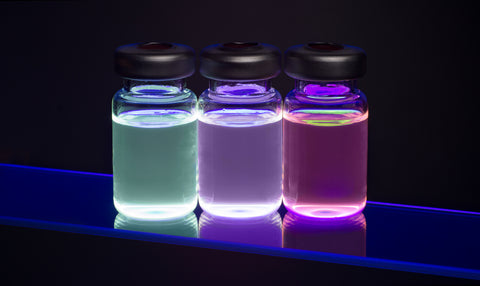
Most people picture gold nanoparticles as smooth red spheres. That picture is accurate for many samples, but it leaves out a more interesting family. Gold nanourchins look like tiny sea urchins, with a round core and sharp spikes on the surface. The spikes change how the particle handles light, and that opens doors for sensing, labeling, and imaging work. This article covers how gold nanourchins behave, how they are made, and where researchers are taking them next.
Why Gold Nanourchins Behave Differently
A smooth gold sphere interacts with light through its surface plasmon, a collective wiggle of electrons that gives colloidal gold its color. A sphere has one clean surface, so the response is fairly simple. Gold nanourchins are more complicated. The spikes act like tiny antennas, and they reshape that electron response.
Red-Shifted Absorption and Tip Hot Spots
Two effects matter most. First, the absorption peak moves toward longer wavelengths. A smooth sphere of a given diameter absorbs at a shorter wavelength than a gold nanourchin of the same core size. In our own line of 50 nm to 100 nm particles, the peak climbs with size, from 585 nm at the small end to 680 nm at 100 nm.
Second, the electromagnetic field gets concentrated at the spike tips. These hot spots are the reason researchers look at gold nanourchins for signal-enhanced detection. A stronger local field can mean a stronger readout from molecules sitting near the surface.
Multifunctional Properties Researchers Put to Work
Gold already earns its place in the lab through biocompatibility, easy attachment of biomolecules, and strong optical signals. Gold nanourchins keep all of that and add the spiky geometry on top. This makes them useful across several kinds of work, including blotting, lateral flow assays, microscopy, and TEM. Many groups also explore them for surface-enhanced Raman work, where those tip hot spots are a clear advantage.
Conjugation Without Extra Steps
Attaching a protein to a nanoparticle can be the slowest part of a project. Gold nanourchins are well suited to this step because the surface takes up proteins and other ligands readily. For teams who want a cleaner route, an NHS activated format lets you link proteins and other amine-containing molecules in a single step.
Choosing Between Bare and NHS Activated
Use bare gold nanourchins if you are developing a conjugate by passive adsorption and want full control over your own chemistry. Choose the NHS activated kit if you want a covalent attachment to primary amines and a more repeatable process. If you are unsure which suits your assay, a pilot run with each is a cheap way to find out.
How Gold Nanourchins Are Made
Most published routes use seed-mediated growth. The process starts with small seed particles in solution. Gold is then deposited in a controlled way, and the right conditions push growth into spikes instead of a smooth shell. Small changes in seed size, additives, and reaction conditions change both the core diameter and the spike length. That is why two batches that look similar on paper can behave differently in a spectrometer.
After growth, the particles need cleaning. Leftover reagents can interfere with conjugation and optical readings. Our gold nanourchins are supplied in 0.1 mM phosphate-buffered saline and are listed at greater than 95% purity, free of reactants. They come in sizes from 50 nm to 100 nm.
What to Check on Every Batch
Good habits catch most problems early. When a vial arrives, run these checks:
- A UV-Vis scan. Confirm the absorption peak sits where you expect for the size you ordered.
- A TEM image. Look at the spike shape and the spread of sizes, not just the average.
- A buffer test. Try a small portion in your actual medium before using the whole vial.
These steps take little time. They also give you a baseline to compare against when you reorder.
Where the Field Is Heading
The next few years look busy. Because the spikes can be tuned, researchers are studying how spike length and core size shape the optical response, and that knowledge feeds back into better designs. Interest keeps growing in sensing platforms, where stronger local fields can help detect smaller amounts of a target. Imaging and light-based therapy ideas are also under study, since absorption in the red and near-infrared region is useful in biological settings. Much of this work is still at the research stage, and careful batch-to-batch consistency will decide how fast it moves.
For anyone starting now, the practical advice is simple. Pick the size that matches the wavelength you need, choose a surface that fits your molecule, and verify every batch. Gold nanourchins reward that care.
If you are planning a project with gold nanourchins, the team at NNCrystal US Corporation is ready to help you choose the right size and surface. Call us toll-free at 877-701-0662 to talk through your application. Whether you need standard gold nanourchins or an NHS activated version for conjugation work, we will help you find the right fit for your research.














Comments (0)