

Biohazard Bags for Pharmaceutical and Healthcare Industries
Singhal Industries Private Limited (India) is known as a leading manufacturer, supplier, and exporter of biohazard bags and other types of packaging.

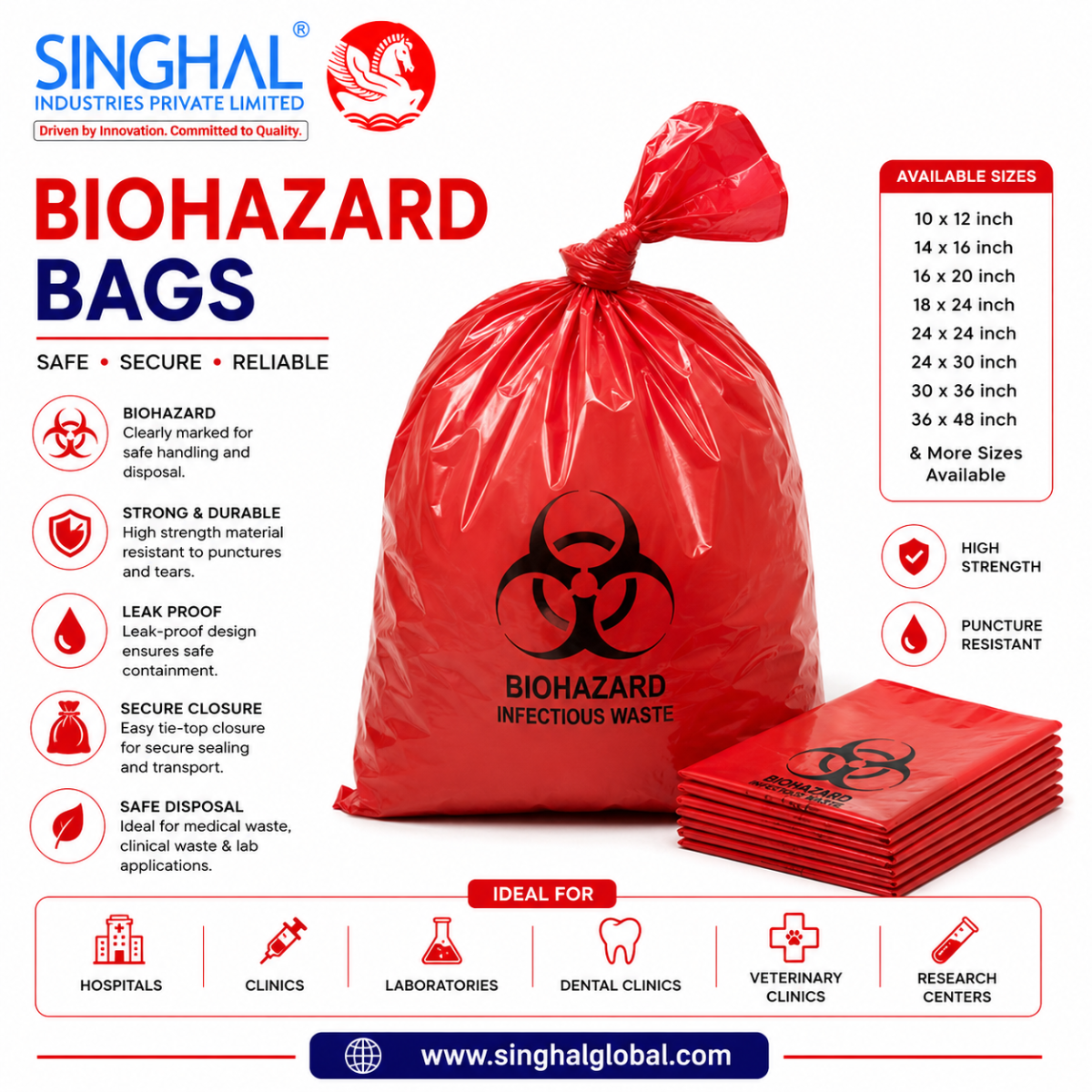
Biohazard bags are essential to effective waste management within the pharmaceutical and health care sectors. By keeping potentially harmful waste products (such as chemicals, infectious materials, and other types of contamination) separate from non-hazardous waste streams, they reduce both the likelihood of human exposure and the potential for negative impacts on the environment.
Why Biohazard Bags Matter
Pharmaceutical businesses and health care systems produce numerous forms of waste each day, including dirty gloves and dressings, outdated medications, and chemical containers. Much of this waste can be either infectious or harmful (hazardous), meaning that if not managed correctly, the waste will allow the spread of infection or harm someone.
No, a company cannot use the same bag for all types of waste. Each type of waste has specific requirements for bags/containers/labeling/handling. Color coding allows employees to quickly determine what type of waste they are dealing with. Additionally, tightly sealed bags help prevent spills when transporting waste.
Colour Coding and Waste Segregation
One of the best safety measures available to the waste industry is color-coding. Color coding enables employees to separate waste at its origin rather than having to sort it after it has been collected. This helps reduce how much handling employees do with the waste and also reduces the possibility of contamination from other types of waste.
As we've mentioned before, however, color isn't the only factor. All staff must be trained to identify which item goes into which bin. For example, a used glove could go into the infectious waste bin while a clean wrapper would probably go into the general waste bin. If employees are unsure about where an item belongs, then it's best for them to refer to the company's waste management policy rather than make an educated guess.
Safe Handling and Storage
Safe disposal starts prior to the completion of the bin filling. Bins must have covers (if applicable), be washed frequently, and located near to where the trash is generated. When the bins are about half-full, replace the bags with new ones; as an overfilled bag will likely rupture, leak or provide difficulty when tying the top.
Staff must refrain from pushing waste into a bag, particularly if the waste contains sharp objects or has been contaminated. Appropriate PPE is required when staff collect and transport waste.
Transport and Disposal
The full bag should be closed with a tie, and then transported without being dragged on the floor. Dragging can cause damage to the bag, lead to contamination being spread, and result in a negative work environment.
The timing of collections is also critical. Waste should not be allowed to accumulate without collection over extended periods. Daily collections are recommended, and biomedical waste must be removed within the time period specified in the relevant regulations. For example, in India, guidelines state that biomedical waste cannot be held for more than 48 hours per the Bio-Medical Waste Management.
The Role of a Reliable Bags
A business operating within the medical/pharmaceutical industry cannot handle waste effectively using substandard bags. It is therefore vital for organizations to select a trustworthy Biodegradable Plastic Bags Supplier India. An established supplier understands that businesses require consistent products – i.e., identical dimensions, strength, color, and printing standards across all orders
Singhal Industries Private Limited is a leading Biohazard Bags Manufacture Gujrat and other types of packaging products. The company offers a wide variety of biohazard bags which are used for disposing of medical waste safely. The company's biohazard bags come in various sizes, capacities, colors, and thicknesses.
Balancing Safety, Cost, and Sustainability
Pharmaceutical/Healthcare Companies need to find a way to make sure that they are using products that will be safe, yet also within their budget. For example, if you buy the cheapest garbage bags possible, and they tear frequently or you have to use two bags to keep the contents inside, then those "cheap" bags may actually cost you more money in the long run. On the other hand, if you purchase extremely heavy duty bags for dry, non-hazardous wastes, then you will be spending unnecessary money on a product that is designed for a much higher risk level than what you are disposing of.
Sustainability is also being emphasized. Biohazard Bags Supplieras Gujrat alternatives could be used with some non-hazardous waste streams, however, there isn’t always an indication of suitability for each type of clinical and pharmaceutical applications. It is recommended for businesses to verify that any given bag has met the required performance and compliance criteria prior to switching to another provider or material.
Conclusion
Biohazard bags are simple looking, yet essential supplies for managing hazardous materials and wastes in both the pharmaceutical and health care sectors. When selected correctly, biohazard bags provide leakage prevention; provide color-coded segregation of wastes; provide worker protection; and provide improved sanitation within work areas. Organizations should select biohazard bags based upon their specific type of waste being generated; the strength of the bag; the size of the bag; the closure quality of the bag; and regulatory compliance requirements - rather than solely based upon cost.
Frequently Asked Questions
Q1. Who is the largest Exporters of Biohazard Bags?
There isn’t a single, universally accepted “largest exporter” of biohazard bags because there are many variables (e.g., country, product types, production volumes, etc.) that can influence the ranking. However, Singhal Industries Private Limited (India) is known as a leading manufacturer, supplier, and exporter of biohazard bags and other types of packaging.
Q2. How often should pharmaceutical biohazard bags be replaced?
Bags must be replaced when they reach approximately 3/4 full, become damaged, leak, or are no longer safe for handling. Daily collection of waste is encouraged, and bio-medical waste cannot remain on-site for more than the allowed amount of time – 48 hours according to the referenced Indian.
Q3. Why do pharmaceutical companies utilize multiple types of biohazard bags to handle various categories of waste?
Color-coded bags and labeled containers help ensure that employees can properly category each type of waste that is produced at the pharmacy, such as general waste, recyclable waste, and waste that may contain infectious or harmful agents, so that each can be disposed of in its own unique manner.
Q4. Can ordinary black garbage bags be used for pharmaceutical biohazard waste?
In most cases, yes. Standard garbage bags are generally sufficient for disposal of non-hazardous, general waste. However, if you are disposing of infectious or hazardous waste, you will need to utilize specialized waste bags that were engineered specifically to support the physical requirements associated with managing this type of waste (such as being capable of holding the total weight of the waste, properly sealing the bag to avoid leakage, and properly labeling the bag to identify its contents) and also comply with all relevant regulatory standards.
Q5. How often should lab biohazard bags be replaced?
Replace bags when they reach approximately three quarters capacity, damage has occurred, leakage is present, or handling is no longer considered safe. Collection is recommended on a daily basis; however, biomedical waste must not exceed the maximum allowed storage time (48 hours), based on the referenced Indian guidelines.

















Comments (0)